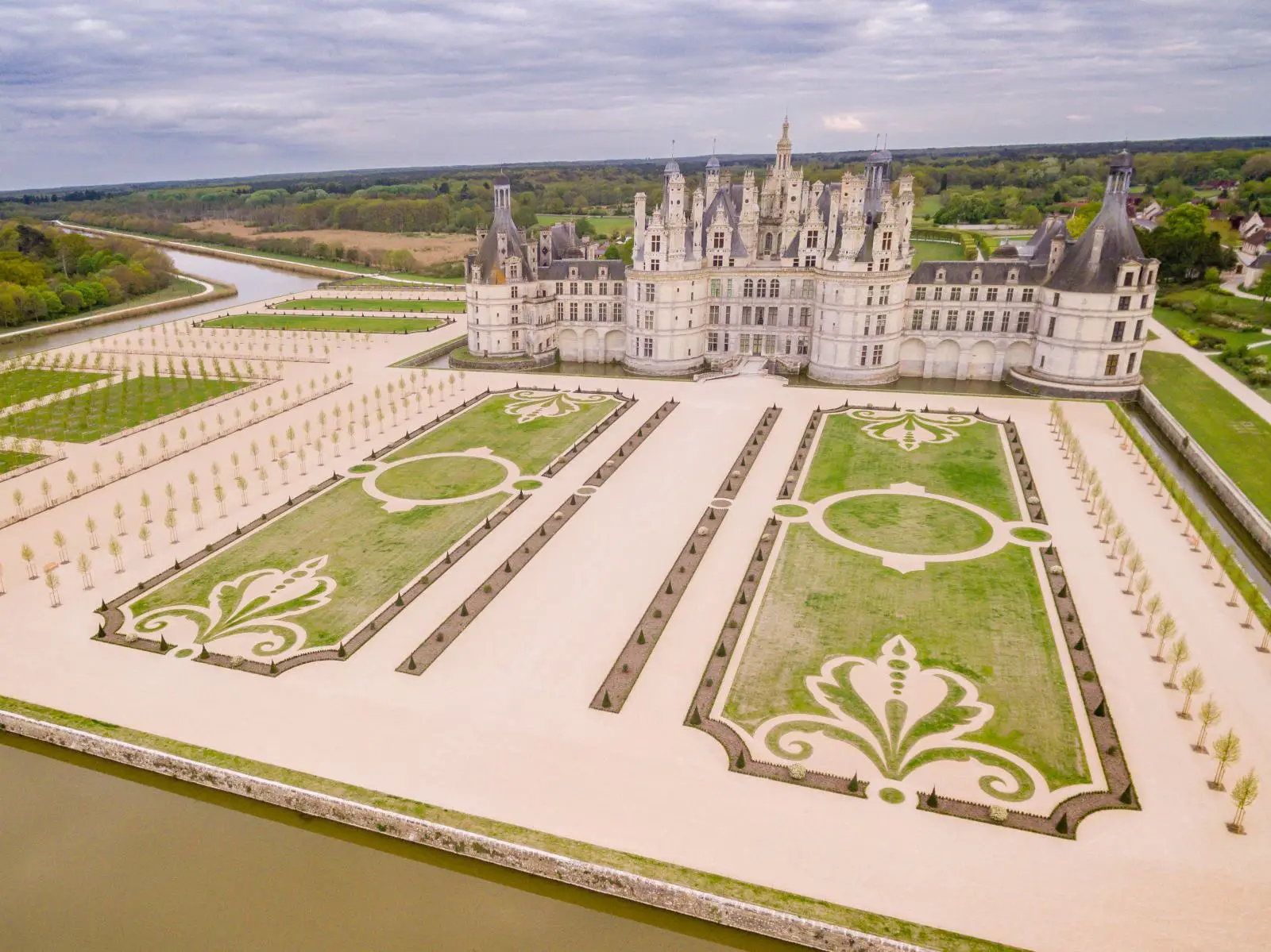
The Château de Chambord, one of France’s most recognisable Renaissance landmarks and a major tourism attraction in the Loire Valley, is undergoing a vast restoration campaign after years of structural deterioration left parts of the castle at risk.
Officials at the Domaine national de Chambord said repairs to the historic François I Wing form part of a broader restoration project estimated at €37 million. The works come after growing concerns over cracks, moisture damage, unstable masonry and weakening foundations in sections of the 16th century château.
The castle, which attracts more than one million visitors annually, is considered one of the finest examples of French Renaissance architecture and has been listed as a UNESCO World Heritage Site since 1981.
According to Chambord officials, the restoration campaign will begin with urgent safety and stabilisation works before moving into a long-term reconstruction programme expected to continue until at least 2030.
The project will focus on consolidating stonework, restoring Renaissance sculptures and rebuilding timber structures using traditional construction techniques. Later phases are expected to redesign visitor areas, exhibitions and interpretation spaces.
The François I Wing has become the most vulnerable section of the château. Built between 1539 and 1545 near marshy ground and the château’s moat, the wing has suffered from decades of water infiltration and increasingly unstable foundations.
French media reports said climate extremes, including alternating floods and droughts, have accelerated the deterioration. The Loire Valley site has faced repeated weather-related pressure in recent years, including major flooding in 2016 that damaged parts of the estate grounds.
The deterioration became more visible after an incident in 2023 when around 20 visitors reportedly fell through a weakened floor section in the château. No serious injuries were reported, but large parts of the François I Wing were later closed to the public as a precaution.
Pierre Dubreuil, director general of Chambord, described the restoration as “the project of the century” for the estate, according to several French media reports.
Although Chambord remains one of France’s most visited castles after Versailles, officials say the scale of the repairs exceeds the site’s normal resources. The château partly funds itself through admissions, events, parking, shops and tourism activities, but authorities have also launched international fundraising and crowdfunding campaigns to support the work.
Chambord officials said the French state and the Domaine national de Chambord are financing part of the project, while additional support is being sought from donors and heritage patrons.
Construction of Chambord began in 1519 under King François I, who envisioned the château as a grand hunting lodge and symbol of royal power. The castle became famous for its elaborate roofline, towers and double-helix staircase, which historians have long linked to the influence of Leonardo da Vinci.
The château contains more than 400 rooms and sits within Europe’s largest enclosed forest park, covering around 13,500 acres in central France.
Heritage experts say the restoration highlights the growing challenge of preserving historic monuments that face rising visitor numbers, climate-related stress and ageing infrastructure.
For the travel industry, Chambord remains one of France’s flagship cultural tourism sites and a key attraction in the Loire Valley. While the castle will stay open during much of the restoration work, some sections are expected to remain inaccessible as repairs continue over the coming years.
The restoration campaign also reflects a wider debate in France over how to fund the preservation of world-famous landmarks while balancing tourism demand, conservation needs and public access.
Photo Credit: tolobalaguer.com / Shutterstock.com