December 2025 is proving to be an unusually dark month for Stockholm, prompting questions about why travellers might visit Stockholm now as the city records exceptionally low levels of sunlight.
In the first 15 days of the month, the city saw just 30 minutes of total sunshine, a striking figure for a European capital and one that places Stockholm among the darkest cities on the continent this winter.
The phenomenon coincides with the peak winter travel season, when visitors typically arrive for festive markets, seasonal events and the promise of a Nordic winter atmosphere. While short days are a familiar feature of life in Sweden at this time of year, the scale of the darkness is exceptional and could see December 2025 enter the record books as Stockholm’s darkest month since 1934.
Why Stockholm is experiencing record darkness
Despite common perceptions, Stockholm does not lie within the Arctic Circle and does not experience polar night, the period when the sun fails to rise above the horizon for weeks at a time. Throughout December, the sun technically continues to rise each day, but this year a rare convergence of weather conditions has rendered that fact almost meaningless in daily life.
Persistent low-pressure systems have dominated southern Sweden for much of the month, bringing mild and humid air along with an almost uninterrupted blanket of cloud. The result has been a sky that rarely clears, leaving no real opportunity for sunlight to reach the ground. Even during the brief hours when the sun is above the horizon, its rays have been too weak to penetrate the dense cloud cover.
Historical comparisons underline just how unusual the situation is. Between 1991 and 2020, Stockholm averaged around 33 hours of sunshine across the entire month of December. By the halfway point in 2025, the city remains dramatically below that figure, and forecasts suggest it will be difficult to approach the seasonal norm even if clearer weather arrives before the end of the year.
What the darkness means for visitors
The sense of gloom has been amplified by another missing ingredient of a typical Scandinavian winter: snow. In most years, snowfall reflects what little daylight is available, lending brightness to streets and public spaces. This December, snowfall has been limited, removing that reflective layer and deepening the impression of continuous twilight.
For travellers, the effect is tangible. Stockholm’s winter appeal often lies in contrast: cold air outside, warmth and light within. This year, that contrast feels sharper. Cafés glow more invitingly, shop windows and festive lights take on an outsized role, and the city’s interiors become central to the experience of moving through it.
There is also a sense of witnessing something rare. Unlike polar night, this extended darkness is not dictated by latitude but by weather, making it an unusual and historically significant moment. Should current conditions persist, December 2025 may be remembered as the darkest since 1934, when recorded sunshine for the month effectively fell to zero.
For those considering a winter visit, expectations may need adjustment. This is not a month defined by crisp winter light or snowy vistas, but by subdued streets and a slower rhythm shaped by darkness. Yet for some travellers, that is precisely the appeal. In December 2025, Stockholm offers a heightened version of its winter character, where the absence of light draws attention to atmosphere, intimacy and the quiet resilience of daily life in the far north.
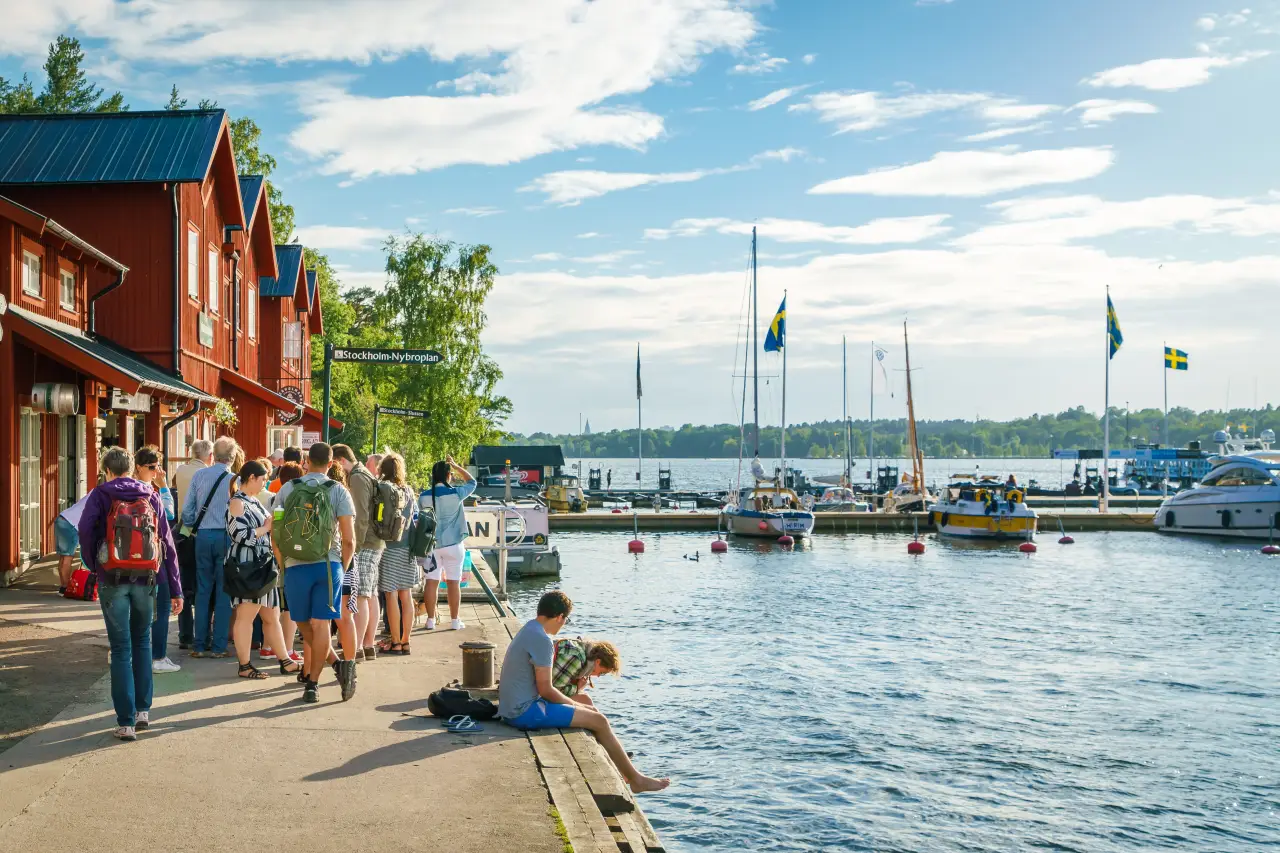
Photo Credit: Oleksiy Mark / Shutterstock.com