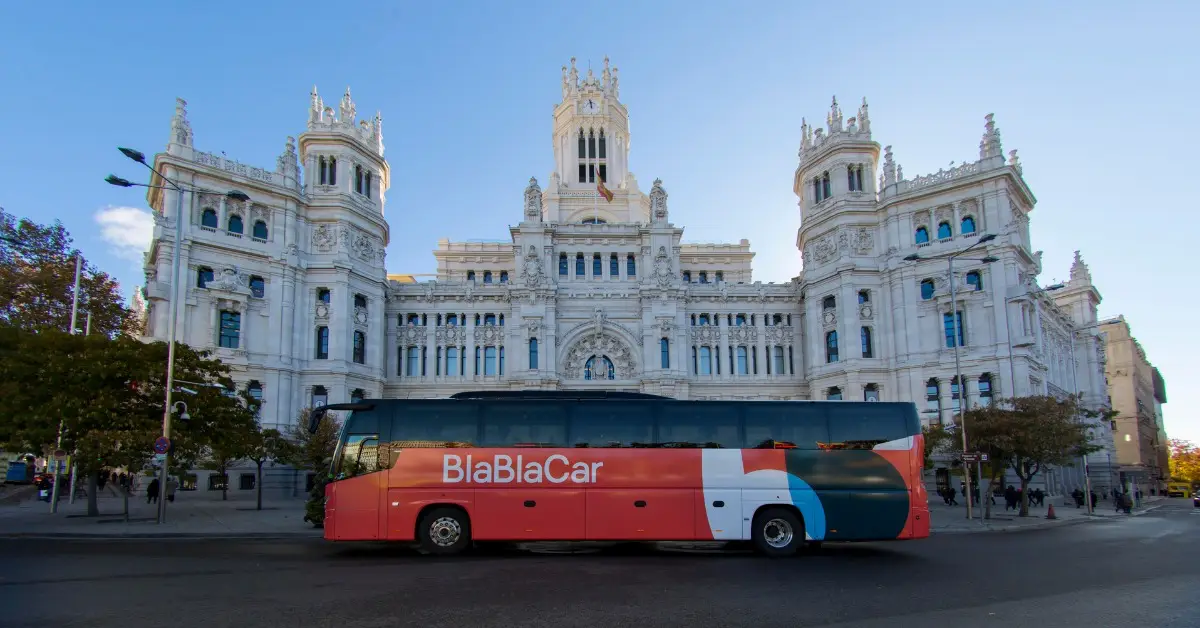
BlaBlaCar is shutting down its bus operator business after years of recurring losses, the car-sharing platform announced on Tuesday 21 April. The closure will eliminate 40 jobs and end a select number of coach routes connecting cities in Spain and Portugal with other European destinations, with services expected to cease by late summer 2026 and a full market exit projected by January 2027.
The company cited “structural economic difficulties” and “no prospects for improvement” in what it described as “a very competitive market” as the reasons behind the decision. BlaBlaCar said it would be “fully mobilised” to support the employees affected by the redundancies.
BlaBlaCar entered the coach market in 2019 by acquiring Ouibus from French state rail operator SNCF, taking on the role of network operator and paying partner coach companies regardless of occupancy levels, meaning the company bore the full economic risk of the operation. The BlaBlaCar Bus brand never recovered financially from that model.
The company’s Spanish division confirmed the closure affects “a limited number of routes” and said the move reflects a strategic pivot rather than a full withdrawal from surface transport. In Spain and across 20 other markets, BlaBlaCar will continue to distribute tickets from local bus operators and, in some countries including Spain, train tickets as well.
BlaBlaCar has indicated it intends to strengthen its role as a marketplace in France by supporting independent coach operators who may wish to take over the affected routes. The platform described the ongoing model as one that “combined with the capillarity provided by car sharing, allows for a more integrated, more efficient collective mobility that better adapts to the needs of travelers.”
The bus operator business was described internally as “far removed” from the company’s core activity. BlaBlaCar operates in more than 20 countries and built its reputation as a peer-to-peer ride-sharing service before expanding into scheduled coach travel. The retreat from direct bus operations marks a significant strategic reversal, returning the company to a distribution and aggregation role rather than that of a transport operator carrying its own financial risk on route performance.