Train services in France and England have faced widespread cancellations and long delays as an exceptionally early heatwave pushed temperatures across Western Europe well above seasonal norms.
Rail operators in both countries blamed the disruption on the heat, though for different reasons. In France, the state operator SNCF pointed to failing air conditioning on older carriages, while in Britain the problem has centred on tracks expanding and overhead power lines sagging in the heat. The UK recorded its hottest May day on record at 34.8C, beating the previous mark by about two degrees, with several areas reaching the mid 30s, a level usually associated with the height of summer.
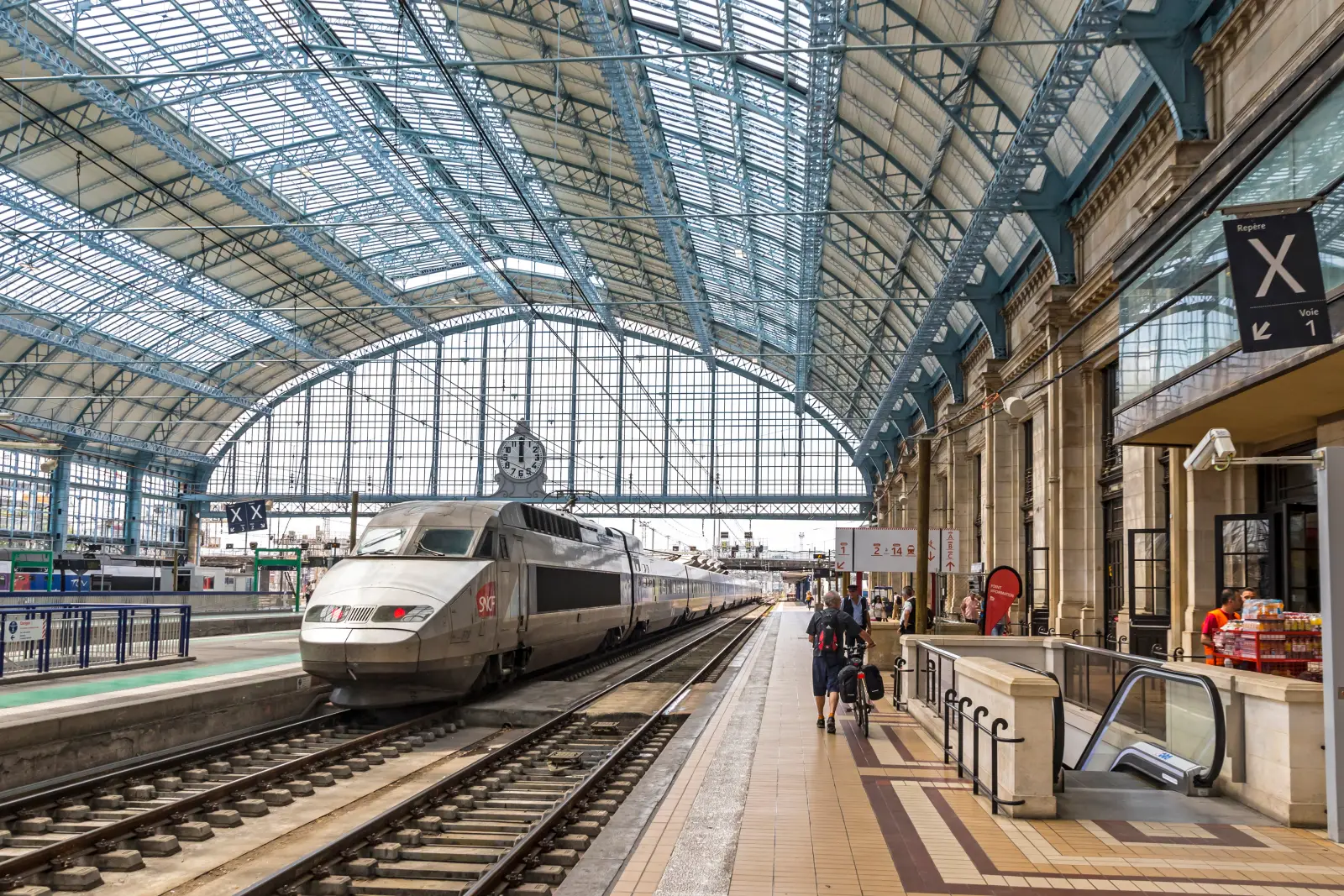
In France, SNCF cancelled a series of Intercités trains scheduled during the hottest hours on Thursday 28 and Friday 29 May. The operator said the move was meant to prevent air conditioning breakdowns on its ageing Corail carriages, which it said lack the robustness of newer stock. The worst-hit corridors were the Paris to Toulouse line via Limoges and the Bordeaux to Marseille route, with further cancellations on the Clermont to Paris line.
The strain on passengers was laid bare when a Paris to Nice service was left stranded for close to four hours in a carriage without working air conditioning. Videos that spread quickly online showed travellers stepping down onto the tracks in search of shade. French media interviewed affected passengers, many of whom said they would rather wait for a delayed train with cooling than be left on a platform for hours.
In England, the disruption has hit both long-distance and commuter routes. National Rail warned that the heat could cause rails to buckle and overhead lines to sag, and flagged the added risk of trackside wildfires. South Western Railway cut services and warned of cancellations and delays of up to 30 minutes on routes out of London Waterloo, affecting long-distance links toward destinations such as Exeter and Southampton, while regional services toward Sheffield and Nottingham were also disrupted. In the capital, the Elizabeth line ran slower because of high track temperatures.
Network Rail imposes temporary speed limits during hot spells because rails in direct sunlight can be around 20C hotter than the surrounding air, and most of the network is designed to keep running only up to a track temperature of about 46C. Slower trains exert less force on the steel, which lowers the chance of buckling, but the trade-off is longer journeys and a higher likelihood of cancellations.
The early timing has drawn the most attention. France broke heat records in more than 300 locations in a single day, and authorities have linked at least seven deaths to the heat. The Met Office described the UK conditions as unprecedented for May, noting that what was once a one-in-100-year event is now closer to one in 33. The UK Climate Change Committee recently warned that the country was “built for a climate that no longer exists,” a concern sharpened by the fact that only around 5 percent of British homes have air conditioning.
For passengers, the immediate impact has been missed connections, longer journeys and uncertainty over whether scheduled services would run at all. The episode has also underlined the different weaknesses of each network, from cooling failures inside French carriages to the physical strain of overheated track in Britain.
There has been no comparable warning in Spain so far, despite its warmer climate, suggesting operators there have not yet faced the same wave of heat-related cancellations. Even so, the situation in France and England has served as a reminder that transport networks can be disrupted quickly once temperatures climb beyond normal seasonal levels.
Travel demand is likely to stay sensitive to the weather as summer approaches, especially on routes where ageing infrastructure, limited cooling and high passenger volumes overlap. Rail operators may now face growing scrutiny over how well they are prepared for heat events that are arriving earlier and hitting harder.
Photo Credit: katatonia82 / Shutterstock.com