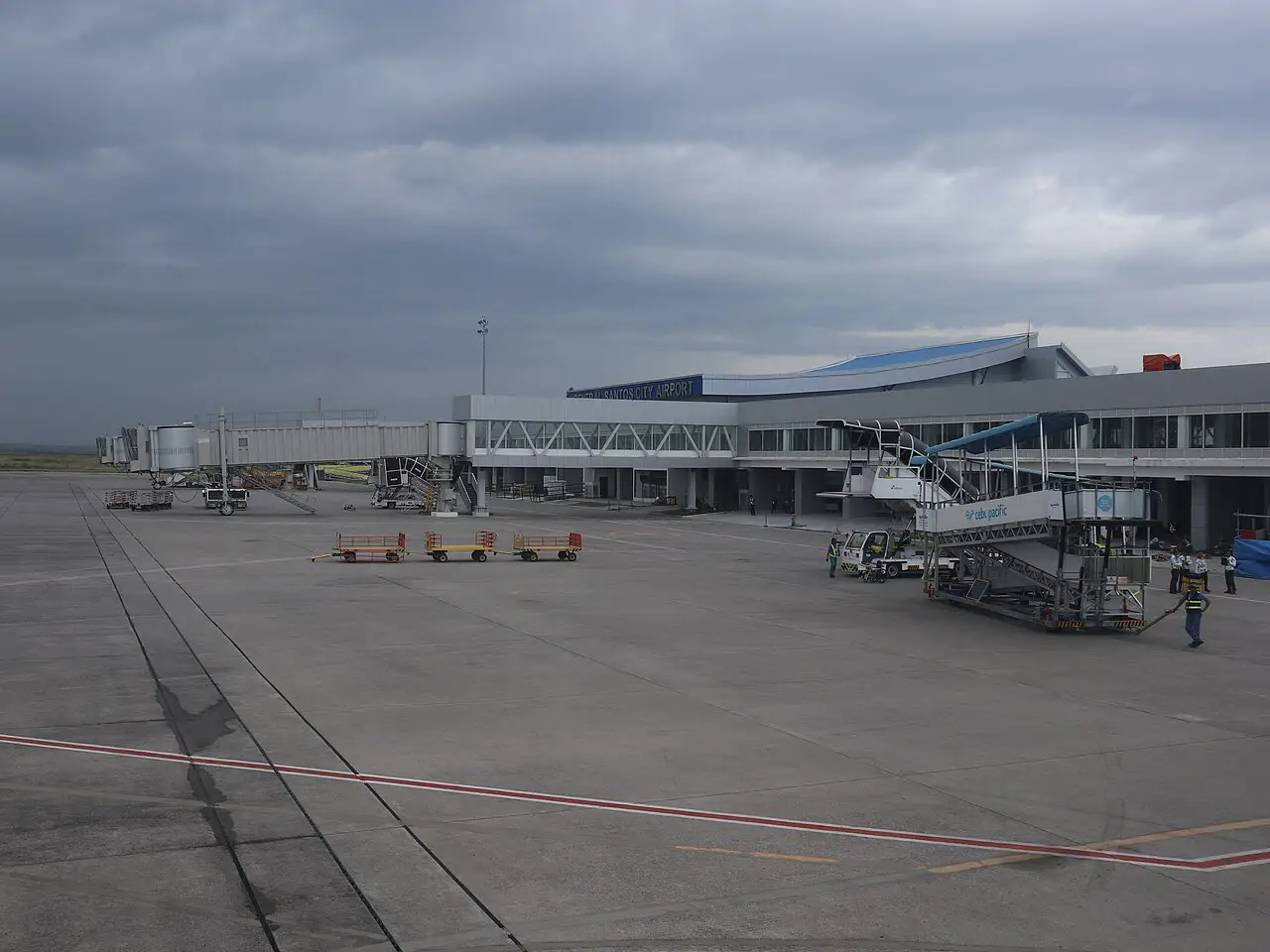
A powerful magnitude 7.8 earthquake struck off the coast of Sarangani province in the southern Philippines on the morning of 8 June 2026, killing dozens of people, damaging buildings across Mindanao and forcing the temporary closure of General Santos International Airport.
The quake hit at 7:37 a.m. local time, shortly before the start of the first day of school, according to the Philippine Institute of Volcanology and Seismology (PHIVOLCS). It was initially recorded at magnitude 7.0 before being upgraded after detailed analysis. The United States Geological Survey placed the epicentre offshore near the island of Mindanao.
The Office of Civil Defense reported at least 35 deaths by Monday evening, with more than 100 people injured, mostly in collapsed buildings and landslides. A landslide in mountainous Sarangani killed more than a dozen villagers, while a two-storey school building collapsed in the region. General Santos, a city of around 722,000 people, sustained some of the most serious damage, with the Department of Public Works and Highways estimating around 1 billion pesos in damage to buildings in the city alone.
The Civil Aviation Authority of the Philippines (CAAP) suspended operations at General Santos International Airport, a key gateway for southern Mindanao, issuing a Notice to Airmen while it inspected runways, navigation equipment and the terminal building. Footage circulating on social media showed damage inside the terminal and passengers evacuating.
At least 17 domestic flights to and from the airport were cancelled. Philippine Airlines and Cebu Pacific grounded all services to and from General Santos, with both carriers extending cancellations through 11 June. Cebu Pacific offered affected passengers free rebooking, rerouting, travel-fund credit or a full refund, and advised travellers to check flight status directly with the airlines.
The airport later reopened on a limited basis to accommodate government, military and humanitarian flights, though CAAP confirmed the Notice to Airmen would remain in effect until the evening of Thursday, 11 June, pending a full damage report on the airport’s equipment and facilities.
Tsunami warnings were issued across the region and as far as Indonesia and southern Japan, prompting evacuations of coastal areas in at least nine Mindanao provinces and the Sulu Archipelago. Waves of approximately one metre were recorded along several coasts, with the highest reaching around 1.4 metres. The Pacific Tsunami Warning Center said the threat had largely passed about five hours after the quake, and Philippine authorities lifted the tsunami warning by mid-afternoon.
The earthquake was followed by more than 130 aftershocks, including tremors measuring above magnitude 6, according to PHIVOLCS. President Ferdinand Marcos Jr said emergency agencies had been activated and ordered the closure of schools in affected areas, with the state news agency reporting that millions of students and tens of thousands of teachers were affected.
The Philippines sits on the Pacific Ring of Fire, an arc of intense seismic activity stretching from Japan through Southeast Asia, and experiences frequent earthquakes. Travellers in the affected areas are advised to follow official advisories, coordinate with their airlines and remain cautious until authorities confirm full safety clearance for General Santos and surrounding areas.
Photo Credit: Patrickroque01 / Wikimedia Commons, CC BY-SA 4.0