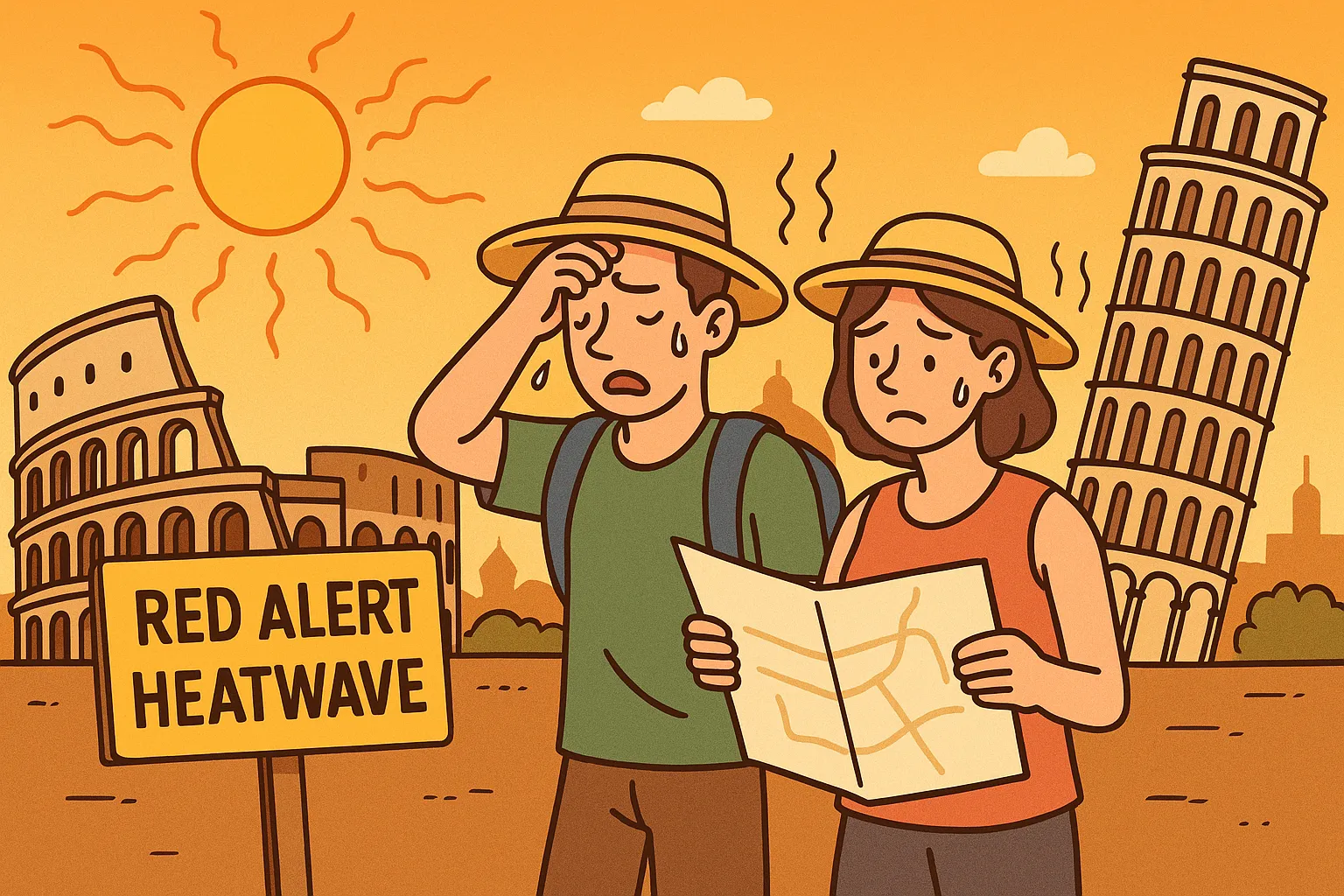
Travellers with heart disease are being urged to take extra precautions as a heatwave pushes temperatures above seasonal averages across large parts of Europe and health authorities warn of increased risks from extreme heat. The warning comes as millions of people prepare for summer holidays while temperatures approach or exceed 40C in parts of Spain, France, Italy and other European destinations.
The renewed focus on travel health coincides with guidance from the German Heart Foundation, which advises people with cardiovascular conditions to seek medical advice before travelling, particularly during periods of extreme weather. Doctors say high temperatures, long-haul flights, poor air quality and high-altitude destinations can place additional strain on the heart and circulatory system.
Extreme Heat Adds Pressure on Vulnerable Travellers
Several European countries have issued heat alerts as unusually hot weather spreads across the continent. Meteorologists report temperatures significantly above seasonal norms in parts of southern and central Europe, prompting public health warnings for older adults and people with chronic medical conditions.
According to the German Heart Foundation, heat is one of the most important concerns for travellers with heart disease. Temperatures of 30C or higher can increase the risk of circulatory problems, heart rhythm disturbances and other complications among people with conditions such as heart failure, coronary heart disease and high blood pressure.
Thomas Meinertz, a member of the scientific advisory board of the German Heart Foundation, said holiday planning should begin with a discussion with a cardiologist.
“Your cardiologist can provide specific recommendations tailored to your risk profile,” said Thomas Meinertz, member of the scientific advisory board of the German Heart Foundation.
The organization recommends arranging a medical check-up about three weeks before departure. Doctors can assess whether a patient is fit to travel and whether adjustments to medication or other precautions may be needed.
Flights, Altitude and Air Quality Also Create Risks
The foundation’s guidance highlights several travel-related factors that can affect cardiovascular health. Long-haul flights can increase the risk of thrombosis because passengers remain seated for extended periods, potentially leading to serious complications such as pulmonary embolism.
People with existing heart conditions are advised to discuss air travel with their doctors and determine whether measures such as compression stockings or heparin injections are appropriate.
Experts also recommend choosing destinations with a climate similar to conditions experienced at home. Tropical regions and Arctic destinations may expose travellers to environmental stress that can place additional demands on the cardiovascular system.
High-altitude locations present another challenge. As elevation increases, lower air pressure reduces the amount of oxygen reaching the bloodstream, causing the heart to work harder. The risk is particularly relevant for travellers planning mountain holidays or visits to elevated resorts.
Air quality is another factor that should not be overlooked. Health experts advise travellers to monitor pollution levels, especially when visiting large cities. Airborne pollutants can contribute to inflammation and worsen existing cardiovascular conditions, including coronary heart disease, arrhythmias and hypertension.
The German Heart Foundation also advises people to postpone travel and seek medical attention if they experience symptoms such as chest tightness during light activity, worsening angina, increasing breathlessness, fluid retention, repeated dizziness or sudden loss of consciousness.
Doctors stress that many people with heart disease can travel safely, provided they plan carefully and receive individualized medical advice. As Europe experiences one of its first major heatwaves of the summer season, health specialists say preparation and awareness remain essential for reducing travel-related risks.