Most travelers drop their bags, check the view, and test the mattress the moment they walk into a new room. But your first priority should really be hotel room safety. The most common threats to your well-being aren’t dramatic crimes. They’re everyday physical hazards like slippery floors, worn locks, and broken furniture. Before you start researching whether your destination is safe, make sure the room you’re sleeping in is secure first.
Checking your surroundings puts you in control of your personal safety in a space you didn’t design and don’t manage. You’re depending on unfamiliar staff and aging infrastructure to protect you from fires, falls, and intrusions. A quick self-inspection lets you catch structural problems and maintenance failures before they wreck your trip. This guide breaks down the most common danger zones so you can actually relax once you’ve unpacked.
Hotel Room Safety Starts With a 5-Minute Check-In Scan
Why your first few minutes in the room matter
It’s significantly easier to request a new room before you’ve scattered your belongings everywhere and settled in for the night. Ask anyone who’s tried to switch rooms at 11 p.m. with two suitcases open on the bed; it’s miserable. Physical hazards also pose a massive financial burden on the hospitality industry. Spotting these risks early gives maintenance teams a chance to document and fix the problems properly. And photos taken right when you arrive can serve as much stronger evidence if an accident happens later.
Your quick hotel room safety checklist
Run through this walk-through every time you check into a commercial lodging property. It takes about five minutes and could save you a lot of trouble:
- Test the main door, latch, deadbolt, and peephole to confirm they function smoothly.
- Locate the nearest exits and study the evacuation map mounted on your door.
- Check smoke alarms, sprinklers, and emergency instructions for any signs of tampering.
- Inspect bathroom floors, the tub, and the shower for slip risks or standing water.
- Look for exposed wiring, overloaded outlets, or damaged lamps near the bed.
- Test balcony doors, window locks, and child-access risks.
- Check that furniture, TVs, and headboards feel stable and secure.
- Make sure your walking path is clear of obstructions, especially for those middle-of-the-night bathroom trips.
Minor annoyance vs. real safety issue
Not every maintenance flaw calls for a room change. Use this table to tell the difference between cosmetic wear and an actual hazard:
| Room Feature | Usually a Minor Issue | Potential Safety Hazard | What You Should Do |
|---|---|---|---|
| Door lock | Sticky door handle | Deadbolt won’t fully engage | Request maintenance or a new room right away |
| Bathroom floor | Cosmetic tile wear | Slippery tile, pooling water, no bath mat | Ask for a mat, document the issue, switch rooms if needed |
| Smoke alarm | Hard to spot on the ceiling | Missing, damaged, or covered detector | Notify the front desk immediately |
| Furniture | Scuffed table edges | Wobbly headboard, unstable TV stand | Avoid using the item and report it |
| Outlet/lighting | Old lamp shade | Exposed wires, sparks, hot outlet | Unplug devices and request a prompt repair |
| Balcony/window | Stiff sliding door | Broken lock or low barrier with child risk | Change rooms if unresolved |
The Most Overlooked Hotel Room Hazards
Bathroom slip hazards are far more common than you’d think
Safety and legal sources estimate that 40 percent of hotel guest accidents are slip-and-fall incidents. Sound familiar? If you’ve ever stepped out of a hotel shower onto slick tile with no bath mat in sight, you already know how sketchy it can feel. Wet bathroom surfaces are a frequent cause of those injuries, especially around bathtubs, showers, and tile floors. Here’s one detail guests routinely get wrong: a towel bar isn’t a safety rail. People instinctively grab them during a fall, and the fixture comes right off the wall. If you experience a slip and fall in a hotel, documenting the scene and understanding the legal deadline to act can make a real difference in protecting your rights.
Faulty locks and easy room access
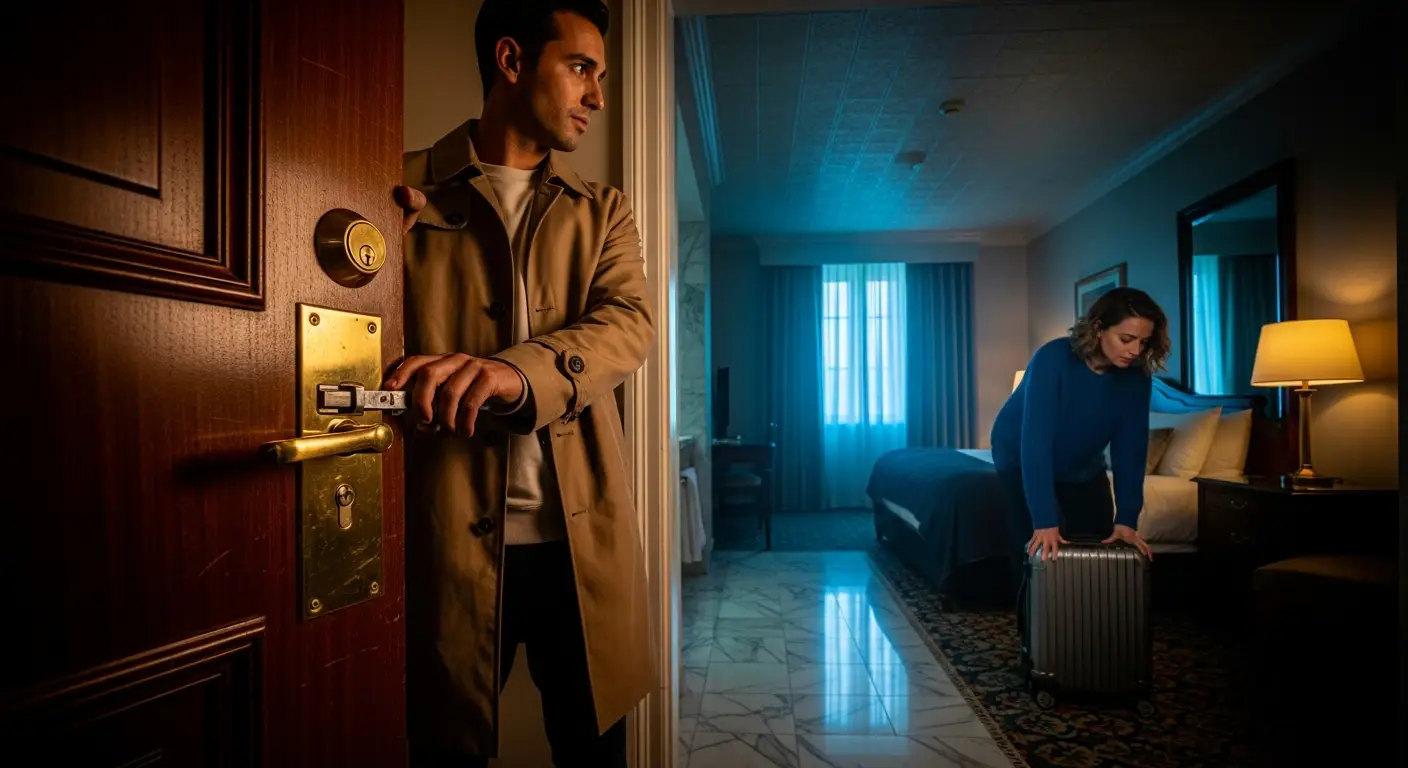
Even properties with modern electronic keycards can still have worn mechanical hardware behind the tech. Safety experts note that hotel deadbolts are often degraded from years of use and may not extend fully into the doorframe. That creates a serious vulnerability; a door that looks locked might be easy to push open with a firm shoulder. Reports of unauthorized room entry also highlight the human side of hotel security failures, from staff members with master keys to doors that don’t latch properly. You should always engage the secondary swing bar or the physical chain latch when available.
Fire Safety Gaps You Should Never Ignore
Domestic tragedies make the strongest case for reviewing building evacuation routes every time you check into a hotel. Major US fire incidents—such as the historic MGM Grand disaster in Las Vegas or more recent multi-unit high-rise fires—stand as stark warnings of how quickly high-occupancy structures can become dangerous. Investigating authorities frequently point to compromised ventilation, sudden flashovers, and dense smoke traveling through vertical shafts as the primary reasons occupants become trapped in upper floors. It is a grim reminder that even under strict domestic building codes, unexpected structural failures can catch travelers completely off guard.
So what should you actually do? Always identify two distinct exit paths and count the doors between your room and the nearest stairwell. In heavy smoke, you won’t be able to see signage, so knowing the route by feel matters.
Unstable furniture, hidden impact points, and electrical risks
Room maintenance involves a lot more than vacuuming the carpets and swapping the sheets. Travelers have reported checking into rooms with exposed wiring, missing floorboards, and significant water damage (think peeling drywall and soft spots near bathroom thresholds). These conditions can cause real harm, especially if you’re navigating the room in the dark after waking up. That’s the kind of hazard you’d never expect, which is exactly why a quick visual sweep of the floor and baseboards is worth your time.
Windows and balconies need a second look, especially with kids
Upper-floor hotel rooms aren’t automatically child-safe just because the windows feel heavy or a balcony rail looks solid. While thousands of pediatric window- and balcony-fall injuries are treated in U.S. emergency departments annually, high-rise hotels can be particularly unforgiving environments for traveling families when safety features are overlooked.
If you are traveling within the U.S. with young children, perform a quick safety sweep the moment you walk into your hotel room:
- Secure the Perimeters: Check the balcony and window locks immediately to ensure they latch tightly and cannot be easily manipulated by curious toddlers.
- Clear the Climb Zone: Move chairs, luggage racks, small tables, and anything climbable completely away from window sills and balcony railings.
- Test the Restrictions: Verify that the window-opening control devices (limiters) function and restrict the opening to a safe gap of 4 inches or less.
Safety Note: Never rely on window screens to prevent a fall. Standard hotel screens are designed to keep insects out, not to hold a child’s weight.
Signs the Property May Have Bigger Safety Problems
Clues in hallways, elevators, and common areas
Maintenance neglect in the main lobby and corridors often signals similar neglect inside guest rooms. Think of it like the difference between a restaurant’s dining room and its kitchen; if the visible areas are rough, imagine what’s behind closed doors. Active building upgrades can also pose serious slip-and-trip risks for guests. Watch for loose carpets, burned-out emergency lights, and housekeeping carts blocking exit stairwells.
When to ask for a different room or leave entirely
You should escalate your concerns to management if basic security and fire systems fail your inspection. Not sure how bad “bad” has to be before you push back? Here’s a useful benchmark. Hospitality properties carry inherent physical risks that affect everyone inside the building. The Bureau of Labor Statistics reported that hotel workers experience an injury rate of 3.9 cases per 100 full-time workers, higher than the 2.3 rate for private industries overall in 2024. If a building isn’t safe enough for the staff who maintain it every day, it’s probably not safe for the guests sleeping there either.
What to Do If You Find a Hazard or Get Hurt
How to report a problem before it becomes an accident
Don’t wait until checkout to mention a loose railing, sparking outlet, or pooling water. Staff members usually have procedures for handling these risks, and you’ll want a paper trail if things escalate. Notify the front desk immediately, ask for written confirmation of your complaint, and jot down the names of the employees you speak with. A quick follow-up text or email summarizing the conversation doesn’t hurt either.
What to do after an injury on hotel property
If you suffer an injury in a hotel due to a preventable hazard, document the scene right away. Photograph the hazard from multiple angles, report the incident to management, and seek prompt medical care even if the injury seems minor at first. Keep copies of all incident reports and treatment receipts. If the incident happened during a Florida vacation, it’s also worth knowing that negligence claims are subject to a strict 2-year filing deadline under Florida law, so don’t assume you can sort out the legal side after you get home and unpack.
Documentation matters because evidence disappears fast
Property owners often move quickly to clean up spills, fix broken fixtures, and overwrite security footage after an accident. Hotels have strong financial incentives to limit liability and remove the hazard as soon as possible. Your own memory can fade as your trip continues, too, making immediate smartphone photos and videos especially valuable. Capture timestamps, get witness contact info if anyone else saw the hazard, and back everything up to cloud storage before you leave the property.
A Safer Stay Starts With Small Checks
Most hotel stays end without a single negative incident, and that’s genuinely good news. The biggest risks you’ll face are rarely dramatic worst-case scenarios. They’re ordinary maintenance failures like a wet tile floor, a broken door latch, or a missing bath mat.
Dedicating five careful minutes at check-in can meaningfully reduce your chance of a serious, preventable accident. Trust your instincts, request a new room if something looks off, and hold the property accountable for basic standards. With a quick room scan and a little attention to the details most guests overlook, you can make your next stay safer and more comfortable from the moment you walk through the door.