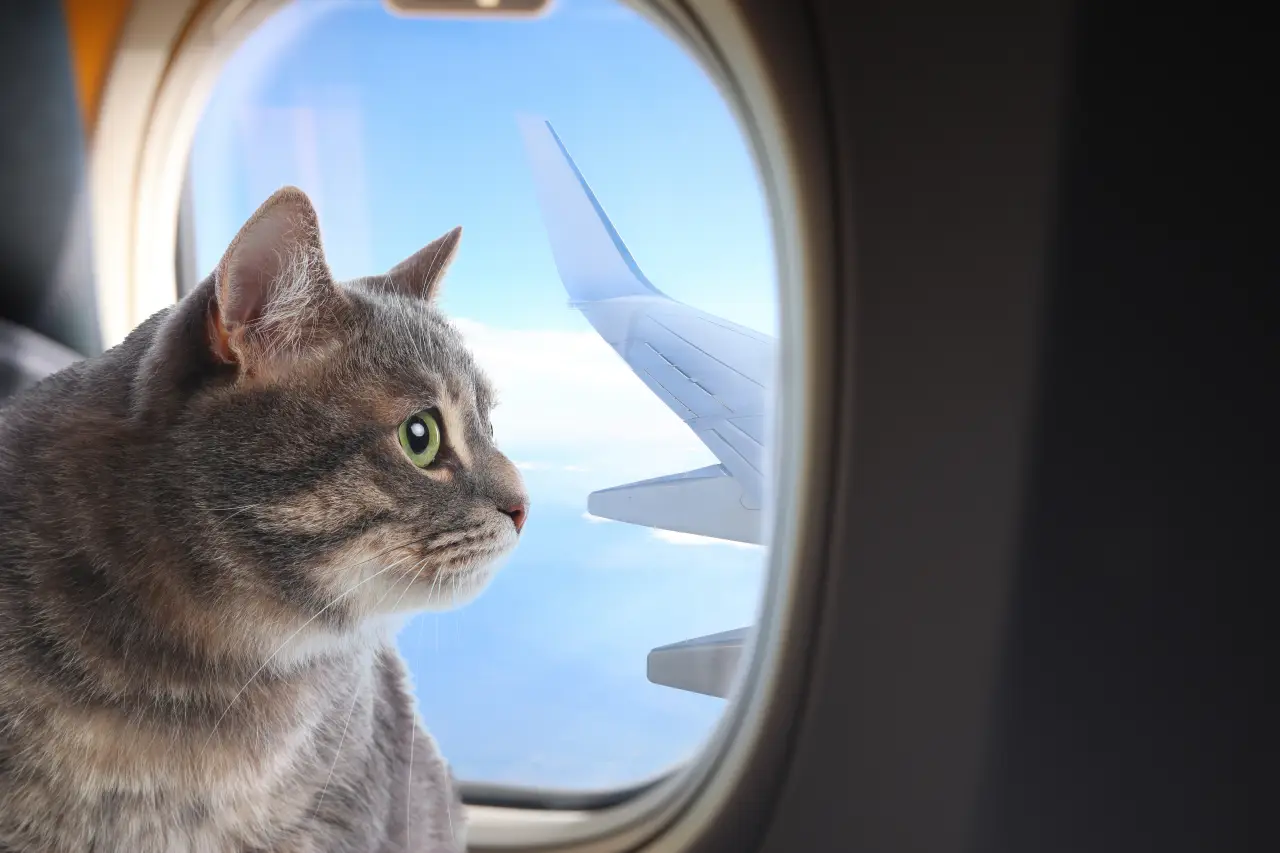
The International Air Transport Association has released new operational guidelines to help airlines manage in-cabin pet travel at every stage of the journey, from booking and check-in through boarding, the on-board experience and arrival. The guidance was published on 15 July 2026.
The document follows IATA’s recently launched Guidance on Traveling with Service Dogs, reflecting a wider effort to improve consistency across the industry in how dogs and other pets are transported by air. It was developed through the collaborative efforts of IATA’s Live Animals and Perishables Board, its In-Cabin Pet Transport Focus Unit, the Live Animals Working Group, the Cargo Handling Council and the Ground Operations Standards Passengers and Baggage Subgroup and Accessibility Working Group.
Brendan Sullivan, IATA’s Global Head of Cargo, said the guidance responds to a genuine need among travellers. “A pet is a much loved member of the family. People traveling with their pets need clear guidance on what to expect at every step of the journey,” he said. “That’s important because well-prepared travelers and industry-wide best practices enable airlines to deliver a safe, consistent, and efficient experience for those traveling with their pets.”
The guidelines were shaped in part by IATA’s 2025 Global Passenger Survey, which found that around a quarter of respondents have travelled with a pet or would consider doing so. Among those respondents, 41% cited uncertainty around pet eligibility as a challenge, 36% were unsure about airline policy, and 34% were unsure about the overall process of travelling with a pet.
To address this, the guidelines set out recommended procedures covering the full passenger journey. At booking, airlines are advised to make eligibility criteria and container requirements clear, in line with Container Requirement 1 of IATA’s Live Animals Regulations, and to require advance reservations generally 48 to 72 hours before departure. Airlines are also told to use the IATA Special Service Request code PETC to register pets travelling in the cabin.
At check-in, trained staff are expected to follow a structured acceptance checklist, verifying the pet’s itinerary, documentation, age, species and overall condition, along with confirming the container meets welfare standards. Boarding must be denied if these requirements are not met.
The guidance also addresses security screening, where pets and their containers may be inspected separately depending on jurisdiction, and boarding, where gate agents must verify that containers are secure, ventilated and correctly sized, with cabin crew given a Passenger Information List identifying pet owners before departure.
Further sections cover in flight protocols, connections and transit, where airlines are encouraged to inform passengers about pet relief areas at airports, and disembarkation, where passengers must present pets for customs and veterinary clearance along with documentation such as health certificates, vaccination records and import permits. The guidelines also set out procedures for irregular operations, including delays, diversions and rerouting, to help maintain pet welfare and legal compliance when journeys are disrupted.
A separate section distinguishes in cabin pets from service animals and emotional support animals, noting that service animals are recognised under international and national regulations and can travel in the cabin free of charge, while emotional support animals are not universally recognised and may be treated as pets depending on the airline and destination country.
Photo Credit: New Africa / Shutterstock.com