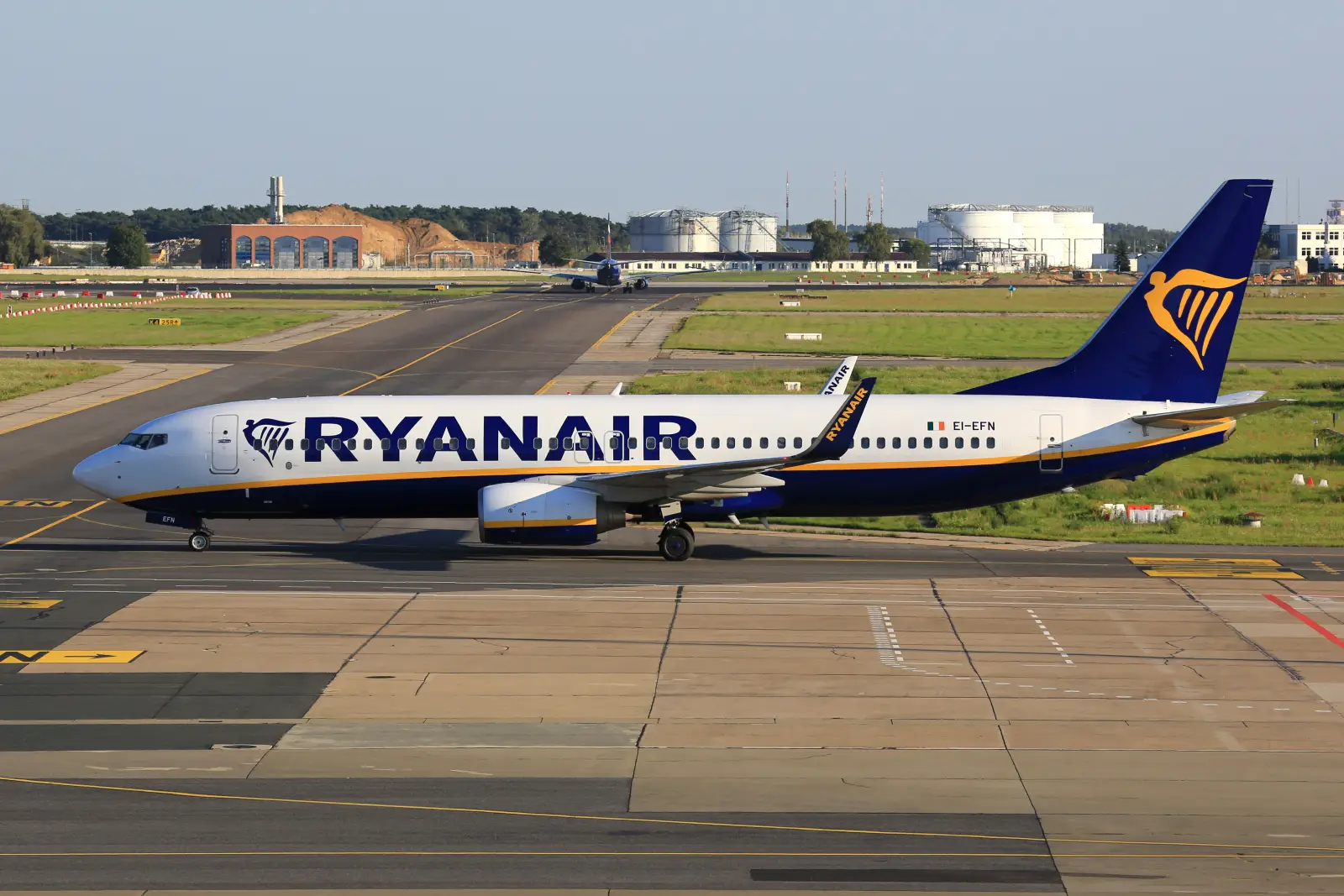
Ryanair has reported a sharp fall in profits after conflict in the Middle East pushed jet fuel costs higher and left some travellers reluctant to book flights. The airline said pre-tax profit dropped 34% to 593m euro (£503m) in the three months to the end of June, while sales were flat.
The budget carrier also said it expects summer fares to be slightly lower than last year because of “consumer hesitancy” about air travel. It cut fares to help stimulate demand as higher fuel prices and weaker booking trends weighed on the business.
Ryanair said the cost of fuel for flights not covered by its hedging arrangements had more than doubled. It warned that its full-year results would be “highly sensitive” to further conflict in the Middle East and Ukraine, as well as changes in the price of unhedged jet fuel.
The warning comes as oil prices have risen again after a weekend of intense exchanges of fire between the US and Iran. Brent crude, the global benchmark, rose 2.5% on Monday and briefly moved above $90 a barrel for the first time in a month.
Traffic through the Strait of Hormuz, a vital route for global oil and gas supplies, has slowed sharply. The passage is a key shipping lane for energy exports from the Gulf, so any disruption can quickly affect fuel markets and airline costs.
Ryanair said it had already “hedged” many of its future fuel costs, meaning it had locked in prices for part of its expected consumption. But it added that the remaining exposure to market prices had become more expensive as tensions in the region intensified.
The airline’s profit warning highlights how quickly geopolitical events can feed through to travel prices. Airlines are particularly exposed when fuel markets rise because jet fuel is among their largest operating costs.
Shane Oliver, head of investment strategy at AMP, said the longer the Strait of Hormuz remained closed, the greater the risk that oil prices would need to rise much further. He said: “The longer the strait remains closed and the war escalates, the greater the risk that oil prices will have to rise to around $150 a barrel to bring demand down to match the hit to supply.”
He added: “This is not our base case but it’s a high risk again.”
For travellers, the immediate impact may be seen in ticket pricing and route planning if oil markets stay volatile. Ryanair’s comments suggest carriers are watching both fuel costs and consumer confidence closely as the peak summer travel period continues.
Airlines across the sector have faced repeated pressure from conflict-driven energy shocks in recent years. When fuel prices rise suddenly, carriers may respond by lifting fares, reducing capacity, or trimming growth plans to protect margins.
Ryanair’s latest figures underline the balancing act between keeping planes full and maintaining profitability. The airline has long used low fares to attract passengers, but it now faces a tougher environment as both demand and costs become harder to predict.
Industry analysts will be watching whether other European carriers issue similar warnings in the coming weeks. Any prolonged disruption to oil supplies through the Strait of Hormuz could add fresh pressure to fares at a time when many passengers are already cautious about travel costs.
Photo Credit: Markus Mainka / Shutterstock.com