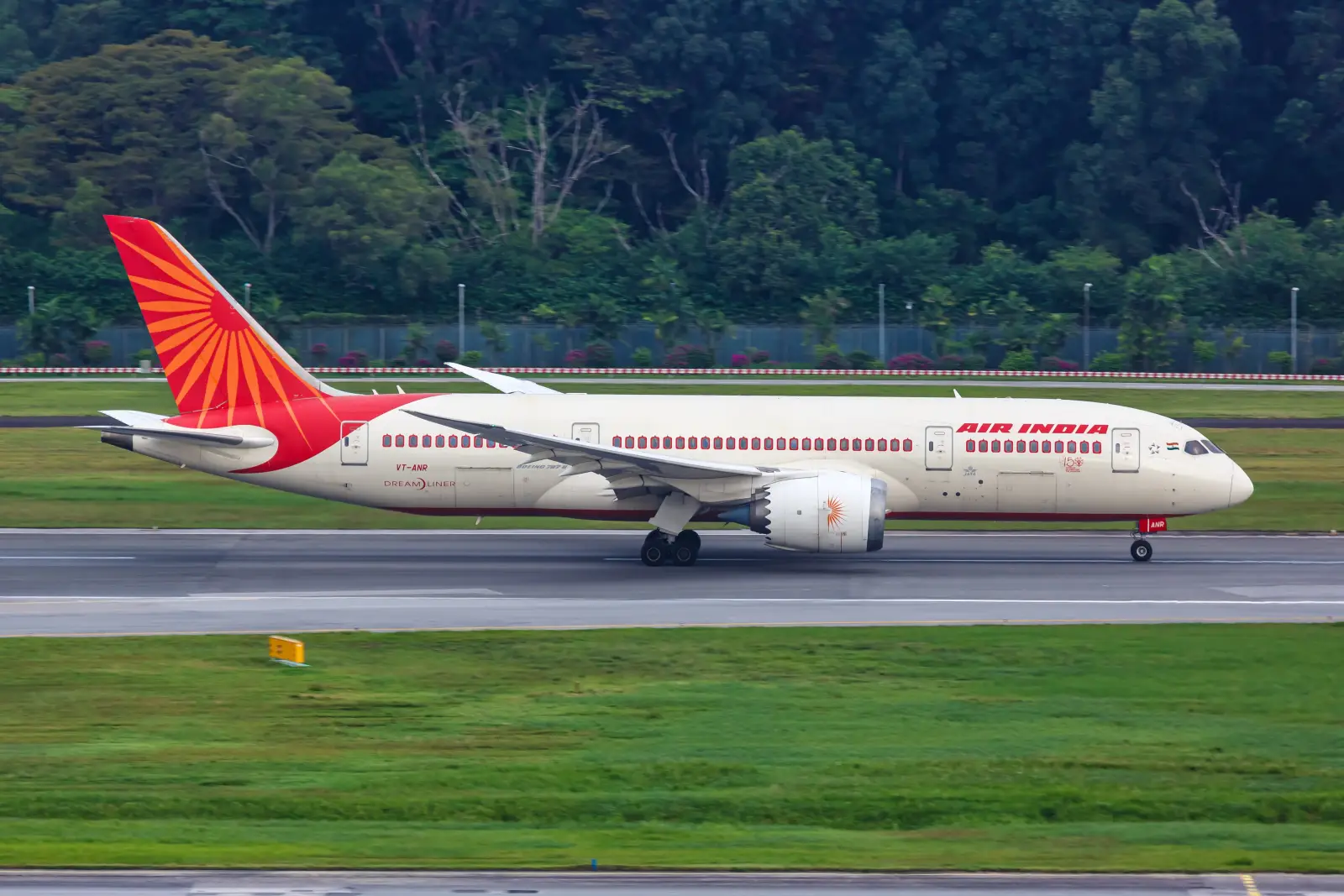
Air India flight 171 crash investigators are facing a fresh wave of scrutiny as the first anniversary of the disaster falls on 12 June 2026, a year after the Boeing 787-8 Dreamliner went down seconds after take-off from Ahmedabad, killing 260 people. The final report from India’s Aircraft Accident Investigation Bureau (AAIB) is expected today, but the inquiry has already become one of the most contested crash investigations in modern aviation history.
The aircraft, registered VT-ANB and operated by Air India as flight AI171, departed Sardar Vallabhbhai Patel International Airport on 12 June 2025, bound for London Gatwick Airport. On board were 230 passengers, including 53 British nationals, and 12 crew members including Captain Sumeet Sabharwal and First Officer Clive Kunder. The plane crashed 32 seconds after take-off into the student hostel complex of B.J. Medical College, killing 241 of the 242 people on board and 19 people on the ground. The sole survivor was Vishwaskumar Ramesh, a 40-year-old British national of Indian origin seated in seat 11A.
The inquiry is led by India’s AAIB, part of the Ministry of Civil Aviation, with the United States’ National Transportation Safety Board (NTSB) and the United Kingdom’s Air Accidents Investigation Branch holding expert status. Boeing and engine maker GE Aerospace are also parties to the investigation.
The preliminary report, published a month after the crash, said the aircraft’s two fuel cutoff switches moved from run to cutoff seconds after take-off and that one pilot asked the other why he had cut off the fuel, to which the other replied he had not done so. The disclosure triggered immediate controversy, with pilot groups and victim families accusing investigators of implying deliberate crew action without sufficient evidence.
Capt. C.S. Randhawa, president of the Federation of Indian Pilots (FIP), said the report was “irrevocably compromised” and argued that deceased pilots cannot defend themselves. The federation, which says it represents around 6,000 pilots, took the matter to India’s Supreme Court alongside Captain Sabharwal‘s father, demanding a judicial investigation. On 11 February 2026, a Supreme Court bench headed by Chief Justice Surya Kant granted the AAIB three weeks to submit its final report. The court also asked the government and bureau to file a report on procedural protocols followed.
On 5 June 2026, the FIP issued a detailed letter to the Prime Minister’s Office, the Civil Aviation Ministry, the Directorate General of Civil Aviation (DGCA) and the AAIB, pointing to technical evidence it says investigators may have overlooked. The federation cited Aircraft Communications Addressing and Reporting System (ACARS) maintenance messages transmitted before and after take-off, the Full Authority Digital Engine Control (FADEC) design feature that allows automatic engine shutdown, and reports that Captain Sabharwal‘s body was recovered while still gripping the control column, all of which the group says contradict a pilot-action theory.
New photogrammetric analysis published by the Safety Matters Foundation of India (SMF) has sharpened that challenge. The foundation’s experts concluded that the Ram Air Turbine (RAT), an emergency power device that only deploys when both engines or major electrical systems fail, was already deployed roughly 2.5 seconds before the fuel switches moved to cutoff. This sequence, if confirmed, would suggest that a systemic failure occurred almost immediately after the aircraft became airborne rather than as a result of human input from the cockpit. Mike Andrews, an attorney at the Beasley Allen law firm representing families of 135 victims, said the RAT deployment raises critical questions. “The RAT deployment is a symptom of something else going on. If it is out prior to the fuel switch allegation, our question still is: why?” he said.
Critics and campaigners have pointed to a broader pattern of electrical issues on the aircraft. Documents reviewed by the BBC show a burning incident in one of the plane’s main power panels in 2022. Air India said repairs were carried out in line with Boeing-approved maintenance procedures. The Foundation for Aviation Safety, led by former Boeing manager and whistleblower Ed Pierson, says the aircraft had a series of serious electrical problems throughout its service life. Air India denies that characterisation. The preliminary report also disclosed that the plane had been flying with a known fault in its core network, a system linking the aircraft’s computers and electronics. A separate maintenance bulletin issued years earlier had flagged a potential fault with fuel control switch locking mechanisms on certain Boeing 787-8 aircraft, including the part number fitted to VT-ANB. The bulletin was advisory rather than mandatory, and according to Air India‘s own submissions to investigators, the recommended inspection was never carried out.
Former UK air accident investigator Tim Atkinson said that blaming a dead pilot can be convenient because it lets regulators, operators and manufacturers off the hook, but added he personally believed pilot action remained the most likely explanation. Aviation minister Kinjarapu Ram Mohan Naidu said the investigation is in its final stage and that the government is not interfering in the process.
Families of victims have requested permission to hold a candlelight vigil on the anniversary date. As the one-year deadline arrives, the new RAT evidence and the FIP‘s formal submission have significantly increased pressure on the AAIB to address the systemic failure hypothesis before releasing its conclusions. The final report is expected to determine whether 260 deaths were caused by crew action, a technical failure, or some combination of both.
Photo Credit: Markus Mainka / Shutterstock.com