Spain is set to enter its third heatwave of the summer on Tuesday, July 21, 2026, with temperatures forecast to climb above 40C across large parts of the country, the national weather office said. The State Meteorological Agency, known as AEMET, said the heat will intensify through Thursday, which forecasters expect to be the peak of the event, with some isolated areas potentially exceeding 45C.
The heatwave will be fuelled by a persistent area of high pressure trapping hot, dry air from North Africa over Spain for several days, AEMET said in a statement. “The level of danger will be significant during the central hours of the day, especially for outdoor activities and vulnerable people,” AEMET said.
Third Heatwave in Two Months
Spain has already endured two other heatwaves this summer, one in late June that broke temperature records across Europe and another in early July. Mainland Spain recorded its hottest first half of summer since records began in 1961, AEMET said, with average temperatures from June 1 to July 15 reaching 24.5C, which is 3.3C above the 1991-2020 reference period average of 21.2C.
The current episode is being driven by an atmospheric blocking pattern reinforced by a cut-off low pressure system positioned west of the Iberian Peninsula. That combination is allowing a mass of warm, dry air from North Africa, carrying suspended dust, to settle over much of Spain and the Balearic Islands. AEMET has not ruled out classifying Monday itself as part of the official heatwave period if the data confirm it.
The highest temperatures are forecast for Andalusia, the Ebro valley, the north-eastern depressions, the Genil basin and the interior of Mallorca, where maximums above 40C are expected in several areas for several consecutive days. Readings could locally approach or exceed 45C in the south-eastern third of mainland Spain.
Hugo Moran, president of AEMET and secretary of state for the environment, said in an interview that the country has entered a chain of successive heatwaves, a situation that is complicating efforts to control the risk of forest fires.
Wildfire Risk Remains High
Scientists say human-driven climate change is increasing the length, intensity and frequency of heatwaves, which dry out vegetation and raise the risk of wildfires. A ferocious blaze in the southeastern province of Almeria earlier this month killed 13 people, making it Spain‘s deadliest wildfire in recent years.
The repeated heat episodes are placing sustained pressure on emergency services and land management authorities across the country as the summer tourism season continues. Travelers to affected regions, particularly Andalusia and the Balearic Islands, are likely to face advisories around outdoor activity during peak afternoon hours as the heatwave intensifies through the week.
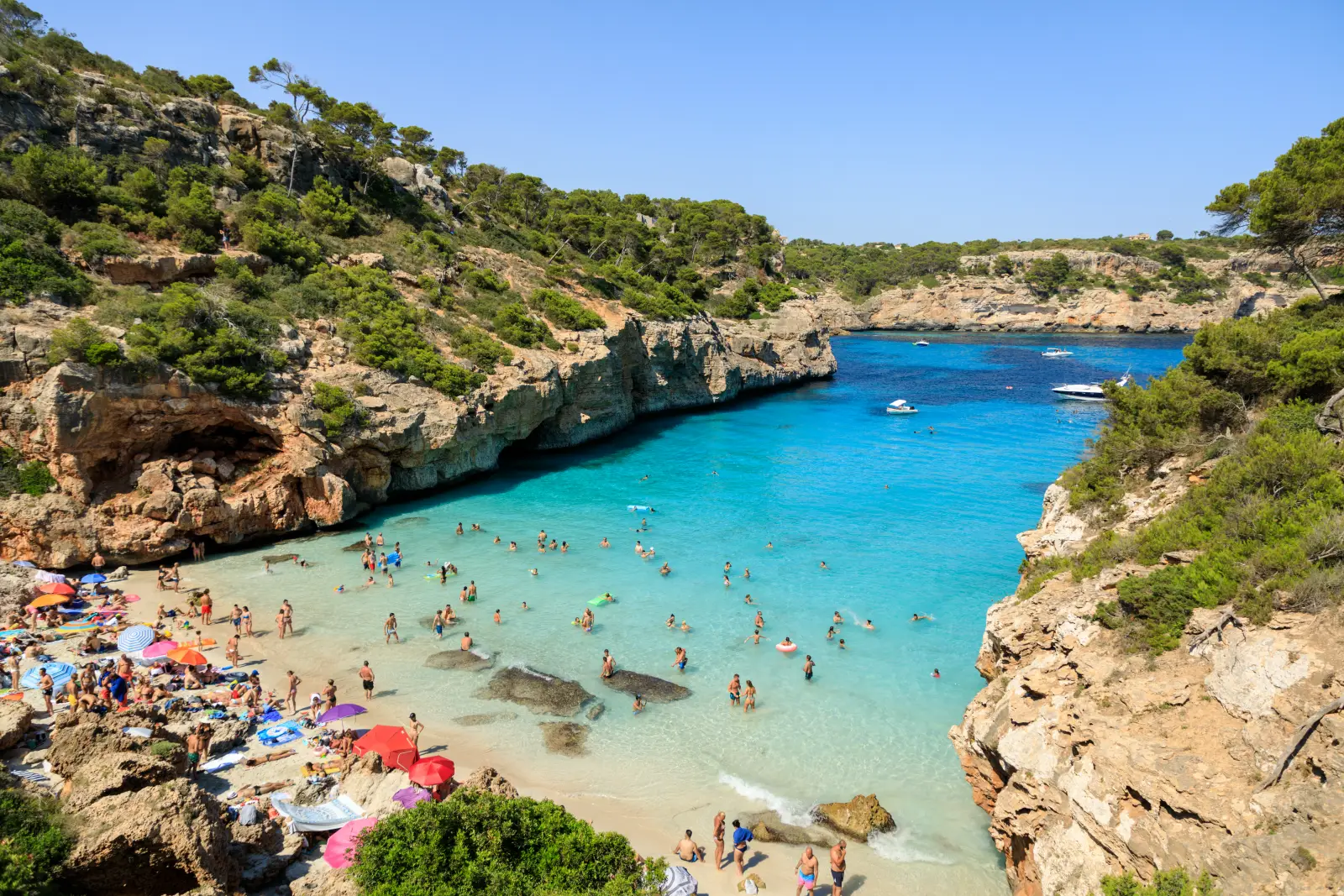
Photo shows Cala des Moro, a popular cove beach on the island of Mallorca, Spain. Photo Credit: Konstantin Tronin / Shutterstock.com