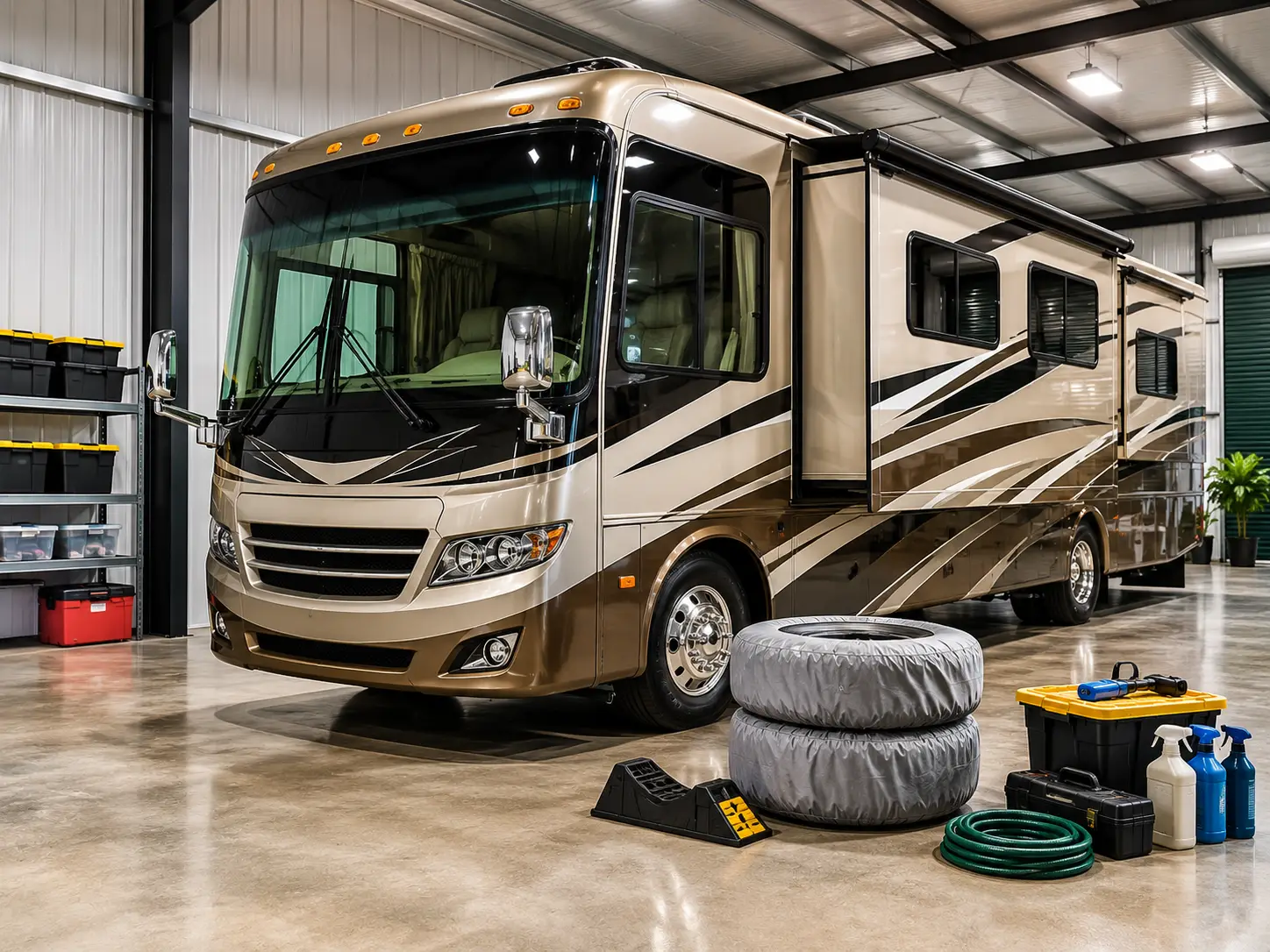
A motorhome represents a significant financial investment, and the condition it is in when you next need it depends almost entirely on the decisions you make when you are not using it. Leaving an RV improperly stored through the off-season exposes it to a predictable set of risks including moisture damage, UV degradation, pest intrusion, and battery failure, all of which are avoidable with the right preparation and the right facility. The cost of addressing these problems after the fact consistently exceeds what it would have cost to prevent them in the first place.
In this article, we walk through everything you need to know to protect your motorhome or travel trailer between road trips. From comparing your storage format options and understanding what each one actually protects against, to the preparation steps that matter most before long-term parking, this guide gives you a practical and thorough approach to off-season RV care.
Key Takeaways
- Indoor climate-controlled storage offers the strongest protection against moisture, temperature extremes, and pest intrusion for high-value motorhomes.
- Covered outdoor parking provides a cost-effective middle ground that significantly reduces UV and rain exposure compared to open-lot storage.
- A thorough pre-storage routine covering cleaning, fluid management, battery disconnection, and tire protection prevents the majority of common off-season damage.
- Anti-theft measures including hitch locks, wheel chocks, and motion-activated lighting meaningfully reduce the risk of theft at both facility and residential storage locations.
- Scheduled inspection visits during the storage period allow you to catch developing issues early before they escalate into costly repairs.
Evaluating Your Storage Options
Choosing the right storage format for your RV is the single most consequential decision in the entire off-season process. The level of environmental protection your vehicle receives, the security infrastructure surrounding it, and how easily you can access it when needed all vary considerably between the three main options available to RV owners. Understanding what each format genuinely delivers, and where it falls short, is the foundation of a well-informed storage decision.
Budget is inevitably a factor, but it should be weighed against the potential cost of damage that inadequate storage can produce. A cheaper storage arrangement that results in one significant repair can easily exceed a full season of premium facility fees.
Indoor Climate-Controlled Facilities
Indoor climate-controlled storage represents the highest standard of protection available for recreational vehicles. These facilities maintain regulated temperature and humidity levels throughout the year, eliminating the environmental conditions that cause the most damage to stored RVs. The enclosed environment also removes exposure to dust, airborne debris, and the pest populations that are common in outdoor storage areas.
The specific benefits of indoor climate-controlled storage include:
- Protection from freezing temperatures that can crack pipes, damage water pumps, and compromise plumbing seals.
- Significantly reduced risk of rodent and insect intrusion compared to outdoor or covered alternatives.
- Lower ongoing maintenance requirements due to the absence of dust accumulation, UV exposure, and weather-related wear.
These facilities carry a higher monthly cost than outdoor alternatives, but for owners of high-value motorhomes or those storing their RV for extended periods, the investment in superior protection is consistently justified by the condition the vehicle is returned in.
Outdoor Covered Parking Solutions
Covered outdoor parking offers a meaningful improvement over open-lot storage without the cost of a fully enclosed facility. A permanent canopy structure blocks direct sunlight and reduces rain exposure, slowing the rate of UV degradation on exterior paintwork, rubber roof membranes, and window seals. The open-sided design allows for natural airflow, which helps manage moisture on exterior surfaces and reduces the risk of condensation-related issues.
For owners who access their RV frequently throughout the year and need straightforward drive-in access, covered outdoor parking strikes a practical balance between protection and convenience. It is particularly well suited to travel trailers and mid-range motorhomes where the investment in a climate-controlled unit is harder to justify against the vehicle’s value.
Residential Driveway and Backyard Storage
Storing your RV at home offers unmatched accessibility and eliminates monthly facility fees entirely. The ability to carry out maintenance, top up supplies, and monitor your vehicle on your own schedule is a genuine practical advantage that facility storage cannot replicate. However, residential storage comes with a set of responsibilities and limitations that are worth understanding clearly before choosing this route.
Local authority regulations and homeowners association rules frequently restrict where and how an RV can be parked on residential property, and non-compliance can result in fines or enforcement action. Security at home relies entirely on the measures you put in place yourself, without the benefit of perimeter fencing, surveillance infrastructure, or on-site management. The table below summarizes how the three storage formats compare across the criteria that matter most:
| Storage Type | Protection Level | Cost | Accessibility |
| Indoor Climate-Controlled | Highest | Premium | Limited |
| Outdoor Covered | Moderate | Mid-range | Moderate |
| Residential | Low | Minimal | High |
Owners looking at storage for recreational vehicles should use this comparison as a starting framework before visiting and evaluating specific facilities. The right choice for your situation depends on your vehicle’s value, your local climate, how frequently you need access, and the budget you are working with.
Essential Preparation Steps Before Long-Term Parking
Selecting the right storage environment addresses the external risks your RV faces. Equally important is the preparation work you carry out before leaving your vehicle for an extended period. A thorough pre-storage routine is what prevents the majority of common off-season problems, and skipping steps in this process is where most preventable damage originates.
The steps below do not require specialist knowledge or significant time investment, but they do require consistency. Treating pre-storage preparation as a fixed checklist rather than an optional process is the habit that separates owners who retrieve a road-ready vehicle from those who face repair bills before they can depart.
Deep Cleaning the Interior and Exterior
A thorough clean before storage is one of the most effective pest prevention measures available. Food crumbs, organic residue, and scented products left inside an RV are reliable attractants for rodents and insects. Removing every trace of food debris from cupboards, upholstery, and flooring, and wiping down all surfaces before storage, removes the incentive for pests to enter in the first place.
Exterior cleaning is equally important. Road salt, bird droppings, tree sap, and accumulated grime left on the surface during storage accelerate paint oxidation and can work into seals and joints over time. A thorough wash followed by a quality wax or protective sealant creates a barrier that preserves the exterior finish through the off-season and keeps the vehicle’s appearance and resale value in better condition.
Managing Fluid Levels and Battery Health
Fuel management before long-term storage is straightforward but frequently overlooked. Filling the tank before parking reduces the airspace inside it, limiting the moisture accumulation that leads to fuel degradation and corrosion in the fuel system. A fuel stabilizer added at this point provides further protection against the chemical breakdown that occurs when petrol or diesel sits unused for extended periods.
Battery care is equally critical. Leaving a battery connected during storage allows parasitic drain from onboard electronics to gradually deplete it, potentially damaging the cells beyond recovery. Disconnecting the negative terminal before storage prevents this. Where electrical hookups are available at your chosen facility, a quality trickle charger maintains the battery at an optimal charge level throughout the storage period without the risk of overcharging.
Protecting RV Tires from Sun Damage
Tires left stationary under load for extended periods are vulnerable to two distinct forms of damage. Flat spots develop where the tire contacts the ground as the rubber loses its ability to return to its original shape, and dry rot progresses when UV exposure degrades the rubber compound from the outside. Both issues are preventable with a small investment of time and basic equipment.
Fitting opaque tire covers before storage blocks UV exposure and slows the dry rot process considerably. Using leveling blocks or tire jacks to distribute weight evenly reduces flat spot formation during extended parking. Where the storage period extends to several months, periodically moving the vehicle a short distance redistributes the contact point and further reduces the risk of permanent flat spotting.
The table below outlines the core pre-storage tasks and the specific benefit each one delivers:
| Maintenance Task | Frequency | Primary Benefit |
| Interior Deep Clean | Before each storage period | Pest prevention |
| Fuel Tank Fill | Before each storage period | Prevents moisture and corrosion |
| Battery Disconnect | Before each storage period | Preserves charge and cell health |
| Tire Cover Install | Before each storage period | Prevents dry rot and flat spots |
Security and Maintenance Best Practices
Preparation before storage addresses the risks that develop from within your RV. Ongoing security and maintenance practices during the storage period address the risks that develop from outside it. A well-chosen facility provides a strong foundation, but supplementing that with your own security measures and scheduled inspection visits significantly strengthens the overall protection your vehicle receives.
The owners who experience the fewest problems with stored RVs are consistently those who treat the off-season as an active period of management rather than a passive wait for the next travel season.
Implementing Anti-Theft Measures
Physical anti-theft devices remain among the most effective deterrents against vehicle theft because they increase the time and effort required to move a vehicle significantly. High-quality hitch locks prevent unauthorized connection to a tow vehicle, while wheel chocks and wheel clamps immobilise the trailer entirely. Using both in combination creates a layered physical deterrent that most opportunistic thieves will not attempt to overcome.
Motion-activated lighting around your storage area adds a further deterrent layer by removing the cover of darkness that opportunistic theft typically relies on. For owners using residential storage, a GPS tracker fitted discreetly to the vehicle provides a recovery resource in the event that a theft does occur, and many modern systems allow real-time location monitoring from a smartphone application.
Routine Inspection Schedules
Visiting your stored RV on a regular schedule is the most reliable early warning system available for developing problems. A structured inspection covering the roof, window seals, slide-out mechanisms, and undercarriage allows you to identify water ingress, pest activity, or physical damage before it progresses to a point that requires significant repair. Problems caught at an early stage are almost always cheaper and faster to resolve than those discovered only when the vehicle is retrieved for use.
The table below outlines a practical inspection and maintenance schedule for the storage period:
| Task Category | Frequency | Primary Goal | Key Action |
| Security Check | Monthly | Theft deterrence | Verify hitch lock and wheel clamp status |
| Exterior Inspection | Quarterly | Waterproofing | Check roof sealant and window seal integrity |
| Pest Management | Every six months | Interior protection | Refresh natural deterrents and check entry points |
| Battery Health | Monthly | System readiness | Check charge level and terminal connections |
Pest Prevention Strategies
Rodents and insects cause damage that is disproportionate to their size. Chewed wiring, contaminated upholstery, and compromised insulation are among the most frequently reported consequences of pest intrusion in stored RVs, and remediation can be expensive. A proactive approach focused on denying access and removing attractants is significantly more effective than reactive treatment after an infestation has established itself.
- Seal entry points: Close off potential access points around plumbing penetrations, electrical conduits, and ventilation openings using steel wool or purpose-made expanding foam before placing your vehicle into storage.
- Use natural deterrents: Place natural repellents such as peppermint oil at likely entry points and distribute cedar blocks throughout the interior, refreshing them during scheduled inspection visits.
- Remove attractants: Clear out all food, scented toiletries, and cleaning products, as lingering odours can attract rodents during long-term storage.
Conclusion
Protecting your recreational vehicle between road trips is a straightforward process when approached with the right combination of facility selection, pre-storage preparation, and ongoing maintenance discipline. The risks your RV faces during the off-season are well understood and almost entirely preventable, making the investment of time and effort in a structured storage routine one of the most cost-effective things an owner can do.
Choosing a facility that matches your vehicle’s protection requirements, completing a thorough pre-storage checklist before each parking period, and maintaining a regular inspection schedule are the three practices that consistently determine whether an RV is retrieved in excellent condition or with an avoidable repair bill attached.
FAQs
Why Is Indoor Climate-Controlled Storage the Best Option for Long-Term RV Protection?
Indoor climate-controlled facilities maintain regulated temperature and humidity throughout the year, eliminating the environmental conditions that cause the most common forms of off-season damage. They protect against freezing temperatures that crack plumbing, UV exposure that degrades seals and upholstery, and pest intrusion that is significantly more common in outdoor storage environments. For high-value motorhomes stored over extended periods, the additional monthly cost is consistently justified by the condition the vehicle is returned in.
What Are the Most Important Pre-Storage Steps for an RV?
The most critical steps are a thorough interior and exterior clean to remove pest attractants, filling the fuel tank and adding a stabilizer to prevent moisture and fuel degradation, disconnecting the battery or connecting a trickle charger, and fitting tire covers with leveling blocks to prevent dry rot and flat spotting. Completing all of these steps before each storage period prevents the majority of damage that owners discover on retrieval.
How Can I Protect My RV from Pests During Storage?
Seal all exterior entry points around plumbing, vents, and electrical penetrations before storage. Remove all food, scented products, and organic materials from the interior entirely. Place natural deterrents such as peppermint oil around entry points and cedar blocks throughout the cabin, and refresh them during each scheduled inspection visit. Regular check visits allow you to identify early signs of intrusion before significant damage occurs.
What Anti-Theft Measures Are Most Effective for Stored RVs?
A combination of a high-quality hitch lock, wheel chocks or a wheel clamp, and motion-activated lighting provides a strong layered deterrent that significantly increases the difficulty of unauthorized removal. For residential storage, a GPS tracker fitted discreetly to the vehicle provides a recovery resource and real-time monitoring capability. At facility storage, supplementing the site’s existing security with your own physical locks adds meaningful additional protection.
How Often Should I Inspect My RV During the Storage Period?
A monthly visit to check security hardware and battery charge levels is the minimum recommended frequency. A more detailed exterior inspection covering roof sealant, window seals, and slide-out mechanisms should be carried out quarterly. Pest deterrents should be checked and refreshed every six months. Consistent adherence to this schedule allows developing problems to be caught and addressed early, before they require significant repair investment.