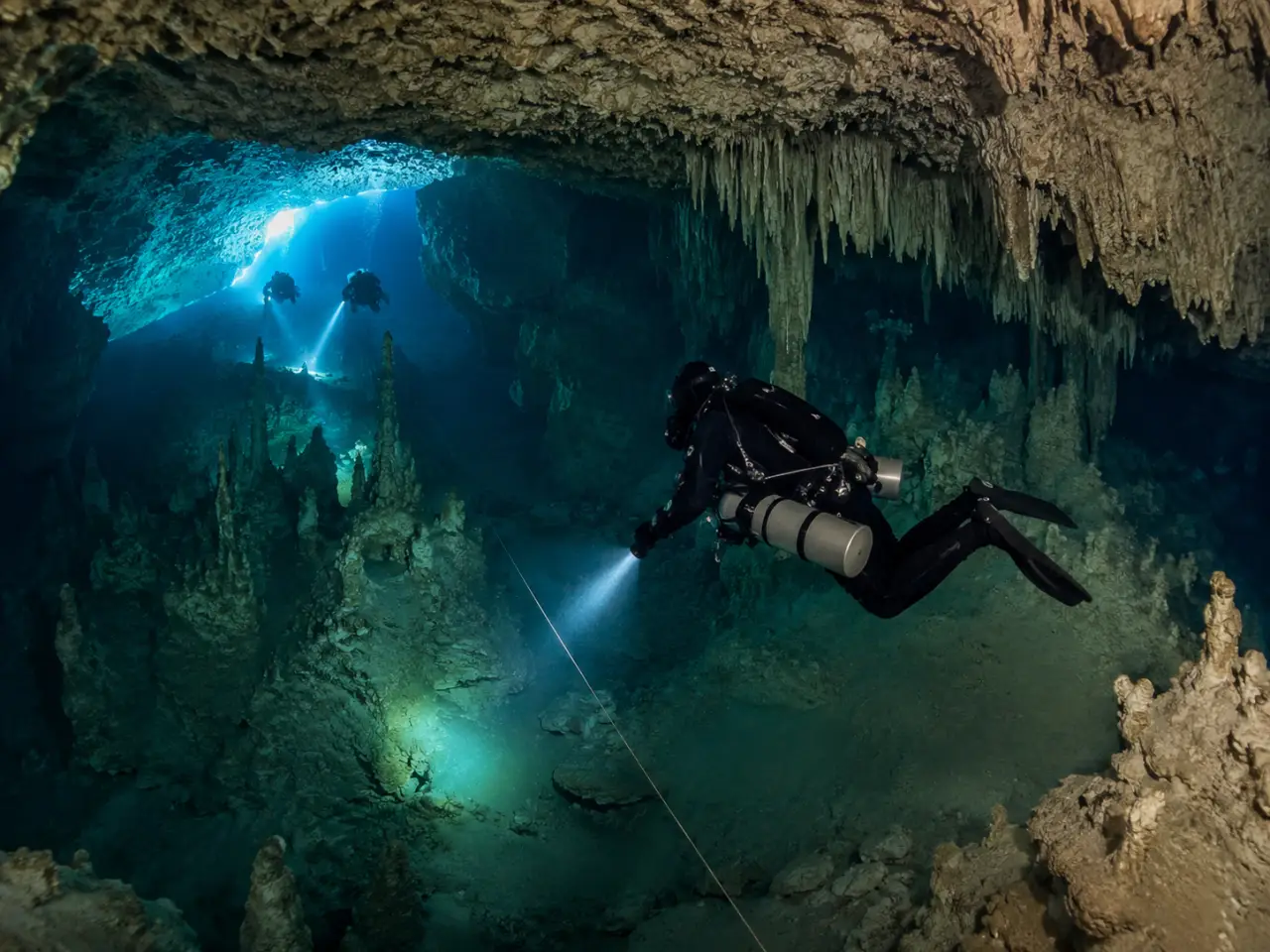
Cave diving has long drawn experienced divers to some of the most dangerous and remote places on Earth, but the recent deaths of five Italian divers in the Maldives have highlighted again how unforgiving these underwater systems can be.
The divers died on 14 May while exploring caves at Vaavu Atoll. A Maldivian military diver, Sgt. Mohamed Mahudhee, also died while trying to recover their bodies.
Authorities said the group had permission to dive deeper than the 30 metres normally allowed for recreational dives in the Maldives, but it remains unclear whether they went beyond the planned depth or whether they had the right equipment for such a technical dive.
The dead Italians were identified as diving instructor Gianluca Benedetti, Monica Montefalcone, an associate professor of ecology at the University of Genoa, her daughter Giorgia Sommacal, marine biologist Federico Gualtieri and researcher Muriel Oddenino. Benedetti’s body was found at the mouth of the cave, while the other four were found deeper inside the system.
Cave diving is a specialist form of scuba diving in which divers move through submerged tunnels and chambers using only flashlights and a guideline to find their way back to the entrance. The systems can stretch for hundreds of miles, with narrow passages, low visibility and no direct route to the surface if something goes wrong.
Veteran Canadian cave diver Jill Heinerth, who has completed more than 8,000 dives, said the experience can feel like moving through a hidden world beneath the planet. “swimming through the veins of Mother Earth,” said Jill Heinerth, Cave diver.
Heinerth, who appeared in the 2024 documentary Diving Into the Darkness, said the risks begin before a diver even enters the water. Divers must consider equipment failure, broken guidelines, poor visibility and the limits of their own ability to rescue themselves or a partner.
“the last step I take is I leave the emotions on the surface … You really have to stay in a pragmatic brain ready to deal with any situation that can occur,” said Jill Heinerth, Cave diver.
The Maldives caves involved in the deaths are relatively rare, according to technical diving instructor Vladimir Tochilov, who has explored the system before. He described the cave as only 200 metres long but deep enough to require “serious, serious training”.
The tragedy has renewed attention on a discipline that many divers describe as beautiful but unforgiving. Cave systems can hold scientific value as well as challenge, offering information about geology, water flow and underwater life that is difficult to find anywhere else.
Heinerth said cave divers are drawn back despite the dangers because the environment offers a view of the world unlike any other. She said divers often feel they are inside the planet rather than looking at it from above.
“I’m literally within the sustenance of the planet that’s supplying the water for humanity, wildlife and even all of the industries we require for our modern life,” said Jill Heinerth, Cave diver.
Investigators are still working to establish what happened in the Maldives cave system and why the group never returned to the surface. The incident has again underlined the high level of training, preparation and discipline required for underwater cave exploration.