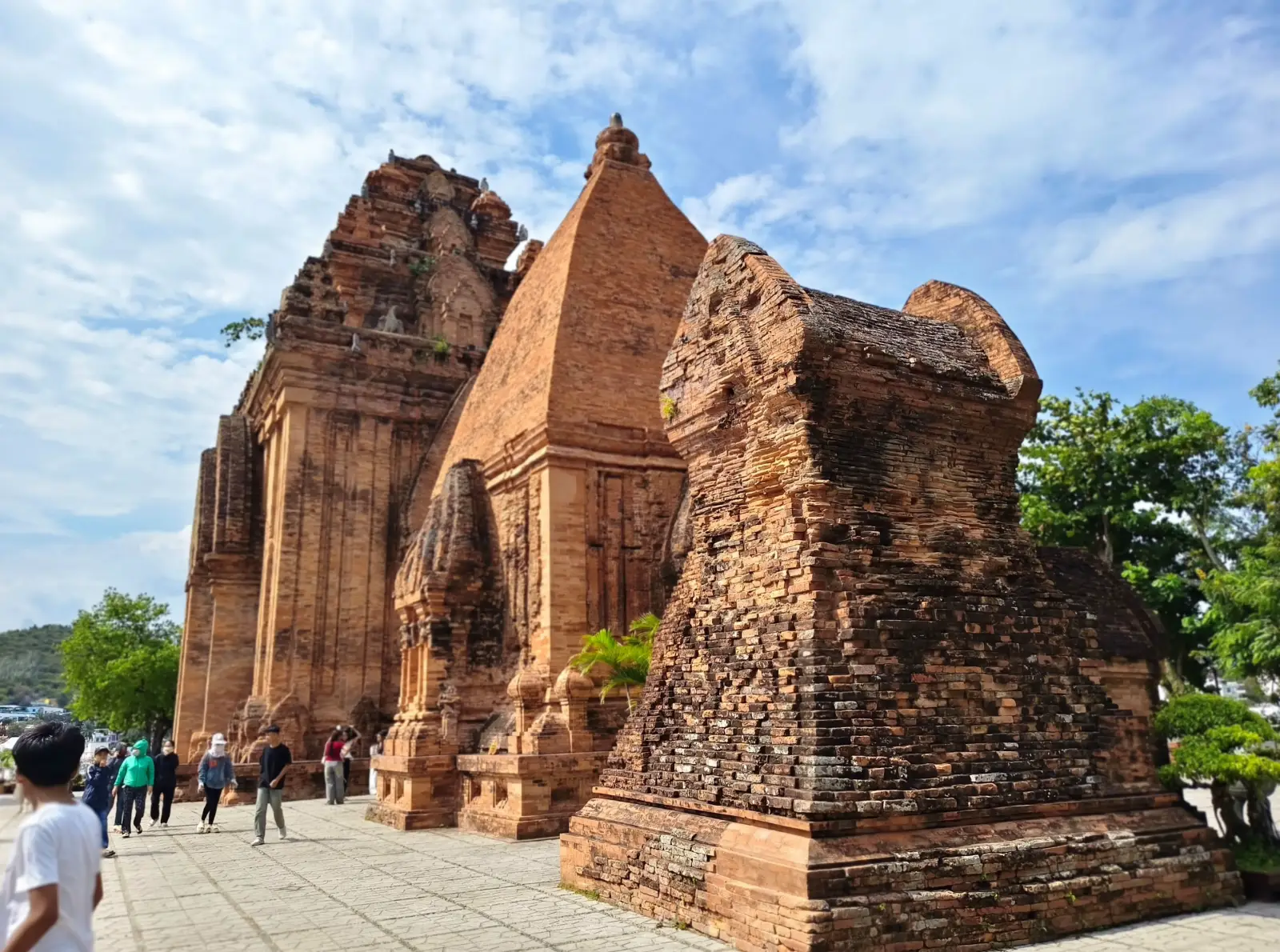
The Ponagar Cham Tower complex is perched atop a 10-metre-high hill overlooking the Cai River in Nha Trang, a coastal city in southeast Vietnam. Visitors come for pilgrimage, capture photos of its grand ancient towers, and enjoy panoramic views overlooking the bustling riverboats on the river. Surrounded by mountains, the natural scenery around Po Nagar Cham Towers is quite beautiful and serene.
Ponagar Cham Tower is one of Vietnam’s largest Cham cultural sites, built between the 7th and 12th centuries. The other sites are at My Son which is accessible via Da Nang and at Quy Nhon (five hours by road from Nha Trang), both of which I must try to visitas the I find the Cham architectural style quite fascinating. This is what I learnt based on research.
Characterised by towering baked-brick temples with intricate sandstone carvings, the Cham sites are most famous for a mysterious mortarless construction where bricks are bonded seamlessly without visible mortar. Historians and contemporary engineers are still studying how Cham builders linked and baked the bricks, so the Cham sites remain great mysteries.
The unique structure of Ponagar Cham Towers
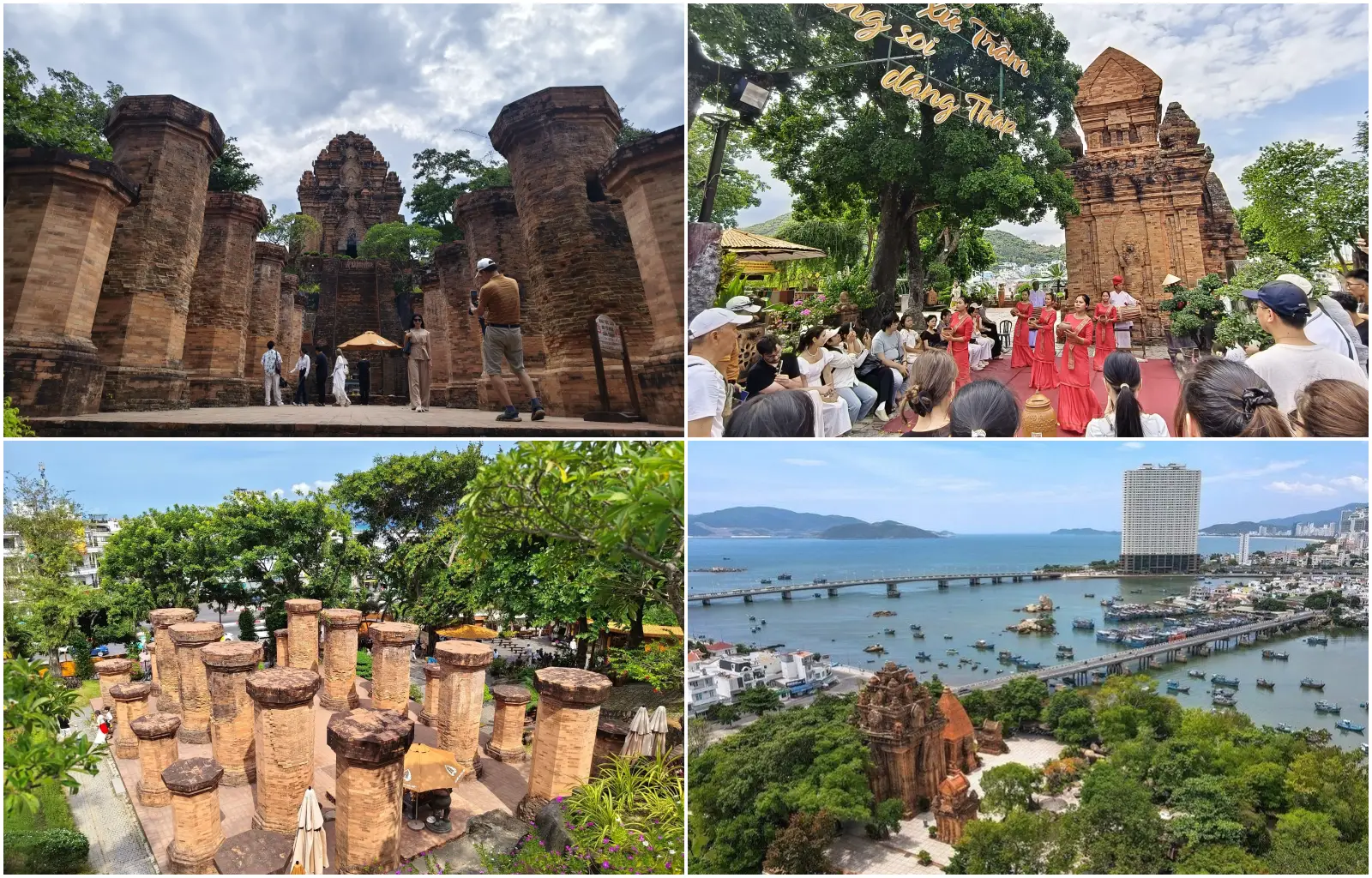
After passing through the gate tower, you enter the vestibule or Mandapa which is an area where the Cham people prepared offerings for their rites. The structure now has two rows of octagonal brick columns, with 6 small and 5 large columns per row.
Music and dance play an integral part in Cham culture. In the communal courtyard, visitors can watch traditional dance and musical performances.
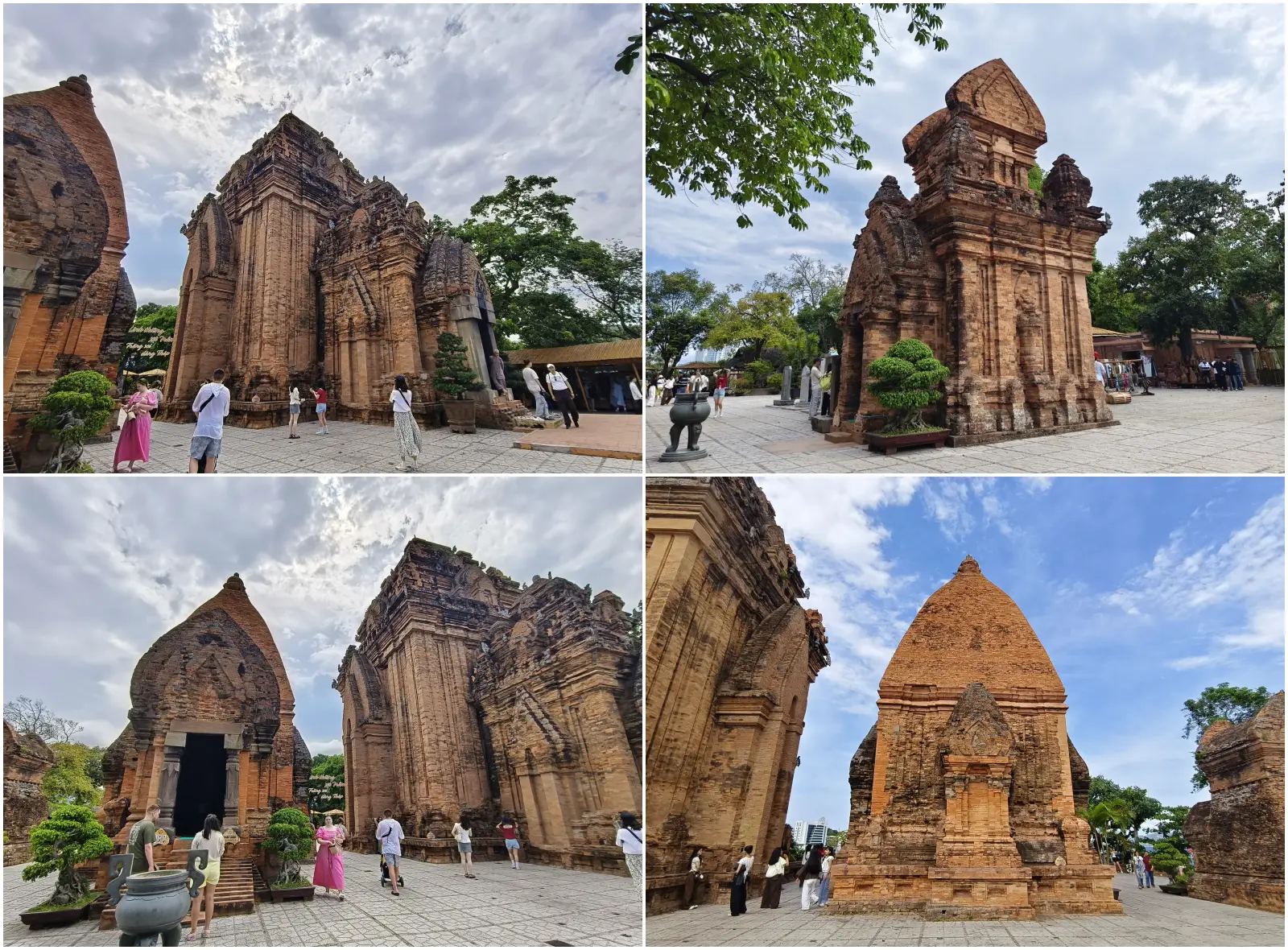
The stairs leading up to the hilltop from the entrance is an ideal spot to frame the grand scale of the whole complex set against a majestic background. The highlight of the site is where three majestic towers stand, with the tallest being the Tower of the goddess Po Nagar, which according to myth, formed the land where the Champa Kingdom stood.
Take a leisurely stroll around the grounds to fully soak in the exotic atmosphere and marvel at the beauty of this ancient architecture.
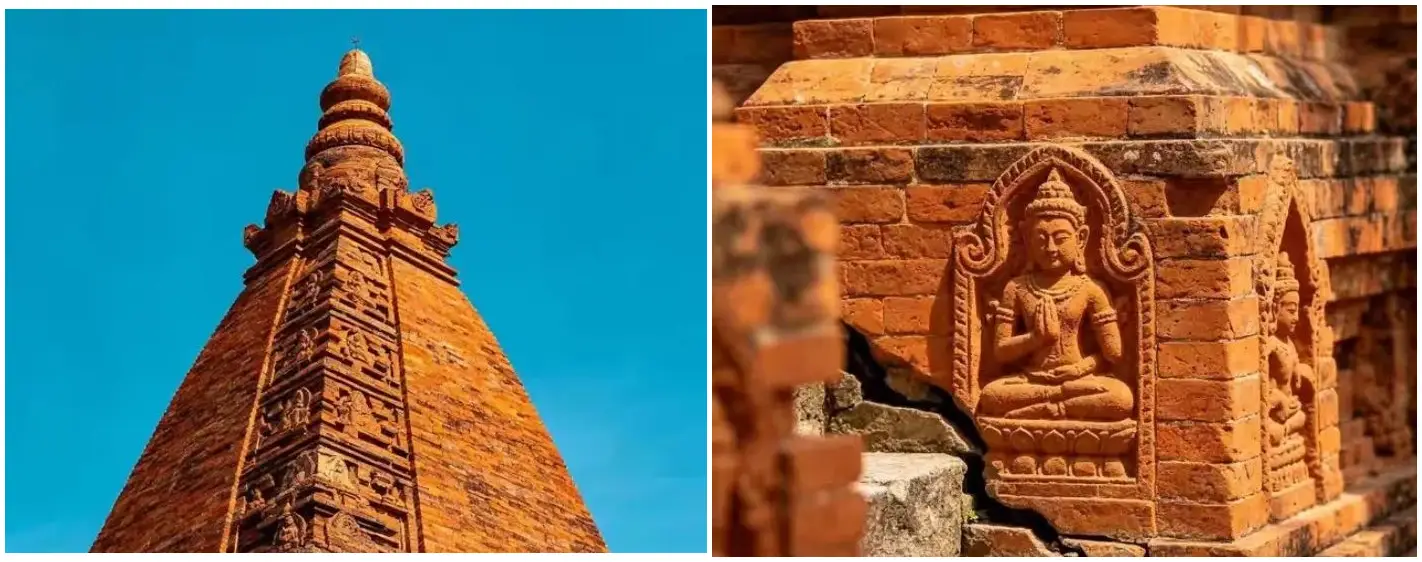
Here you can view up close how the red bricks are stacked incredibly tightly together. The towers feature dome-shaped tops and feature a beautiful collection of intricate sculptures and reliefs that adorn the walls. These ancient carvings visually encapsulate the spiritual beliefs of the Cham people. It also reminded me of the similar reliefs at Borobudur in Indonesia.
Heavily influenced by ancient Indian design and Hinduism, these cultural sites are deeply rooted in religion and remain an active place of worship for locals so there is a strict dress protocol. If you wish to enter the shrines in the towers, but you are wearing shorts or sleeveless tops, you can borrow robes on-site. Please do not speak in loud tones. Taking photos is not advised as a mark of respect to those who are praying or offering prayers.
There are plenty of benches under large trees, providing shade and a lovely breeze for a sit-down. After exploring the towers, take a moment to appreciate the stunning view and enjoy the peaceful atmosphere before descending the stairs.