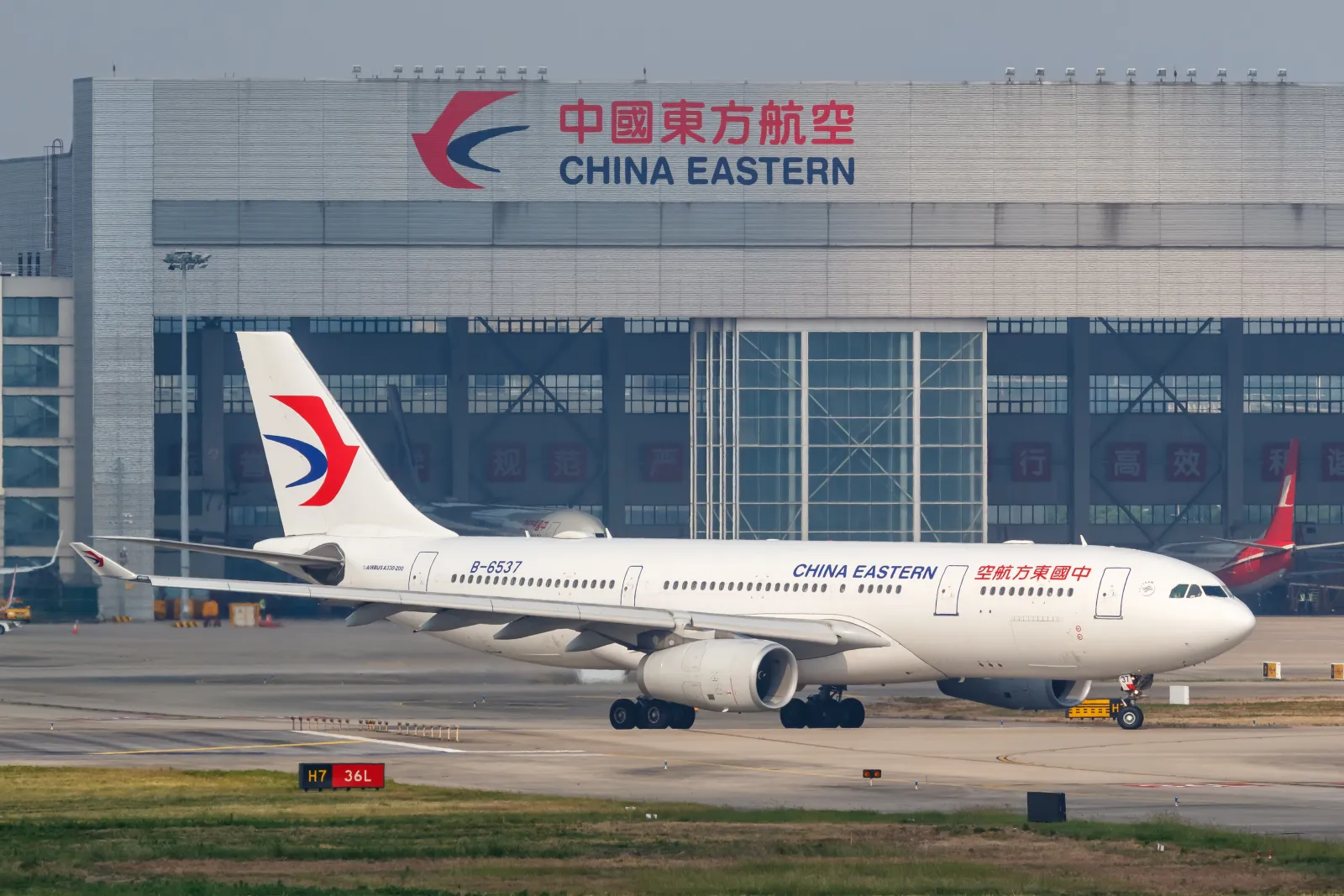
China Eastern Airlines has launched what it calls the world’s longest one-way commercial passenger service, connecting Shanghai with Buenos Aires via Auckland in a direct multi-sector operation spanning approximately 20,000 kilometres.
The inaugural flight departed Shanghai Pudong International Airport on 4 December 2025, continuing to New Zealand before completing the final leg to Argentina. The route operates twice weekly using Boeing 777-300ER aircraft.
The service shortens travel time between China and South America by more than four hours compared with common transit options through Europe or North America. It also establishes a new southern trans-hemisphere corridor, linking Asia, Oceania and Latin America through a single aircraft routing. The carrier positions the launch as a milestone in global air connectivity, citing demand for faster intercontinental travel and increased business exchange.
Route structure, flight duration and operational details
Flight MU745 departs Shanghai on Mondays and Thursdays, landing first in Auckland for refuelling and servicing before continuing to Buenos Aires Ministro Pistarini International Airport. The total travel time averages 25 hours 55 minutes eastbound, while the westbound return service MU746 operates on Tuesdays and Fridays, with a scheduled duration of about 29 hours due to headwinds and transit procedures. Despite requiring a stop, the flight retains a single flight number and uses the same aircraft throughout.
The nearly 20,000-kilometre routing positions the Shanghai–Auckland–Buenos Aires connection as the world’s longest scheduled one-way commercial flight currently in operation. Until now, the longest regularly served commercial routes had been concentrated on ultra-long-haul nonstop services linking Asia with North America and the Middle East with Oceania. China Eastern’s addition signals a shift toward southbound global air link development across multiple hemispheres.
The carrier uses its long-haul Boeing 777-300ER fleet on the route, configured with first class private suites, lie-flat business seating and standard economy cabins. The Auckland stop remains a technical necessity, as range limitations at full payload make nonstop operations impractical. However, the direct service model means passengers remain on the same aircraft without changing flights, creating a travel experience not previously available between China and Argentina.
Strategic importance for travel, trade and regional movement
China Eastern frames the new corridor as a vital link supporting commercial cooperation, tourism flow and cultural exchange between Asia and South America. The route gives travellers a faster option to reach Buenos Aires from China, bypassing multiple traditional hubs and reducing total layover time. Businesses are expected to benefit through simplified air logistics and greater market access across the Pacific and South Atlantic regions.
The inclusion of New Zealand as a transit point positions Auckland as a mid-point hub in the emerging southbound aviation network. The route may enable potential fifth-freedom traffic rights, which would allow the carrier in future to transport passengers and cargo between New Zealand and Argentina on the same aircraft. Aviation analysts note that such capability could reshape existing travel patterns and diversify long-haul market competition beyond northern hemisphere routes.
China Eastern describes the route as an expansion of an “Air Silk Road” model, referring to long-distance transport links intended to strengthen continental trade and diplomatic reach. The launch comes amid wider efforts by Chinese airlines to increase connectivity with Latin America, which has historically been underserved by East Asian carriers due to distance and complex routing demands.
Tourism impact is also expected as more travellers gain easier access to Patagonia, Iguazu Falls, Andean regions and Argentina’s urban centres. Meanwhile, outbound visitors from Latin America may now reach Shanghai and surrounding regions with fewer transfers. Reduced friction in long-distance travel could stimulate new itineraries covering multiple hemispheres with a single ticket.
Industry observers note that the launch may encourage other airlines to evaluate similar long-haul southbound corridors linking Asia with South America or Africa. The route’s performance will likely influence future network planning decisions across global carriers evaluating aircraft range, fuel economics and passenger demand for extreme-length itineraries.
For now, the carrier positions the route as a direct answer to demand from business travellers, long-distance leisure passengers and growing trade between China and South America. While operational challenges remain — including weather patterns over the South Pacific and range margins at full load — the Shanghai–Auckland–Buenos Aires service marks a notable advance in intercontinental network capability.
China Eastern’s record-length operation underscores an evolving era of international aviation in which geographic gaps once considered impractical may now be bridged through long-haul efficiency, optimized routing and strategic fuel management. As the service matures, its performance metrics and passenger uptake will determine whether the route becomes a long-term fixture or a stepping stone toward future nonstop ambitions in ultra-long-range flight development.
Photo Credit: Markus Mainka / Shutterstock.com