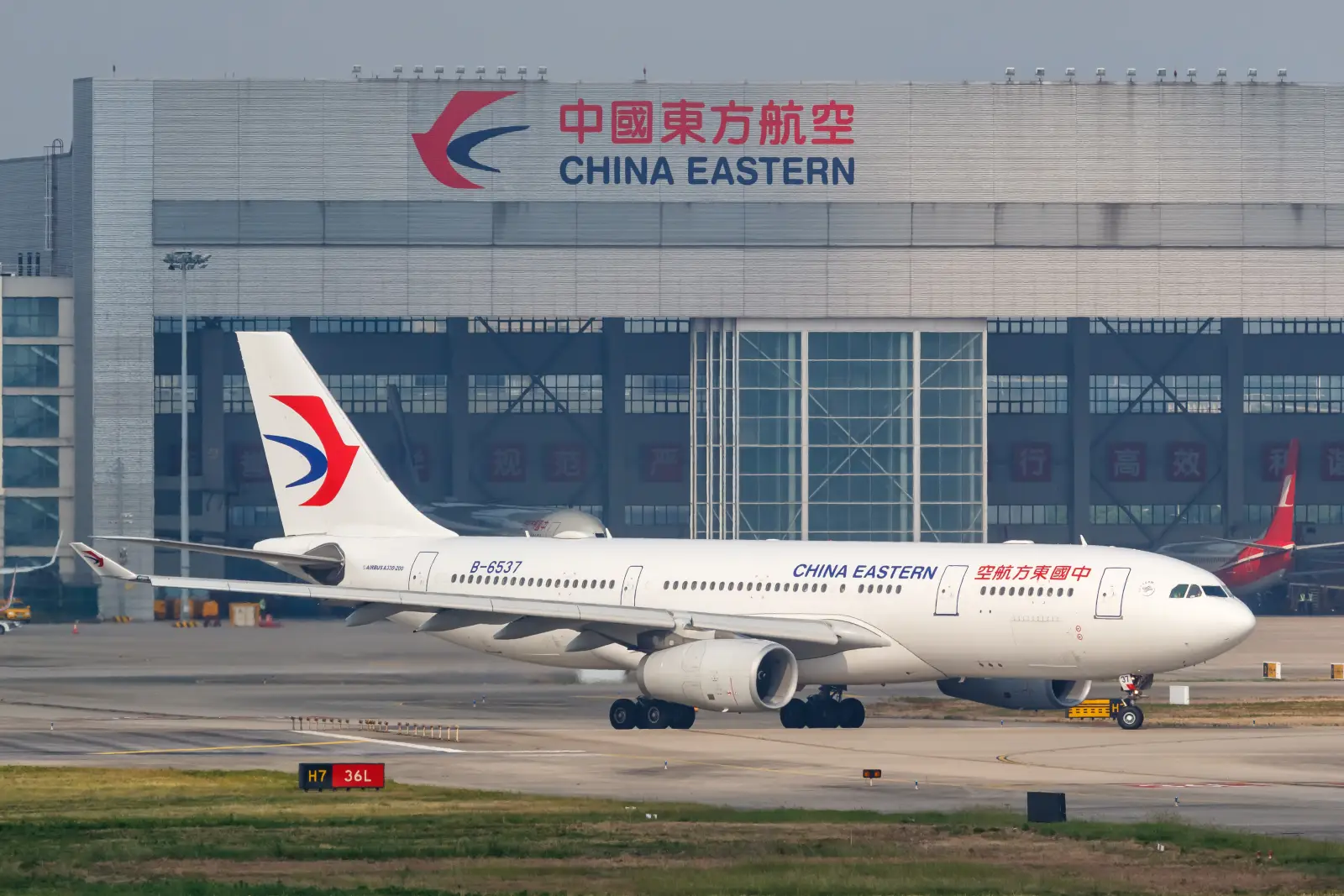
China Eastern Airlines will begin operating the world’s longest direct passenger flight in December, linking Shanghai and Buenos Aires in a journey that will take up to 29 hours.
The route will launch on December 4 and will include a technical stop in Auckland, New Zealand, while keeping the same flight number and aircraft throughout.
The airline confirmed it will use a Boeing 777-300ER for the service, which will run as a direct connection under aviation standards despite the Auckland refueling stop. The outbound Shanghai–Buenos Aires leg will take about 25.5 hours, while the return trip will stretch to nearly 29 hours, making it the longest direct flight by total travel time.
Ultra-long route sets new aviation milestone
China Eastern announced the service as part of its expansion into Latin America, positioning the Shanghai–Buenos Aires link as a record-breaking achievement. The route covers close to 20,000 kilometers, surpassing Air China’s Beijing–São Paulo service, which includes a stop in Madrid. The flight will also outlast Singapore Airlines’ nonstop New York–Singapore route, which remains the world’s longest nonstop service by distance but operates in a shorter duration.
The classification of the service as “direct” rather than “nonstop” has drawn attention. Industry definitions distinguish between the two: a direct flight maintains the same flight number and aircraft, even if it includes stops, while a nonstop flight has no interruptions. Because passengers are expected to remain on board during the Auckland stopover, China Eastern is marketing the service as the longest direct flight currently scheduled.
Technical stopover in Auckland
The inclusion of Auckland addresses operational needs such as fuel and crew requirements for the nearly 20,000-kilometer journey. Reports indicate the stop will last between two and 2.5 hours, with no passenger disembarkation. The procedure enables the airline to maintain continuity for travelers while fulfilling logistical obligations.
The service reflects broader trends in ultra-long-haul aviation, where carriers are pushing the limits of aircraft endurance and crew management. Aviation analysts note that ultra-long flights create unique challenges, including passenger fatigue, health considerations, and the need for additional inflight supplies. These concerns are heightened when travelers remain on board for nearly 30 hours without the opportunity to disembark.
Strategic push into Latin America
China Eastern’s launch of the Shanghai–Buenos Aires route aligns with growing efforts to strengthen air connectivity between China and Latin America. Argentina is a major trading partner for China, particularly in agriculture and energy, and direct air links are expected to support both business and tourism flows. The route also underscores China’s broader initiative to deepen ties with South American countries through expanded transport and trade networks.
The decision to use the 777-300ER reflects the aircraft’s range and capacity to handle long sectors with large passenger loads. The aircraft type is widely deployed for intercontinental services and is considered a reliable platform for extended operations. By assigning it to the Buenos Aires route, China Eastern aims to balance operational feasibility with passenger comfort on a service of unprecedented duration.
Record-setting flight times
The flight times set a new benchmark for direct passenger services. According to the airline, the Shanghai–Buenos Aires segment will operate in about 25.5 hours, while the return flight will take approximately 29 hours, making it the longest direct service in terms of hours spent onboard. Aviation publications note that while the Singapore Airlines New York–Singapore nonstop route holds the distance record, its flight time of under 19 hours is significantly shorter than the China Eastern service.
The distinction highlights the complexities of defining “longest” in commercial aviation. While distance and nonstop classification remain important benchmarks, passengers often experience the length of a journey most directly through total time spent in the aircraft. For travelers, the Shanghai–Buenos Aires service will represent a new threshold in endurance flying.
Aviation observers have raised questions about passenger comfort and health implications for such an extended journey. Industry analysts point out that extended time without deplaning can increase the risk of deep vein thrombosis and other health issues associated with prolonged immobility. Cabin crew scheduling and rest management are also expected to require strict planning to comply with international safety standards.
Despite these challenges, the announcement underscores airlines’ willingness to test the boundaries of ultra-long-haul travel. The Shanghai–Buenos Aires link offers new options for passengers traveling between China and South America, which until now have been underserved by direct connections. The flight also provides a strategic advantage to China Eastern in competing with other global carriers that dominate long-haul travel between Asia and Latin America.
As airlines seek to expand global connectivity, ultra-long-haul services are becoming increasingly significant. With its scheduled launch in December, China Eastern’s Shanghai–Buenos Aires service will mark a milestone in commercial aviation by establishing the world’s longest direct passenger flight measured by travel time. The flight will provide a new direct bridge between Asia and South America, with implications for trade, tourism, and the future of extended air travel operations.
Photo Credit: Markus Mainka / Shutterstock.com