The Korean Ministry of Land, Infrastructure and Transport and the Korea Fair Trade Commission have announced that they have completed the selection of replacement airlines for major monopolistic routes as part of structural corrective measures ordered by antitrust regulators following the corporate merger of Korean Air and Asiana Airlines.
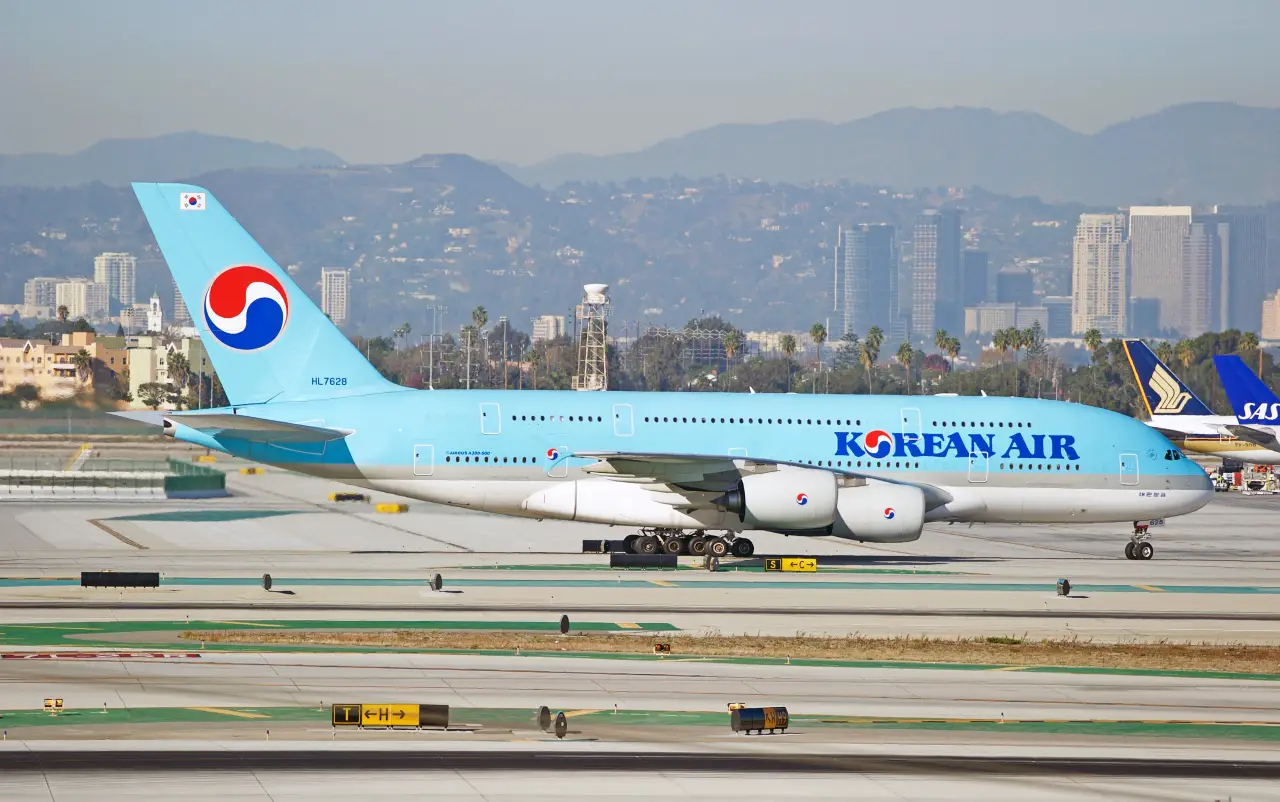
South Korea’s largest airline, Korean Air, completed a US$1.3 billion acquisition of two-thirds of Asiana in December 2024, which will be run as a subsidiary until 1 January 2027, when it will integrate under the Korean Air name and corporate identity.
This procedure is a follow-up to the corrective measures that the Korea Fair Trade Commission (FTC) required when it conditionally approved the merger of Korean Air and Asiana, mandating the transfer of slots and traffic rights on routes with competition concerns to other airlines.
A committee conducted suitability evaluations for each applicant airline as a replacement for competing routes based on submitted materials and presentations from the airlines.
The Korean media has reported that the routes that have had their slots and traffic rights reallocated include those from Seoul Incheon to the United States, four domestic routes and one to Jakarta:
- For international routes, Alaska Airlines was selected as the alternative carrier for Incheon–Seattle, Air Premia for Incheon–Honolulu, and T’way Air for Incheon–Jakarta.
- For the Incheon–Jakarta route, applicants were evaluated and the highest-scoring airline was chosen, while Incheon–Seattle and Incheon–Honolulu each had a sole applicant selected.
- For domestic routes, four airlines—Eastar Jet Co., Jeju Air, T’way Air, and Parata Air—were selected as alternative carriers for the high-demand Gimpo–Jeju and Jeju–Gimpo routes.
- For Incheon–Guam, Busan–Guam, Gwangju–Jeju, and Jeju–Gwangju, there were no applicants, so the selection process for alternative airlines did not proceed.
Ongoing measures to transfer more than 20 routes
Following this selection, each replacement airline will take subsequent measures such as organising business plans reflecting the allocated slots. A slot refers to the departure or arrival time assigned by aviation authorities to airlines, during which the airline has the right to use airport facilities. The replacement airlines are expected to sequentially enter the stated routes as early as the first half of this year.
As part of the merger concessions, the Korea Fair Trade Commission mandated that Korea Air and Asiana transfer slots and traffic rights on 34 routes where the consolidation raised concerns.
With this latest announcement of seven slots, corrective measures for 13 routes with monopolistic concerns have been completed. In October last year, remedies for six routes were completed, which include from flights from Seoul Incheon to Los Angeles, San Francisco, Barcelona, Frankfurt, Paris and Rome. These were distributed to T’way Air, Air Premia and United Airlines.
The government announced that the transfer process for the remaining 21 routes will proceed starting from the first half of this year.
Photo Credit: Philip Pilosian / Shutterstock.com