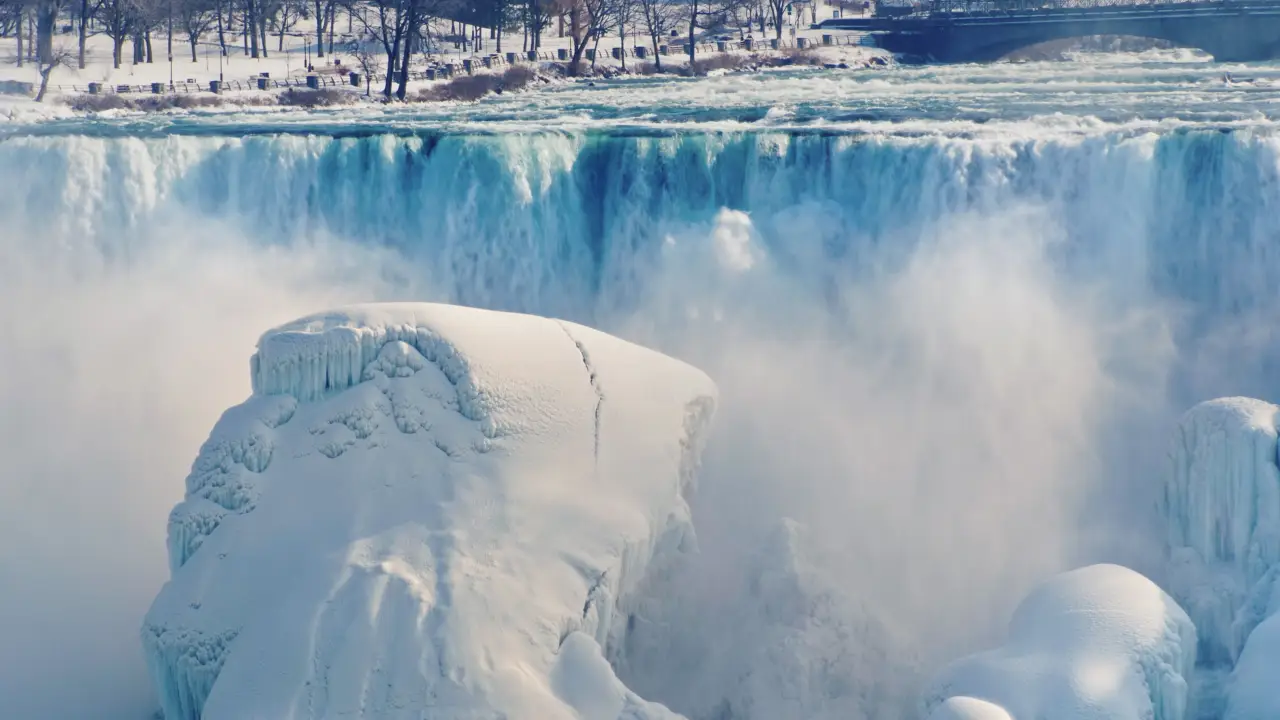
Tourists are flocking to Niagara Falls in the past 72 hours to view the landmark partially frozen by extreme winter temperatures, as freezing conditions transform flowing water and mist into large ice formations along the riverbanks and cliffs.
Visitors continue to arrive despite sub-zero weather driven by a polar vortex that has pushed temperatures below −20°C, creating a rare winter spectacle while the falls remain in motion.
The surge in visitors follows widespread cold across the US-Canada border region, with ice accumulating on observation decks, trees, and rock faces as spray from the falls freezes on contact. Photo galleries published by international news outlets such as Reuters show crowds bundled in heavy winter clothing as they move carefully along icy walkways to capture the frozen scenery.
Extreme cold reshapes one of North America’s busiest tourist landmarks
While Niagara Falls does not freeze completely due to the volume and speed of water flow, prolonged cold temperatures have produced thick ice sheets, frozen mist towers and snow-covered cliffs surrounding the American and Horseshoe Falls. The partially frozen appearance has dramatically altered the landscape, turning normally roaring cascades into a mix of flowing water and sculpted ice.
Weather conditions across the region were driven by a powerful polar vortex that sent Arctic air southward, producing some of the coldest temperatures of the winter season. The cold snap froze sections of the Niagara River while allowing water to continue surging beneath ice layers near the brink of the falls.
Tourism activity continues despite hazardous conditions
Local authorities maintained access to viewing areas while warning visitors to move cautiously on icy paths and observation platforms. Crews increased salting and snow removal efforts to reduce slipping hazards as foot traffic rose over the past several days.
Winter conditions traditionally reduce visitor numbers at Niagara Falls, but rare freezing events often reverse the trend, drawing crowds eager to witness the transformed landscape. Hotels and nearby restaurants reported higher-than-usual winter foot traffic as the frozen scenery spread across news outlets and social media.
Meteorologists forecast continued cold temperatures in the short term, though gradual warming later in the week could begin melting surface ice formations. Until then, the falls are expected to remain partially frozen, maintaining the dramatic winter visuals that have turned the landmark into a seasonal draw for tourists despite the frigid weather.
Photo Credit: StockMediaSeller / Shutterstock.com