Dublin is a city defined by its dualities — it is both a bustling modern capital and a collection of ancient, cobblestone villages stitched together by the dark waters of the River Liffey. For a first-time visitor, the best way to understand the “soul” of the city is not from the top of a tour bus, but through the soles of your shoes. Dublin is remarkably compact, and its most evocative atmospheres are found in the transition between its Viking roots, Georgian elegance, and literary haunts.
For those looking to dive deeper into the history behind these paths, you can find more info at https://www.generationtours.com/dublin, which offers specialized insights into the city’s hidden corners.
The Medieval Core and the Liberties
To begin a walk through Dublin is to begin with its oldest foundations. Starting at Dublin Castle, you stand on the site of the original “Dubh Linn” (Black Pool) where the Vikings first settled. Walking westward from the castle toward the Christ Church Cathedral area, the atmosphere shifts into something decidedly medieval.
The walk through the Liberties district is perhaps the most authentic “old Dublin” experience. Once outside the city walls and the jurisdiction of the crown, this area became a hub for weavers, distillers, and market traders. Today, the air here often carries the yeasty, roasted scent of hops from the nearby Guinness Storehouse.
Key Highlights of the Medieval Walk:
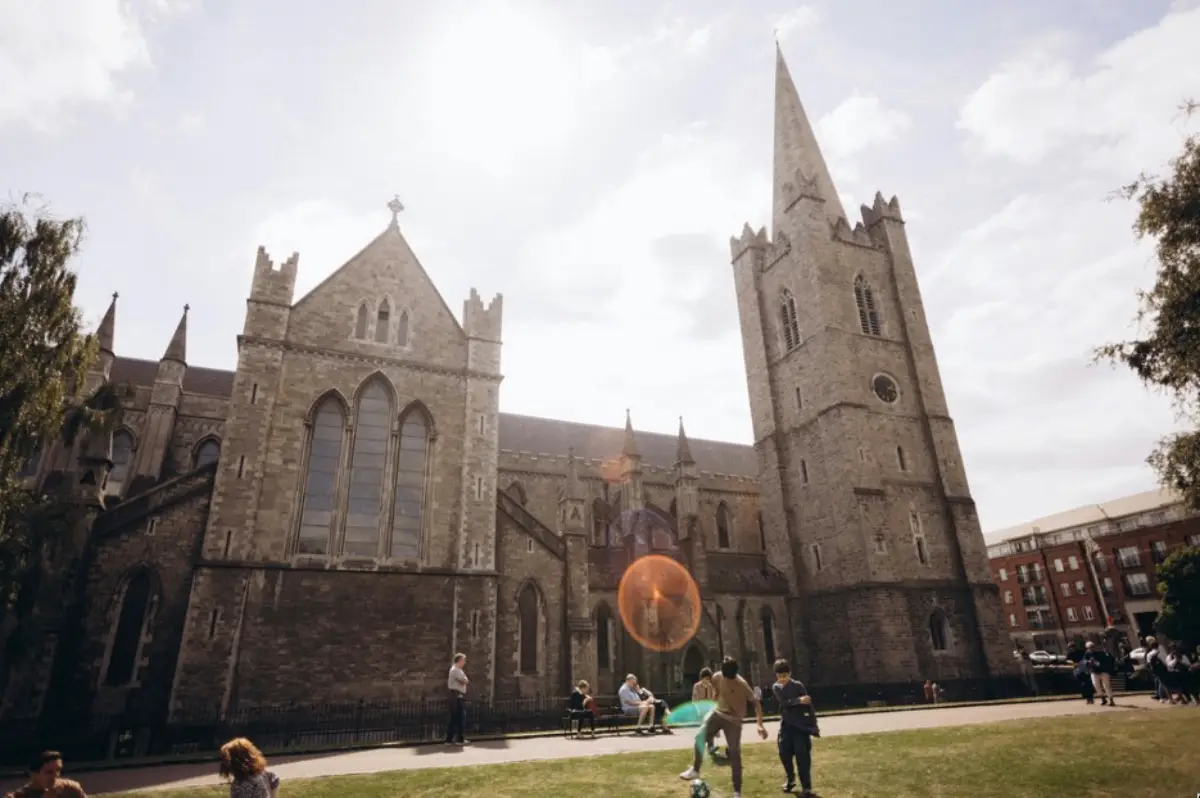
- Patrick’s Cathedral: The towering spire and the lush park surrounding it offer a moment of gothic serenity.
- The Ivy Wall at Marsh’s Library: Just behind the cathedral lies the oldest public library in Ireland, unchanged since it opened in 1707.
The Georgian Splendor of the Southside
Crossing into the late 18th century, the Southside of Dublin offers a stark contrast to the cramped medieval alleys. This is the Dublin of Oscar Wilde and W.B. Yeats — an era of wide boulevards, red-brick townhouses, and ornate fanlights.
A walk starting at Stephen’s Green and moving toward Merrion Square is essential for any first-timer. The atmosphere here is refined and quiet, characterized by the famous “Doors of Dublin.” Each door, painted in vibrant shades of peacock blue, deep red, or emerald green, served as a mark of individuality against the uniform architectural requirements of the Georgian era.
To understand the preservation of these historic landscapes, the Irish Georgian Society provides extensive resources on the architectural heritage that defines this part of the city. As you stroll, you will encounter the statue of Oscar Wilde reclining on a rock in Merrion Square, a fitting tribute to the city’s razor-sharp wit and literary history.
The River Liffey: The City’s Artery
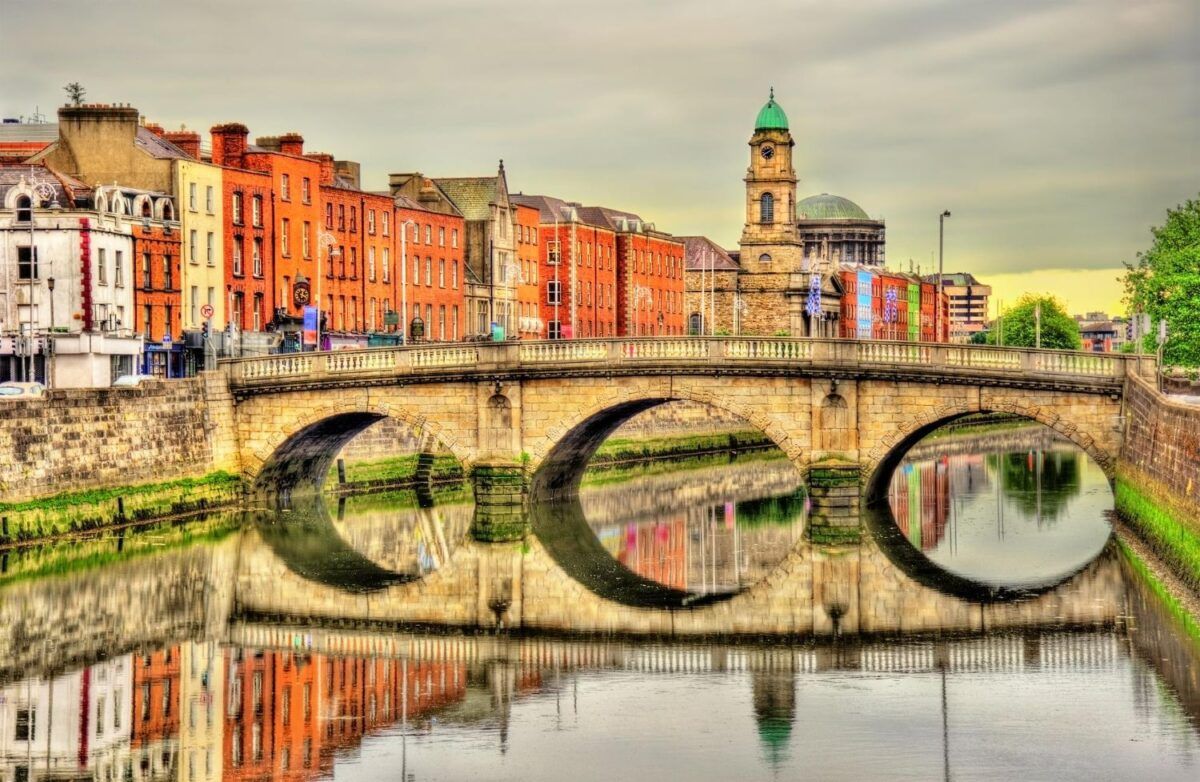
No visit to Dublin is complete without a walk along the Quays. The River Liffey divides the city physically and culturally into the “Northside” and the “Southside.” Walking along the boardwalk at sunset provides a cinematic view of the city’s evolution.
Starting at the Ha’penny Bridge — the iconic white cast-iron pedestrian bridge built in 1816 — you can head east toward the Docklands. This walk transitions from the grit of the old city into the “Silicon Docks,” where glass-and-steel skyscrapers house global tech giants.
Significant Landmarks Along the Water:
- The Custom House: A masterpiece of Neoclassical architecture that glows orange in the evening light.
- The Famine Memorial: Located at Custom House Quay, these haunting bronze statues commemorate the Great Famine, a pivotal and somber chapter in Irish history.
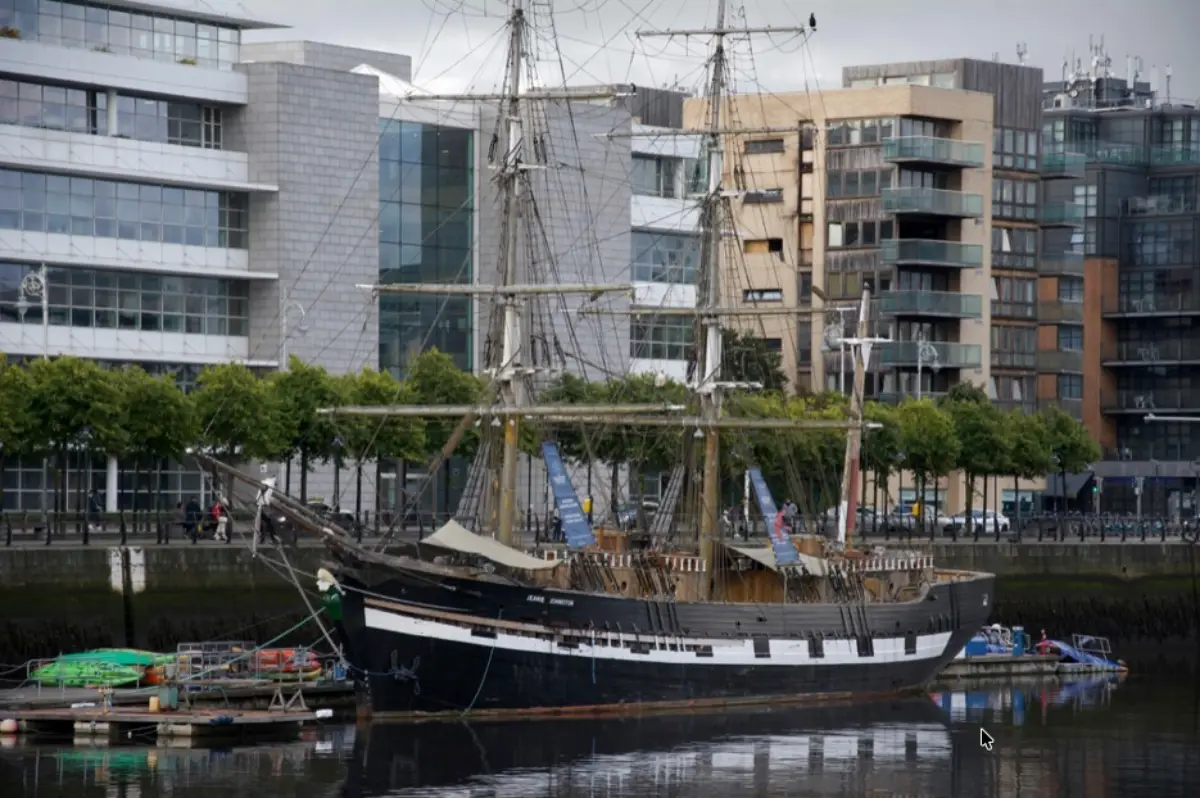
- The Jeanie Johnston: A replica tall ship that tells the story of the millions who emigrated from these shores.
According to the National Museum of Ireland, the artifacts and historical sites along the Liffey basin represent over a thousand years of continuous habitation and maritime trade.
The Literary Ghost Walk of the Northside
While the Southside is often seen as the more “polished” half of the city, the Northside holds a raw, literary atmosphere that inspired the likes of James Joyce and Sean O’Casey. A walk starting at the GPO (General Post Office) on O’Connell Street is a walk through the heart of the Irish revolution. The bullet holes still visible in the Doric columns serve as a visceral reminder of the 1916 Easter Rising.
Heading north toward Parnell Square, the atmosphere becomes more intellectual. Here you will find the Dublin Writers Museum and the James Joyce Centre. Walking these streets, particularly North Great George’s Street, feels like stepping directly into the pages of Dubliners. The architecture is grand but often weathered, giving it a poetic, melancholic charm that is uniquely Dublin.
Coastal Escape: The Howth Cliff Walk
If the city center begins to feel too claustrophobic, a short train ride (DART) takes you to the fishing village of Howth. While technically on the edge of the city, the Howth Cliff Path is the most atmospheric natural walk available to visitors.
As you ascend the cliffs, the sounds of the city are replaced by the crashing of the Irish Sea against the rocks and the cries of seagulls. On a clear day, you can see across the bay to the Dublin Mountains and the Baily Lighthouse. This walk provides a sense of the wild Atlantic landscape that defines the rest of Ireland, all while remaining within the Dublin metropolitan area.
Why These Walks Matter
Dublin is a city that reveals itself in layers. For a first-time visitor, these routes offer more than just exercise; they provide a narrative of survival, creativity, and transformation.
- Variety of Experience: You can move from a 12th-century cathedral to a 21st-century tech hub in under thirty minutes.
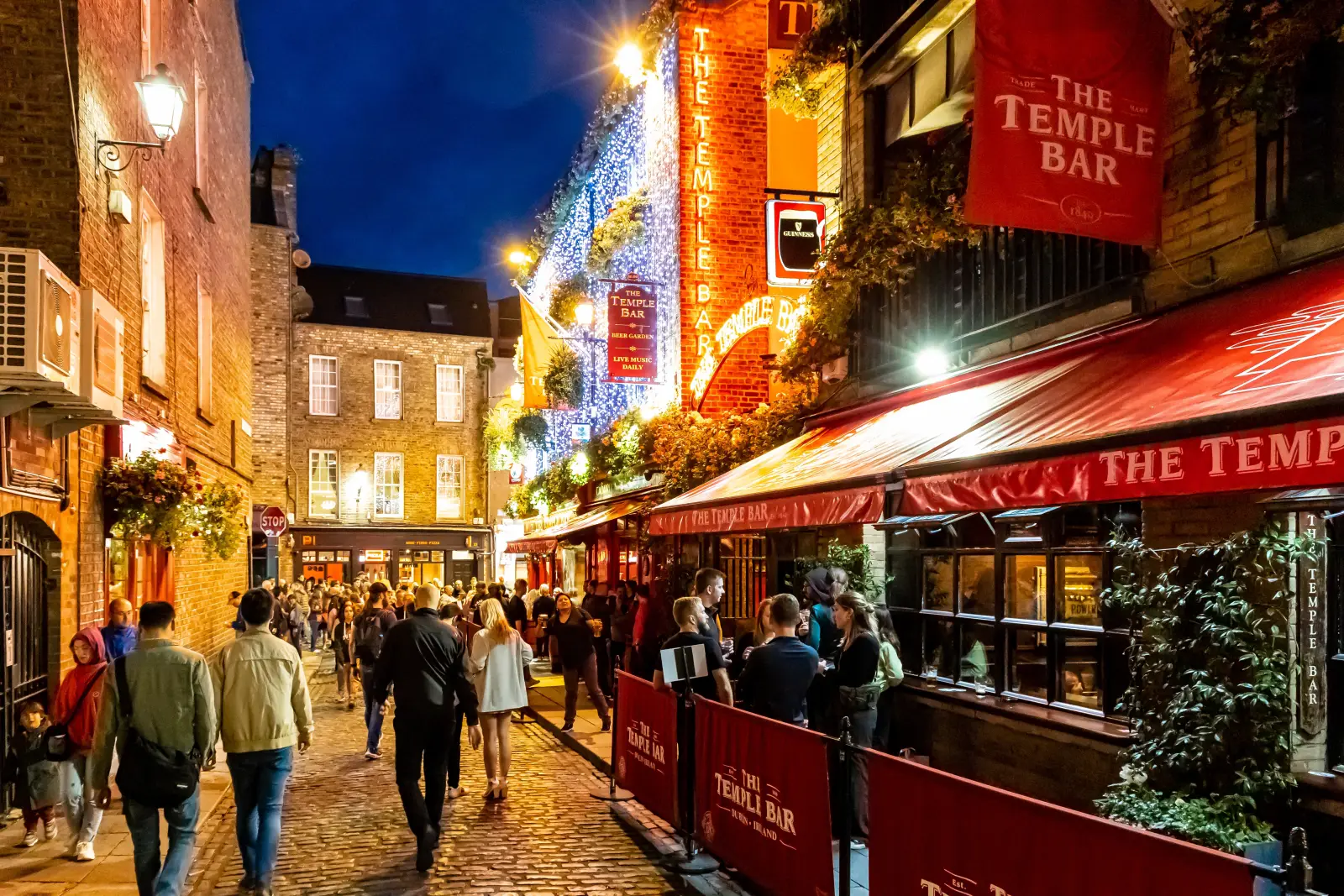
- Sensory Immersion: The smell of roasting barley, the sound of traditional music spilling out of pubs in Temple Bar, and the feel of uneven cobblestones underfoot.
- Accessibility: Dublin is a “fifteen-minute city,” meaning most of these atmospheric hubs are easily reachable on foot, making it one of the most pedestrian-friendly capitals in Europe.
In conclusion, the most atmospheric walks in Dublin are those that embrace the city’s contradictions. Whether you are admiring the symmetry of a Georgian square or watching the mist roll in over the Howth cliffs, you are participating in a tradition of “flânerie” that has defined Dublin’s greatest writers and residents for centuries. Put away the map, follow the river, and let the city’s history rise up to meet you.
Top Photo Credit: Alexey Fedorenko / Shutterstock.com