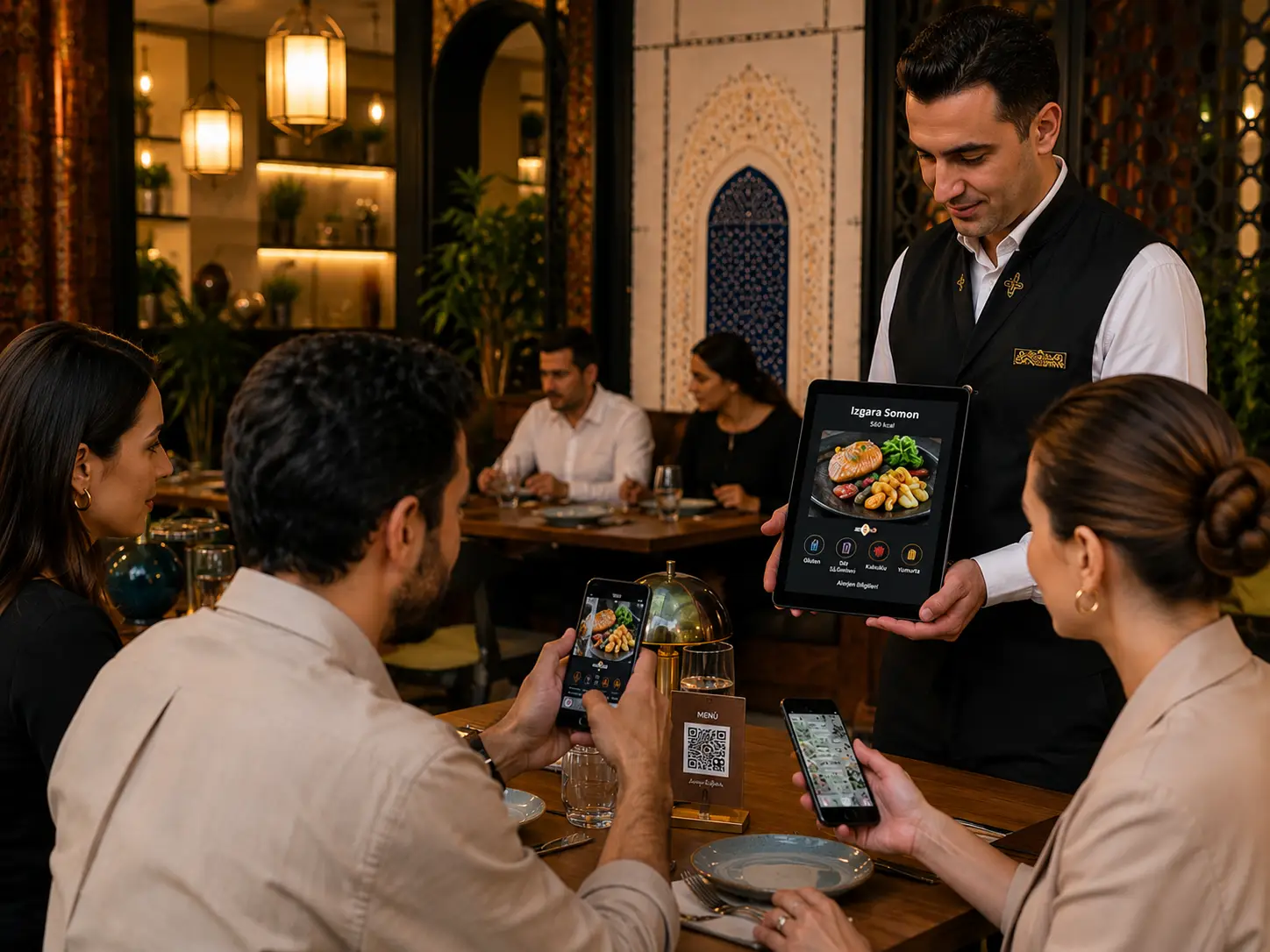
Türkiye’s Ministry of Agriculture and Forestry introduces a new consumer information regulation on 1 July 2026, requiring restaurants, cafes and similar food and beverage businesses to display calorie values, ingredients and allergen information openly to customers. The rule applies to all food and drink items on offer and marks a significant shift in how the country’s hospitality sector communicates with diners.
Under the new regulation, businesses may share the required information through printed menus, QR codes, digital screens or other digital platforms. The change affects thousands of establishments across Türkiye and comes into effect immediately, giving the sector little time to adapt without a ready solution in place.
Technology company Elektraweb has developed a Smart Digital Menu solution specifically designed to help businesses comply with the regulation while simultaneously digitalising their order management and kitchen operations. The system allows businesses to manage product content, allergen data, calorie values, cooking options and product descriptions from a single central platform, with any updates reflected instantly across all digital menus.
The regulation is expected to create a substantial operational burden for restaurants with large and varied menus, where updating hundreds of product entries, ensuring consistency across all menu formats and keeping content continuously current presents a significant logistical challenge. Elektraweb’s system addresses this by centralising all product data management in one place.
Beyond compliance, the Smart Digital Menu extends the function of QR codes well past simple menu display. Guests can browse detailed ingredient information, check allergen data, select cooking preferences and complete their orders entirely through the digital interface. The company says the approach reduces communication errors during the ordering process while ensuring customers have access to accurate information.
The system also integrates an artificial intelligence-powered recommendation engine that automatically suggests drinks, desserts or side dishes based on a customer’s selections, giving restaurants a tool to increase average order value while delivering a more personalised dining experience.
On the kitchen side, waiters can create orders via mobile devices, with those orders transmitted directly to digital production screens in the kitchen. Card-based kitchen display screens allow production workflows to proceed more efficiently, reducing the risk of incorrect dish preparation and improving service speed during peak hours.
“The implementation starting on 1 July is not just a new legal obligation, it also offers an important opportunity for restaurants to strengthen their digital infrastructure,” said Kemal Oral, CEO, Elektraweb. “Businesses will no longer just share product information; they will need to keep it continuously updated, manage it correctly and deliver it to customers in the easiest way. With our Smart Digital Menu solution, businesses can easily comply with the new regulation and manage all their operations digitally on a single platform, from ordering to kitchen management. This way, the legal obligation turns into an advantage that provides efficiency and customer satisfaction for businesses.”
The regulation represents part of a broader global trend toward greater transparency in food service, with similar allergen and calorie labelling rules already in place across the European Union and the United Kingdom. For Türkiye’s hospitality sector, which serves millions of domestic and international visitors each year, the shift toward digital menus is likely to accelerate well beyond the requirements of the new law.