Spain’s August 2026 total solar eclipse is driving a sharp rise in rural tourism bookings as travellers prepare to watch the country fall into darkness at sunset on 12 August. The path of totality will stretch across a band about 290 km wide, covering cities including A Coruña, Bilbao, Zaragoza and Palma as the Moon’s shadow moves from northwest Spain towards the Mediterranean.
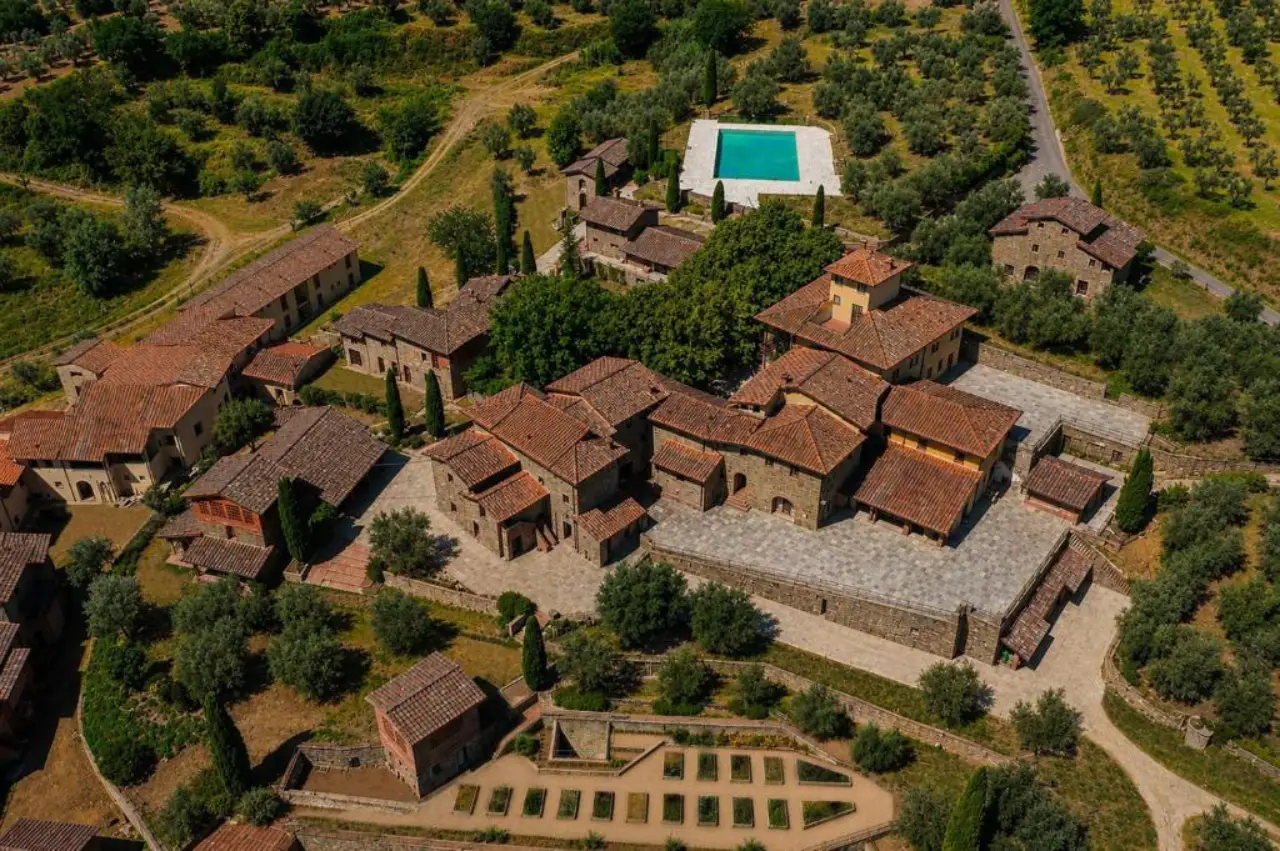
Bookings in non-urban destinations along the eclipse route have tripled compared with the same period in 2025, while visitor spending has risen by €670 per person. Demand is as much as 10 times higher in rural areas of Aragon, Navarre, La Rioja, Castile-La Mancha and Castile and León, while eclipse-viewing villages in Galicia, Asturias and the Basque Country have recorded four times as many bookings.
The event will be Spain’s first total solar eclipse in more than a century and one of the country’s most significant astronomical attractions in decades. Totality is expected at about 8.30pm in parts of Spain, with the partial phase beginning from about 7.30pm, although exact timings and the duration of darkness will vary by location.
The timing of the eclipse has made accommodation with an unobstructed western view particularly desirable. As the Sun will be low on the horizon, hills, coastal viewpoints and open rural landscapes could provide better visibility than built-up areas or places surrounded by mountains.
Rural towns attract international visitors
Travellers are showing particular interest in towns with fewer than 3,000 residents. Destinations attracting searches include Valtierra, Puertomingalvo, Tales, Almatret, Atienza, Torroja del Priorat, Terriente and Valderrobres, all of which lie in or near areas expected to offer favourable views.
France, the UK and the US account for more than half of international accommodation searches along the eclipse route. Germany, Italy, the Netherlands and Belgium represent almost another third, underlining the international appeal of solar eclipse travel in Spain.
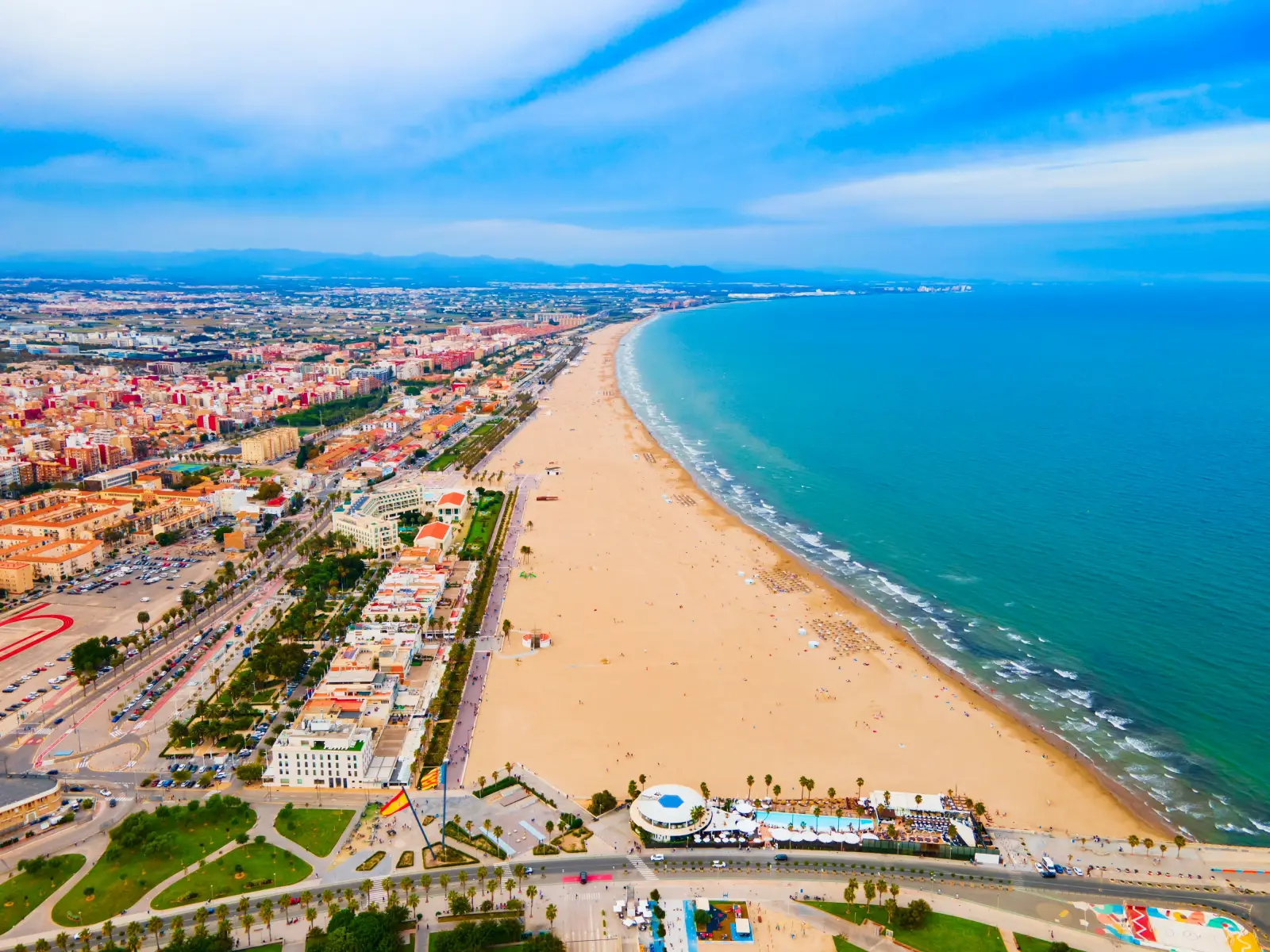
The best places to watch the eclipse will depend on both their position inside the path of totality and the visibility of the western horizon. Provincial capitals expected to experience totality include A Coruña, Palma, Valladolid, Oviedo, León, Bilbao, Tarragona, Zaragoza, Santander, Segovia, Soria and Valencia.
Totality will last for less than 90 seconds in most of these locations. Oviedo is expected to experience one of the longest total phases among the listed cities, at about 1 minute and 48 seconds.
Summer weather may improve the chances of clear skies across much of the route, but cloud cover remains impossible to predict far in advance. Travellers may need flexible plans and should identify alternative observation points within driving distance of their accommodation.
A sunset eclipse followed by the Perseids
Before reaching Spain, the Moon’s shadow will cross the Arctic Ocean, northeastern Greenland and western Iceland before travelling across the Atlantic. The maximum duration of totality along the wider eclipse path will be 2 minutes and 18 seconds near Iceland, compared with a little over a minute in much of Spain.
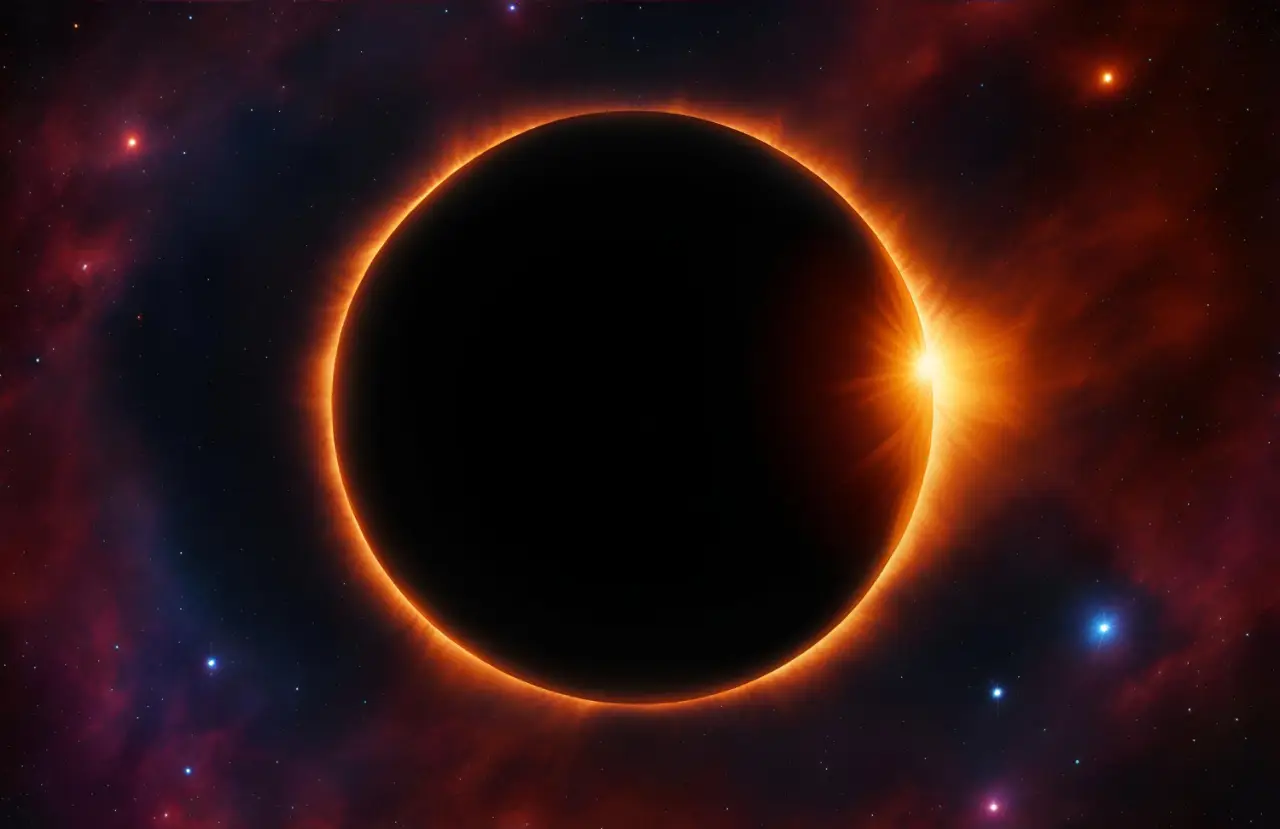
A solar eclipse occurs when the Moon passes directly between Earth and the Sun, blocking the Sun’s light and casting a shadow across part of the planet. The Sun is about 400 times larger than the Moon but is also roughly 400 times farther from Earth, making the two bodies appear almost the same size in the sky.
The effect does not occur every month because the Moon’s orbit is slightly tilted relative to Earth’s path around the Sun. A solar eclipse is possible only when the new moon crosses the plane of Earth’s orbit at one of the points known as astronomical nodes.
People inside the path of totality can experience a sudden transition from daylight to darkness, accompanied by a slight fall in temperature. The Sun’s outer atmosphere, known as the corona, also becomes visible during the brief total phase.
The eclipse will coincide with the annual Perseids meteor shower. Viewing conditions for the meteors are expected to be particularly favourable because the eclipse takes place at new moon, leaving a darker night sky after sunset.
Certified eye protection is essential
Visitors must use certified eclipse glasses during the partial phases. Ordinary sunglasses, smoked glass and X-ray film do not provide adequate protection from ultraviolet and infrared radiation, which can cause permanent eye damage.
Safe glasses should comply with the ISO 12312-2 international standard. Anyone planning to use a camera, telescope or binoculars must also fit the equipment with an appropriate solar filter, as looking through an unfiltered optical device can concentrate sunlight and cause severe injury.
Travellers should inspect certified eclipse glasses before use and avoid damaged or scratched products. Children should be supervised throughout the event to ensure that they keep their eye protection in place whenever any part of the Sun remains visible.
Pinhole projection offers an alternative way to follow the partial eclipse without looking directly at the Sun. The method projects an image of the Sun through a small opening onto another surface and can be made with simple materials such as a box, aluminium foil, a pin and white paper.
Eye protection is not required while the Sun is completely covered during totality, but viewers must replace it as soon as the bright surface begins to reappear. As totality will be brief across Spain, visitors should check precise local timings in advance rather than relying on changes in the surrounding light.
Spain begins a three-year eclipse sequence
The 2026 event will open a sequence known as the Iberian eclipse trio. A second total solar eclipse will cross the southern tip of the Iberian Peninsula and North Africa on the morning of 2 August 2027.
An annular eclipse will follow on 26 January 2028, crossing the peninsula from southwest to northeast. During an annular eclipse, the Moon does not completely cover the Sun, leaving a bright ring visible around its edge.
The National Geographic Institute attributes the unusual sequence to the coincidence of several eclipse series over the Iberian Peninsula and the Balearic Islands. Countries commonly wait decades or centuries between total eclipses, making three major solar events in consecutive years an unusual scientific and tourism opportunity.
Spain also became an important centre for eclipse research during three events in the early 20th century. Total eclipses in 1900 and 1905 supported new astronomical observations, while a brief hybrid eclipse in 1912 was recorded on film in Spain for the first time.
The 2026 eclipse is expected to renew that public interest on a much larger tourism scale. With rural accommodation already filling and demand extending well beyond Spain, visitors planning to travel along the path will need to balance clear western views, transport access and certified eye protection when choosing where to watch.