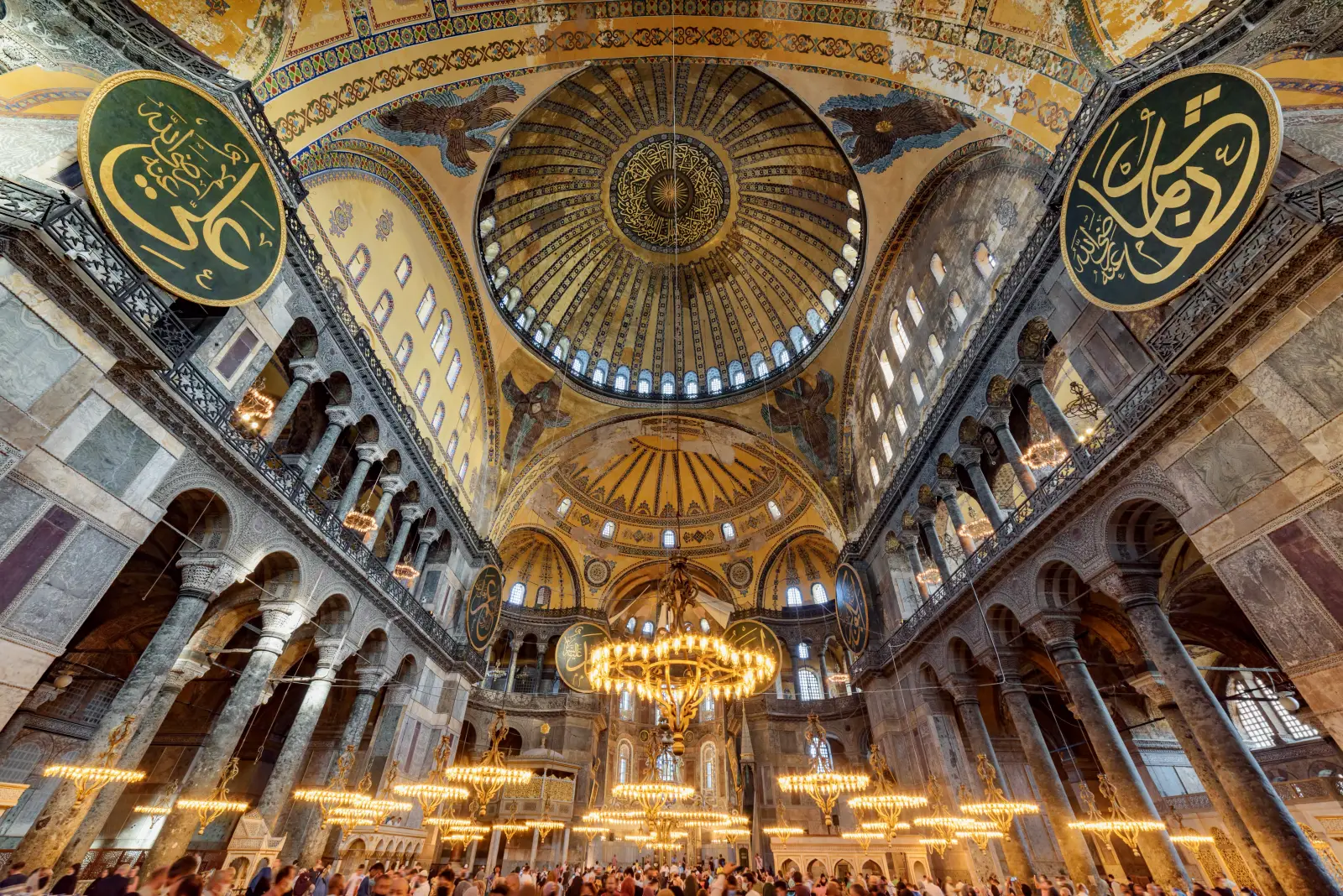
Two Russian tourists have been arrested in Istanbul after they allegedly read aloud from the Bible in the visitor area of the Hagia Sophia, one of Turkiye’s most famous landmarks and a mosque. Authorities say the pair are being investigated on suspicion of inciting hatred and hostility.
The incident took place on Tuesday, according to the local media. The tourists were detained by police and then handed over to the migration authorities, while Russia’s state news agency Tass said the people involved were Russian citizens and that the consulate was examining the circumstances of their detention.
The case has drawn attention because the Hagia Sophia has long been a symbol of religious and political change. Built in the 6th century by Emperor Justinian as a church, it became a mosque after the Ottoman conquest of Constantinople in 1453.
It was later converted into a museum in 1934 under the orders of Mustafa Kemal Ataturk, the founder of the Turkish republic. In 2020, President Recep Tayyip Erdogan moved to turn it back into a mosque, restoring its role as a place of Muslim worship.
The Hagia Sophia remains one of Istanbul’s most visited sites, attracting millions of tourists each year. Its status has also made it a focus of international debate, particularly since its conversion back into a mosque, which changed the way visitors can access and behave inside the building.
Turkish authorities have not publicly detailed the exact words said to have been read, but Anadolu reported that prosecutors are treating the case as one involving incitement to hatred and hostility. The arrests highlight the strict rules that can apply at major religious sites, especially those with active worship services.
The Russian state news agency Tass said the consulate was investigating the detention, but no further details were immediately available. It was not clear whether the tourists had legal representation or when any court hearing might take place.
In recent years, the Hagia Sophia has remained central to questions about heritage, tourism and religion in Turkiye. The building began as one of the great churches of the Byzantine world, then served as a mosque for centuries, before becoming a museum and later returning to mosque status.
The case is a reminder that the Hagia Sophia is not only a major tourist attraction but also an active place of worship. Behaviour inside the site is therefore subject to rules that reflect both its religious function and its historic significance.
Photo Credit: Efired / Shutterstock.com