The Valencia regional government has lifted the evacuation order for four neighbourhoods in La Vall d’Uixó, allowing more than 6,000 residents to return home after a wildfire in Castellón province.
The announcement came as Prime Minister Pedro Sánchez visited the fire’s forward command post on 27 July, warning that “difficult hours, complex hours” remained ahead.
The Generalitat Valenciana authorised the return of residents in the Toledo, Carbonaire, Sant Antoni and Sant de Josep neighbourhoods, affecting a total of 6,020 people who had been evacuated as flames directly threatened their homes.
“Podem tornar tots i totes a casa,” said Mayor Tania Baños, using the Valencian phrase meaning “We can all return home.”
The wider municipality of La Vall d’Uixó remains under confinement until 08:00 on 28 July, after which normal activity is expected to resume gradually unless authorities order otherwise. Evacuation and confinement measures in the nearby towns of Onda and Betxí remain in force until 23:59 on 28 July.
Sánchez visited the command post at midday, greeting emergency crews before addressing reporters. “There are difficult hours ahead, complex hours. We will see a rise in temperatures in the coming hours and in the coming days,” he said.
View this post on Instagram
He confirmed the government will approve a royal decree this Tuesday declaring the region a zone severely affected by a civil protection emergency, allowing state subdelegations to coordinate with local councils and provincial authorities to assess the damage.
Standing alongside Juanfran Pérez Llorca, president of the Generalitat Valenciana, Sánchez called for a national pact against climate change, referring to a proposal he first raised in September of the previous year.
Sánchez also addressed misinformation circulating about the fire’s cause, asking the public to disregard rumours that blazes are started deliberately to clear land for solar plants or lithium mining. Government delegation sources said the fire does not appear to have started from natural causes.
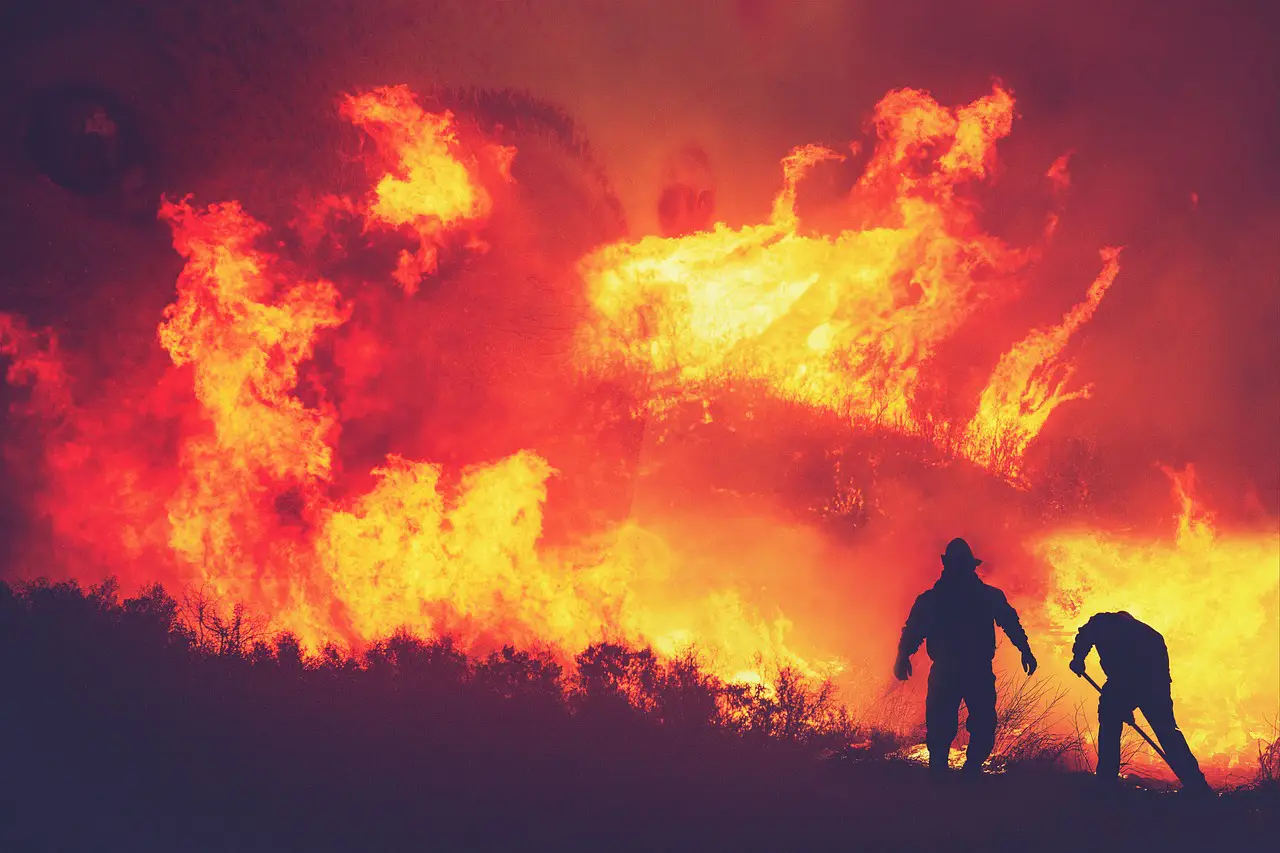
The wildfire began on 25 July and has since burned 7,200 hectares of the Serra d’Espadà mountain range. More than 400 personnel and 25 aircraft were deployed on 27 July to try to stabilise the blaze.
Fernando Pérez, the firefighter leading the operation, said it would not be possible to stabilise the fire that day, with wind gusts of up to 30 km/h expected to complicate efforts. The most concerning outbreaks were in Eslida, the Montí de Onda and residential areas of Betxí, though flames were no longer active in La Vall d’Uixó itself.
More than 16,000 people have been evacuated by the fire, with tens of thousands more confined to their homes. La Vall d’Uixó and Onda together have a combined population of more than 50,000.
Sánchez noted that wildfires have already burned more than 170,000 hectares across Spain this year, six times the total recorded in the whole of the previous year.
He also announced plans to build more than 1,000 climate shelters across the country as part of a wider strategy to protect residents from extreme heat and other effects of climate change.
Local officials have repeated calls for public cooperation after some residents ignored safety orders, diverting police resources away from the emergency response. Baños asked residents to remain patient and to keep roads clear so firefighting crews can continue their work.