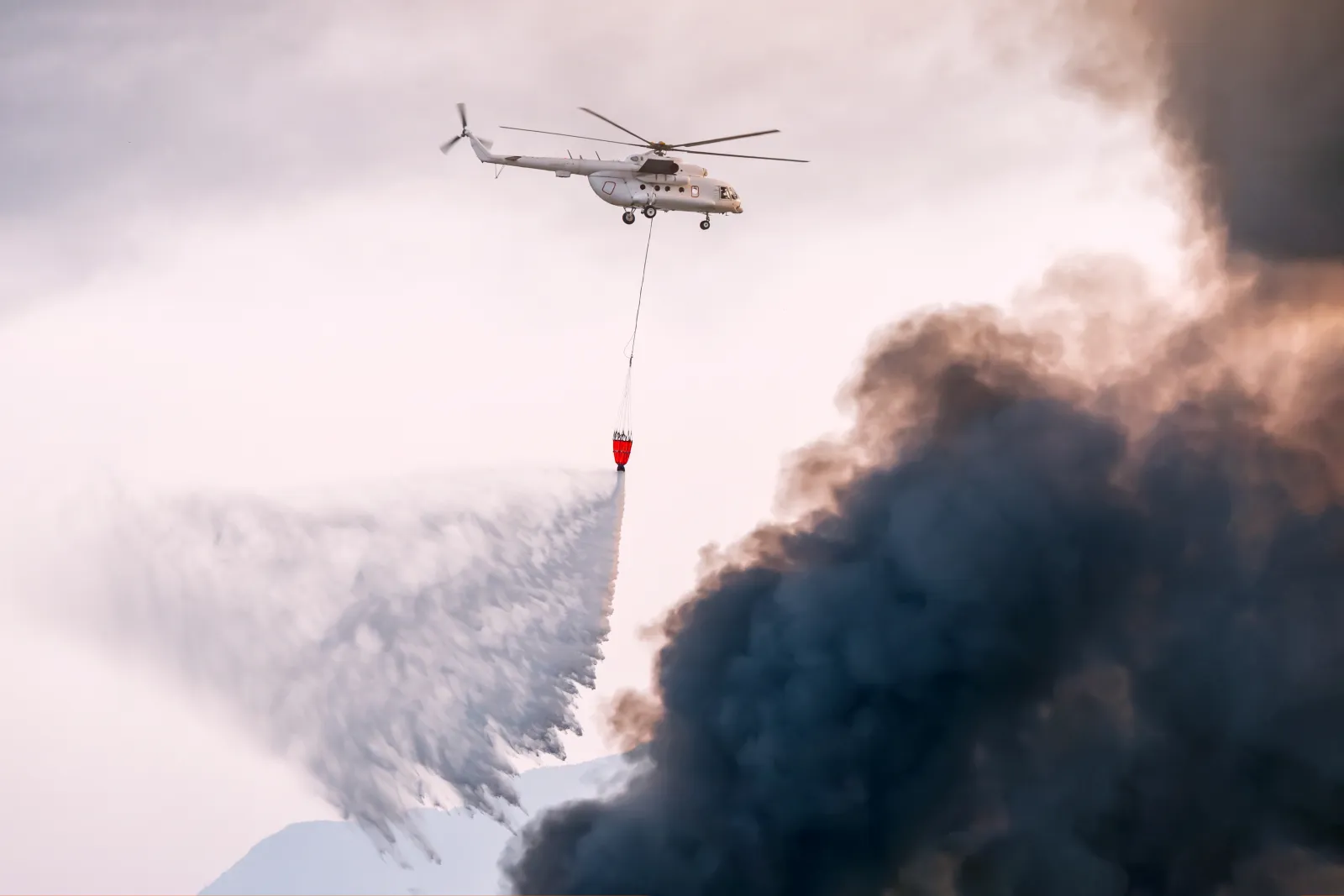
More than 270,000 people have been evacuated or confined as major wildfires continue to burn across France and Spain, with authorities warning that a new heat wave could make firefighting efforts even more difficult. The European Union has deployed aircraft, helicopters and firefighters from several member states to support emergency operations in both countries.
The largest wildfire in southwestern France has burned around 42,000 hectares in the Gironde region, while major fires in Spain have destroyed tens of thousands of hectares across Castellon, the Madrid region and Avila. Thousands of residents remain unable to return home as firefighters work to prevent further spread.
In France, the Gironde wildfire began near Saumos on Wednesday and has since become one of the country’s largest fires of the season. French authorities said approximately 220,000 people had been evacuated as the blaze spread across forests and rural communities.
French Interior Minister Laurent Nunez said the wildfire had been “stabilized, though not yet contained,” and urged the public to avoid travelling to the Gironde area until emergency services had brought the situation fully under control.
The minister said France had recorded 13,566 wildfires or fire outbreaks since the beginning of the fire season, with 116,085 hectares burned nationwide. He said the country had strengthened its aerial firefighting capacity with a fleet of 67 aircraft, including 12 Canadair water bombers, eight Dash aircraft, 10 leased helicopters and six leased planes, making it one of Europe’s largest aerial firefighting fleets.
Authorities also reported that 84 firefighters had been injured while battling the Gironde wildfire. Additional active fires remain in Haute-Corse, Var, Hautes-Alpes and Landes, stretching emergency resources across multiple regions.
In Spain, several major wildfires also remained out of control as the country prepared for another period of extreme temperatures. Prime Minister Pedro Sanchez warned that “difficult and complex” hours lay ahead as firefighters continued efforts to contain multiple blazes.
The wildfire in Vall d’Uixo, in the eastern province of Castellon, has burned more than 7,200 hectares and forced the evacuation of more than 16,000 residents. Elsewhere, the wildfire in the Madrid region has scorched around 25,000 hectares, while the neighbouring Burgohondo fire in Avila has burned approximately 50,000 hectares.
Government Delegate Francisco Martin said authorities remained “cautiously optimistic” despite the scale of the emergency. He stressed that the fires were not yet under control and said firefighting operations were concentrating on preventing the flames from spreading around the San Juan reservoir and neighbouring municipalities.
Regional authorities said more than 50,000 people in the Madrid area remained either evacuated or confined because of the fires. The country’s Ecological Transition Ministry said it had deployed 37 firefighting units, combining aerial and ground resources, to tackle the largest active blazes.
The growing scale of the emergency prompted the activation of the EU Civil Protection Mechanism, allowing countries across Europe to provide additional firefighting assistance.
According to the European Commission, France has received seven firefighting aircraft and four helicopters from the Czech Republic, Croatia, Germany, Portugal, Slovakia, Sweden and Türkiye. Spain has received six firefighting aircraft from Greece, Italy and Türkiye, while Portugal has also deployed 134 firefighters and 41 emergency vehicles.
A liaison officer from the European Commission has been sent to Bordeaux to coordinate international assistance with French authorities. The commission said international firefighting teams had already been pre-positioned in both France and Spain before the wildfire season began as part of the EU’s preparedness programme, enabling rapid deployment when the fires broke out.
The fires highlight the increasing pressure on emergency services across southern Europe during the summer months, particularly as prolonged periods of hot, dry weather create ideal conditions for fast-moving wildfires. Authorities in both countries continue to monitor weather forecasts closely, warning that the approaching heat wave could increase the risk of further outbreaks and complicate efforts to contain existing fires.
Travellers planning to visit affected regions are advised to monitor official guidance from local authorities and transport providers, as road closures, restricted access and temporary disruptions may continue while firefighting operations remain underway.