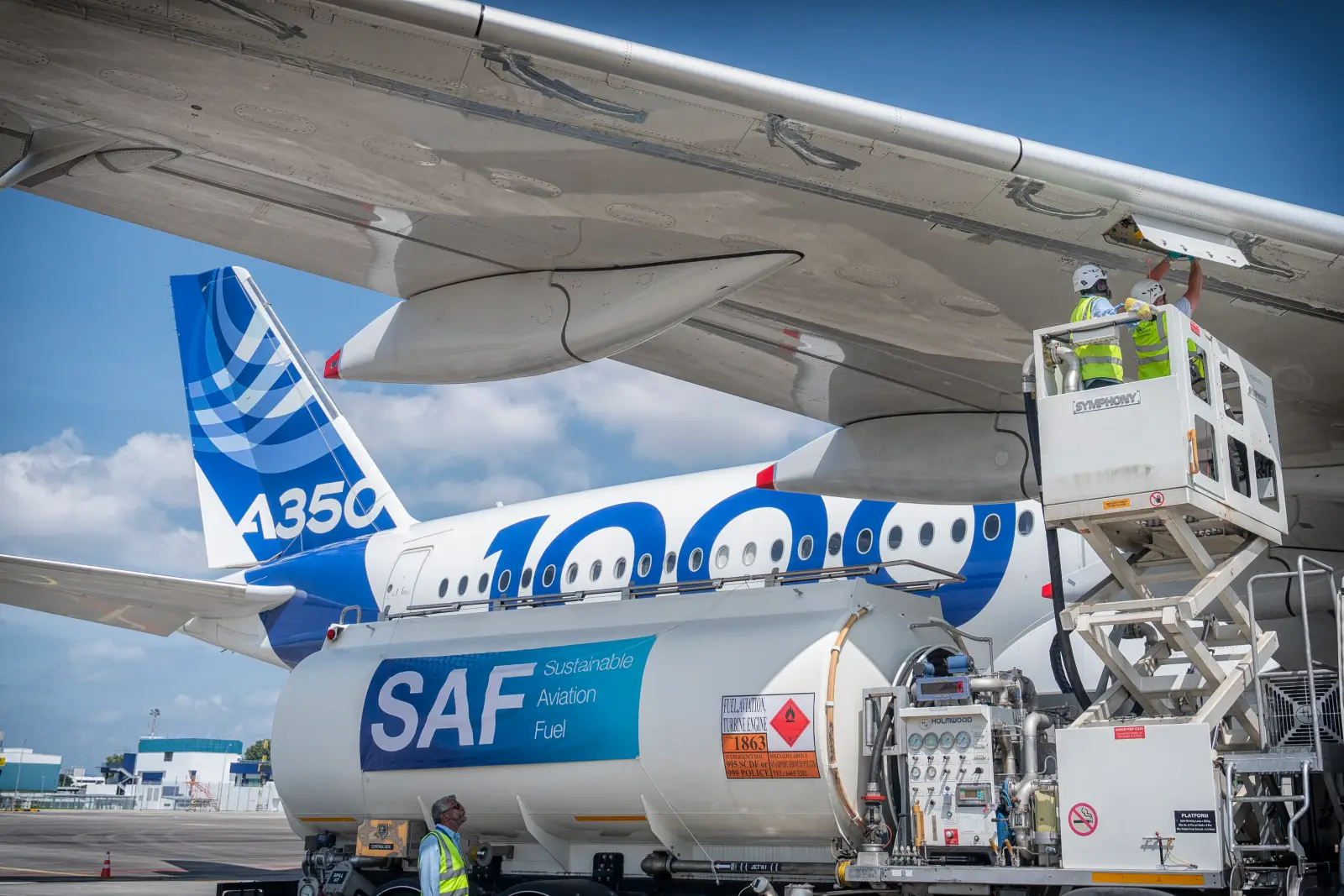
Airbus and the Cathay Group have announced a joint investment of up to US$70 million to accelerate the development of sustainable aviation fuel (SAF) production in Asia and globally.
Under the terms of the partnership, the two companies will collaborate to identify, evaluate and invest in projects that support the scaling of SAF production towards 2030 and beyond. Projects will be assessed based on their commercial viability, technology maturity, and potential for long-term offtake.
Scaling SAF requires deep collaboration across the value chain, including from policymakers and investors to SAF producers and customers. This co-investment agreement reflects the spirit of partnership with Airbus and Cathay teaming up to accelerate production capability for more a meaningful impact.

The joint commitment also includes collaboration to advocate for supportive SAF policies on both the supply and demand sides across Asia. With the region’s strong potential in feedstock supply, production capacity, and its vibrant aviation market, Airbus and Cathay aim to leverage their global experience to help shape policies that make SAF more accessible and affordable in this part of the world.
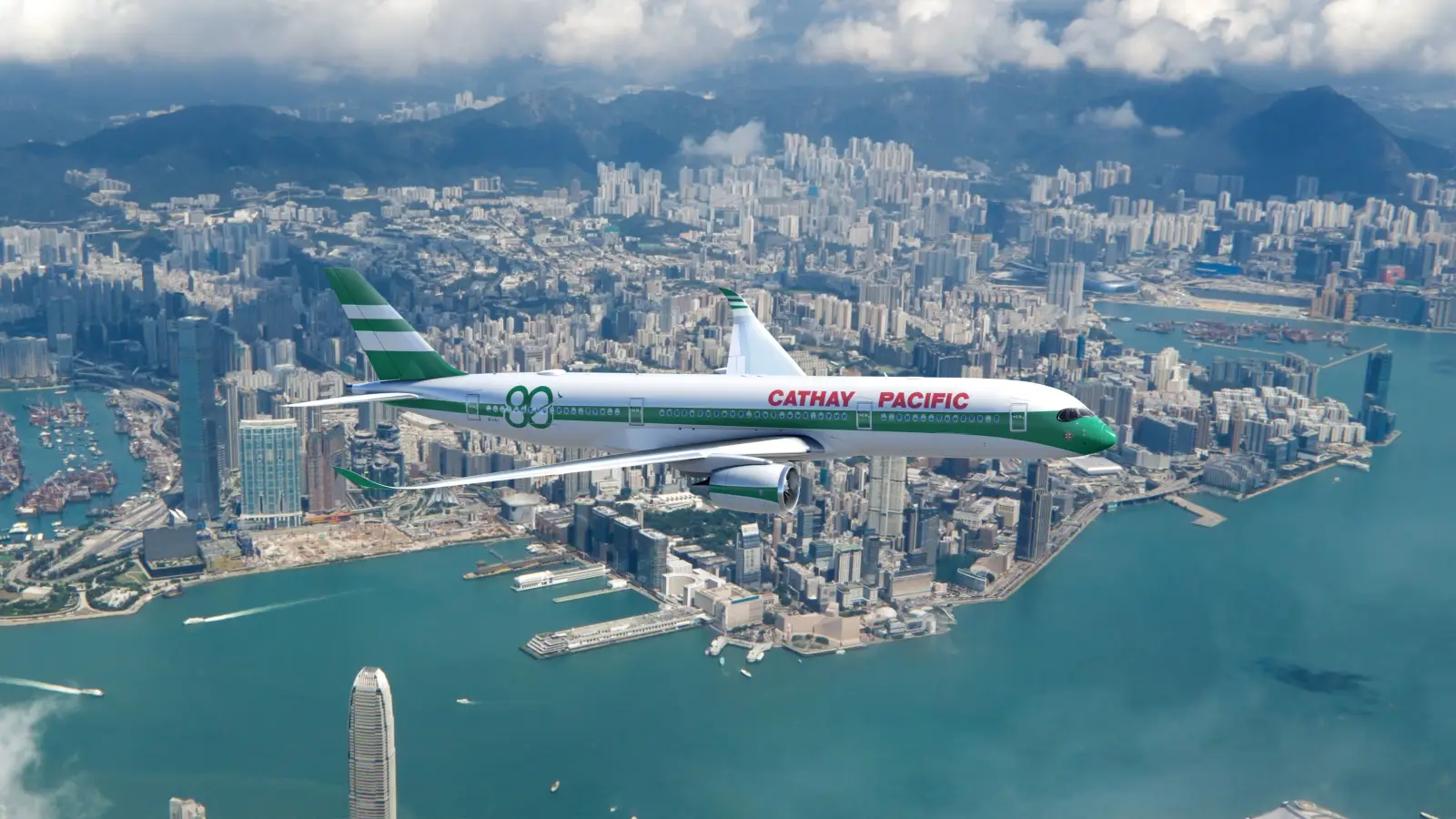
Airbus and Cathay have a long-standing partnership dating back to 1989, when the airline signed its first order for Airbus aircraft. Today, the Cathay Group operates 86 Airbus aircraft with over 70 more on order for future delivery.
Cathay is also a launch investor in the oneworld BEV SAF Fund, which is a joint initiative between Cathay with other oneworld airline members and Breakthrough Energy Ventures, the climate investment firm founded by Bill Gates. The fund focuses on novel, next-generation SAF technologies with the potential to scale significantly and reduce costs.
Malaysia as a potential site for development of SAF
Malaysia has the potential to be one of the locations in Southeast Asia for Cathay Group and Airbus’s newly-announced co-investment projects in the development of SAF. Cathay Pacific general manager of sustainability Grace Cheung said the airline sees Malaysia and other countries in the region and globally as part of its potential project areas, as reported in Malaysia’s The New Straits Times.
“Malaysia and also many countries in the region are all part of where we have potential projects…The partnership that we have with Airbus definitely focuses on SAF development in the Asia region. So, not only limited to Hong Kong, not only limited to Asia but globally,” she said.
Meanwhile, Airbus said Asia holds immense potential for SAF development with about 40 per cent of the world’s feedstock resources located in the region.
Singapore’s levy to boost use of greener jet fuel not suitable elsewhere as it may dampen air travel: IATA
Singapore’s decision to impose a levy on travellers to raise the use of greener jet fuel may have a “dampening effect on air travel”, and the International Air Transport Association (IATA) may not recommend such a policy elsewhere, said the body’s official as reported in The Straits Times.
However, given Singapore’s land constraints and limited capacity in producing SAF, the levy – which would go to a fund to procure the fuel – would be suitable for the country, said Dr Marie Owens Thomsen, IATA’s senior vice-president for sustainability and chief economist.
On Oct 14, the Singapore Parliament passed a Bill to impose a fixed levy on all departing flights from 2026 to support airlines’ use of SAF. The target is for SAF to constitute one per cent of all jet fuel used at Changi and Seletar airports in 2026, with the goal raised to three to five per cent by 2030.
Preliminary estimates from the authorities are that economy-class passengers may incur an additional S$3 levy for short-haul flights, S$6 for medium-haul flights and S$16 for long-haul flights, such as those to Bangkok, Tokyo and London, respectively.