The International Air Transport Association (IATA) announced updates to its 2025 airline industry financial outlook, showing improved profitability over 2024 and resilience in the face of global economic and political shifts.
Highlights from the expected 2025 financial performance include:
- Net profits at $36 billion, improved from the $32.4 billion earned in 2024, but slightly down on the previously projected $36.6 billion (December 2024).
- Net profit margin at 3.7%, improved from the 3.4% earned in 2024 and the previously projected 3.6%.
- Total revenues at a record high of $979 billion (+1.3% on 2024, but below the $1 trillion previously projected).
- Total traveller numbers reaching a record high 4.99 billion (+4% on 2024, but below the previously projected 5.22 billion).
The airline industry employs 86.5 million people and supports 3.9% of global economic activity. Earning a $36 billion profit is significant. But that equates to just $7.20 per passenger per segment. It is still a thin buffer and any new tax, increase in airport or navigation charge, demand shock or costly regulation will quickly put the industry’s resilience to the test.
Passenger Revenues
Passenger revenues are expected to reach $693 billion in 2025 (+1.6% on 2024), an all-time high. Passenger growth (measured in Revenue Passenger Kilometers/RPK) is expected to be 5.8%—a significant normalisation after the exceptional double-digit growth of the pandemic recovery.
It is expected that passenger yields will fall by 4.0% compared with 2024. This is largely reflective of the impact of lower oil prices and strong industry competition. This will continue the trend of travellers benefiting from ever-more affordable air travel. The real average return airfare (in 2024 US dollars) is expected to be $374 in 2025. This is 40% below 2014 levels.
Expense
Jet fuel is expected to average $86 a barrel in 2025 (well below the $99 average in 2024), translating into a total fuel bill of $236 billion, accounting for 25.8% of all operating costs. Recent financial data show minimal fuel hedging activity over the past year, indicating that airlines will generally benefit from the reduced fuel cost. It is not expected that fuel will be impacted by trade tensions.
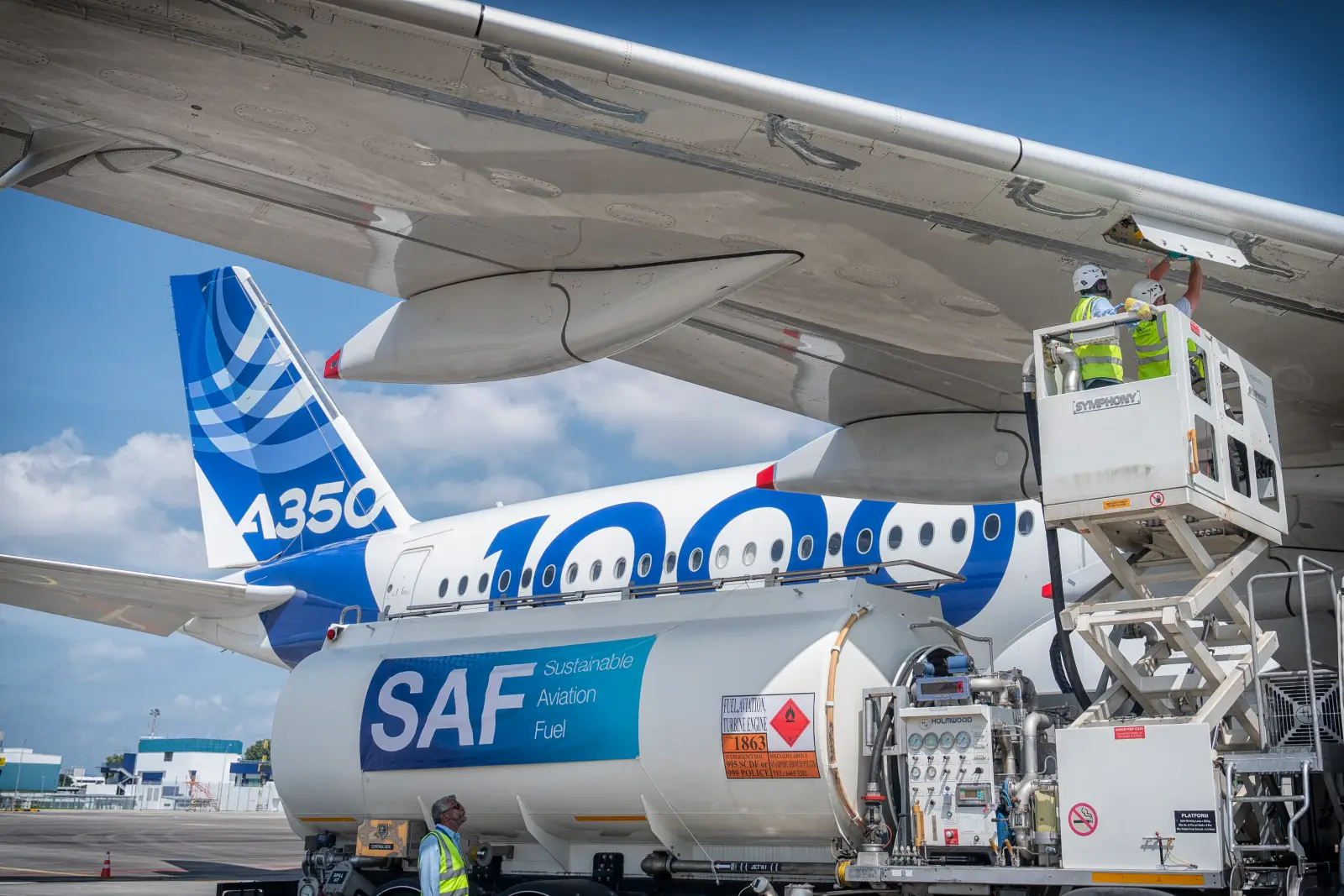
Sustainable Aviation Fuel (SAF) production is expected to grow to two million tonnes (Mt) in 2025, accounting for just 0.7% of airline fuel use. SAF production will double from the 1 Mt produced in 2024 (all of which was purchased by airlines), but production needs an exponential expansion to meet the demands of the industry’s commitment to net zero carbon emissions by 2050.
Fleet/Supply Chain
The aircraft backlog exceeds 17,000 (sharply up from the 10,000–11,000 pre-pandemic), with an implied wait time of 14 years.
In 2025, 1,692 aircraft are expected to be delivered. Although this would mark the highest level since 2018, it is almost 26% lower than year-ago estimates. Further downward revisions are likely, given that supply chain issues are expected to persist in 2025 and possibly to the end of the decade.
Risks
With ongoing geopolitical and economic uncertainties, the most significant risks to the industry outlook include:
- Conflict: The resolution of conflicts such as the Russia-Ukraine war would have a benefit for airlines in reconnecting de-linked economies and reopening airspace. Conversely, any expansion of military activity could have a dampening effect.
- Trade tensions: Tariffs and prolonged trade wars dampen demand for air cargo and potentially travel. Additionally, the uncertainty over how the Trump Administration’s trade policies will evolve could hold back critical business decisions that drive economic activity, and with it the demand for air cargo and business travel.
- Oil prices: Oil prices are a major driver of airline profitability. The complex array of factors impacting oil prices (including economic growth projections, the amount of extraction activity undertaken, policies on decarbonisation, sanctions, availability of refining capacity, and transport blockages) can produce quick shifts in pricing volatility with significant impact on airline financial prospects.
Regional Roundup
All regions are expected to deliver collective net profits in 2025. Most will see their financial performance improve compared with 2024, with Latin America being the exception. The collective net profit margin of carriers in the Middle East is forecast to be the strongest at 8.7%.
North America will generate the highest absolute profit among the regions even as it is expected to be affected by a slowdown in the US economy, with increased tariffs likely to dampen consumption and investment. The persistent shortage of pilots and engine reliability problems, particularly in the low-cost sector, will limit growth in the region.
Europe is expected to benefit from strong passenger demand, driven by growth in the low-cost sector. More of their aircraft fleet will return to service following engine-related grounding, and the EU’s open skies agreements with North Africa will provide market opportunities. A stronger Euro will boost profitability for all carriers in the region with costs (such as fuel) mainly denominated in US dollars.
Asia Pacific is the largest market in terms of Revenue Passenger Kilometers (RPK), with China accounting for over 40% of the region’s traffic. Passenger demand is expected to be strong given the relaxation in visa requirements in several Asian countries, particularly China, Vietnam, Malaysia and Thailand. However, the economic landscape poses some challenges, with the GDP forecast for the region, particularly China, having been revised down.
Although flights between China and the United States are still limited to 100 weekly frequencies and significantly below pre-COVID levels, overcapacity issues are showing signs of improvement due to better fleet deployment between domestic and international travel.
The Middle East will generate the highest net profit per passenger among the regions. Robust economic performance is supporting strong air travel demand, both for business and leisure travel. However, with delays in aircraft delivery, the region will see limitations in capacity as airlines embark on retrofit projects to modernise their fleet, hence limiting growth.
Latin American airlines continue to be impacted by weak domestic currencies as major cost items, such as fleet expenses and debt servicing, are paid in US dollars. Argentina’s signing of open skies agreements with a number of countries is positive. However, the proposed 26.5% VAT on tickets in Brazil could have a significant impact on the market. This is the only region to see profitability decrease compared with 2024.