A Beijing court orders Malaysia Airlines to pay compensation to families of eight passengers who disappeared aboard flight MH370, as Malaysian authorities prepare to restart the search for the aircraft in the southern Indian Ocean on 30 December.
The ruling grants 2.9 million yuan (€350,000) to each family and follows the announcement of a new search effort nearly 11 years after the jet vanished.
The judgment covers loss of life, funeral expenses and emotional distress, and comes as 23 additional cases move forward in Chinese courts. Malaysian authorities confirm plans to resume the search after previous multinational efforts failed to determine the aircraft’s fate.
Compensation Ruling and Ongoing Legal Cases
The court states that 47 families have already reached settlements with Malaysia Airlines and withdrawn their lawsuits, while the eight families named in the ruling receive standardized compensation under Chinese civil law. The passengers involved have been legally declared dead, though the circumstances of the disappearance remain unknown. The court notes that remaining cases continue to proceed as families seek redress more than a decade after the tragedy.
The compensation decision follows years of legal action filed in China, home to most of the passengers on MH370. The award of 2.9 million yuan per family reflects losses related to death and emotional harm and applies only to the cases adjudicated in this ruling. The court statement indicates that further decisions will be issued as cases conclude.
Fresh Search Follows a Decade of Unanswered Questions
Flight MH370 disappeared on 8 March 2014 while travelling from Kuala Lumpur to Beijing with 239 people aboard, including 227 passengers and 12 crew members. The Boeing 777 dropped from civilian radar 39 minutes after takeoff, shortly after issuing the final radio call, “Good night, Malaysian Three Seven Zero,” as it approached Vietnamese airspace. It never made contact with Vietnamese controllers.
Investigators later determined that the aircraft’s transponder stopped transmitting minutes after the final communication. Military radar tracked the jet turning west across the Malay Peninsula toward the Andaman Sea. Satellite analysis suggested that the aircraft continued flying for hours until likely fuel exhaustion, ending in a remote expanse of the southern Indian Ocean.
Despite extensive search operations led by Australia, Malaysia and China, no confirmed wreckage location has been found. Over the past decade, debris consistent with a Boeing 777 has washed ashore on islands in the western Indian Ocean, but investigators have not determined what caused the loss of the aircraft or what occurred on board during its final hours.
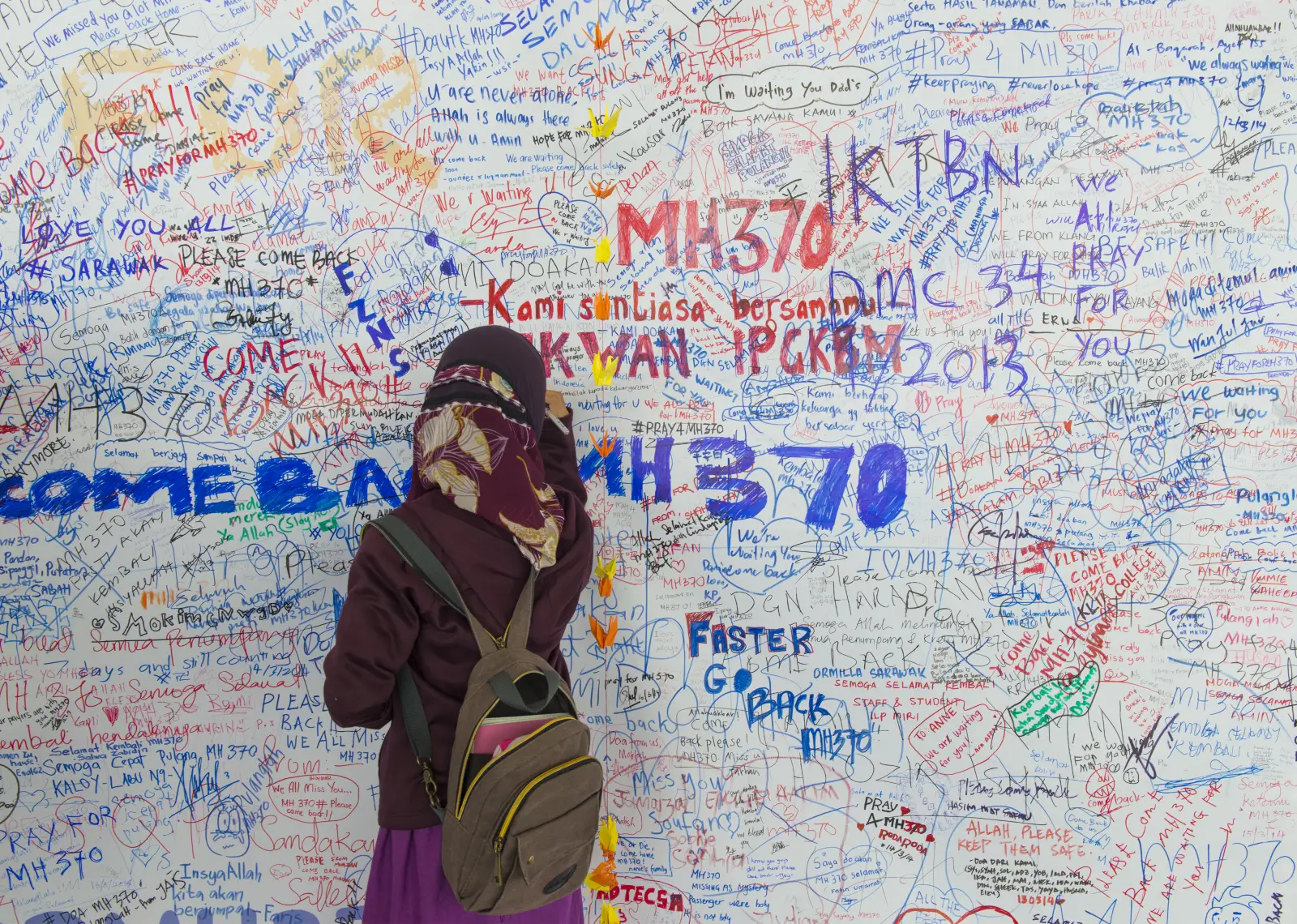
Passengers on MH370 included citizens from China, Malaysia, the United States, Indonesia, France, Russia and other countries, as well as five children. For many families, the lack of definitive evidence has prolonged legal processes and intensified calls for continued search efforts. Malaysian officials say the new operation aims to bring closure after years of uncertainty.
The renewed mission follows technological advances and re-examination of satellite data that may refine previous search coordinates. Authorities have not disclosed the full scope of the campaign but say activities begin on 30 December, marking the first formal search effort since 2018. Officials indicate that the operation will focus on areas believed to hold the highest probability of locating the aircraft.
The dual developments—court-ordered compensation in China and a new search commitment from Malaysia—have renewed international attention on one of aviation’s most enduring mysteries. With several legal cases still pending and the upcoming search expected to re-engage regional partners, MH370 remains a priority for families seeking answers and for officials working to resolve the disappearance.
Photo Credit: ahmad.faizal / Shutterstock.com