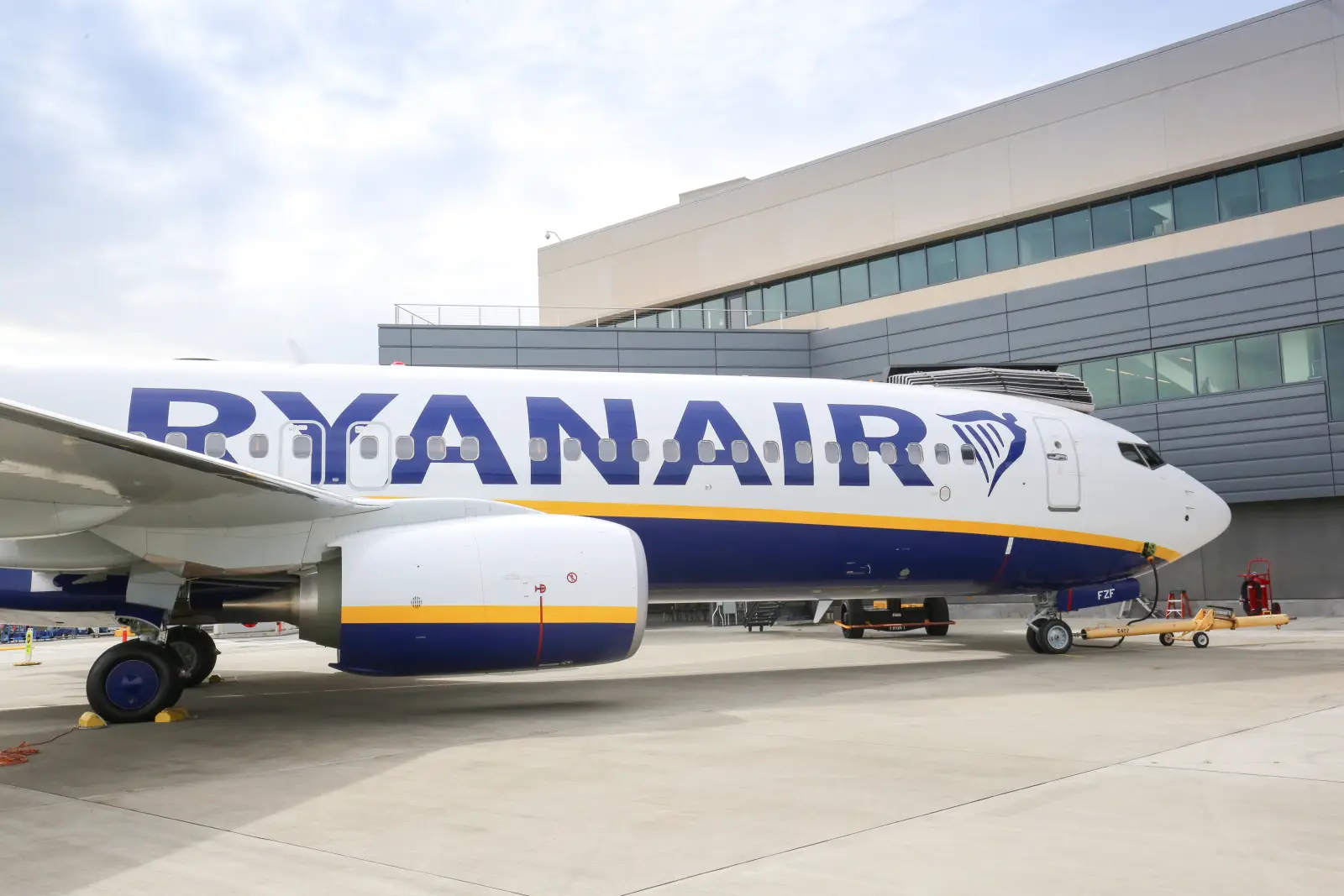
Airport Coordination Netherlands has revoked two Ryanair landing slots at Eindhoven Airport for the upcoming summer season after the airline recorded repeated late arrivals on specific routes.
The decision affects Monday evening flights from Sofia and Thursday evening flights from Pisa, which both registered more than 30 late arrivals over a three-month period with average delays close to one hour. Ryanair has appealed the action, calling the measure unprecedented as Dutch regulators enforce stricter compliance with airport slot rules.
The removal of landing rights marks one of the rare instances in which Dutch slot authorities penalize an airline for persistent punctuality violations. The decision may alter Ryanair’s operations at Eindhoven next summer, requiring the airline to adjust scheduling, reassign aircraft, or discontinue certain flight timings. Travelers flying on the affected routes could face changes to availability and departure times as the airline restructures its network to accommodate the lost slots.
Regulator’s Findings and Operational Impact
According to Dutch media reports, Airport Coordination Netherlands determined that Ryanair failed to operate its allocated slots within the required parameters, despite earlier warnings about repeated delays. Records show that the two routes in question consistently landed outside their permitted windows, disrupting airport operations and affecting the efficiency of the overall slot system. Slot coordinators noted that the concentration of delays on the same routes suggested a pattern rather than isolated operational challenges.
Eindhoven Airport, which operates under slot-controlled regulations due to capacity constraints, relies on strict adherence to scheduling to ensure smooth traffic flow. When airlines repeatedly exceed permitted arrival times, airport coordination officials can take corrective action under European slot rules. In this case, ACNL determined that removing two of Ryanair’s slots was necessary to restore compliance and protect the operational integrity of the airport’s timetable.
The measure affects Ryanair’s 2025 summer schedule, which must now be revised to compensate for the loss of the two evening arrival slots. The airline may attempt to reallocate aircraft to other time windows or shift affected flights to different airports within its Dutch network. Ryanair’s appeal to the European Commission and Dutch courts indicates that the carrier intends to challenge the enforcement decision, though its current flight planning must proceed with the slot removals in place unless regulators overturn the ruling.
Ryanair described the decision as “unprecedented, irrational and disproportionate,” arguing that the penalties exceed normal enforcement practices for late arrivals. The airline is seeking review from European authorities, claiming that the removal of landing rights could impact passenger choice and lead to reduced route capacity. While the appeal process is underway, industry analysts note that slot removals remain one of the strongest actions available to coordinators when airlines breach compliance rules.
The case highlights increasing scrutiny of airline punctuality within the European aviation market, especially at capacity-constrained airports. Regulators have become more assertive in ensuring that airlines operate within their assigned slot windows, particularly during peak travel seasons when congestion can quickly escalate. With passenger volumes rising, slot coordinators across Europe are adopting stricter interpretations of operational rules to maximize efficiency and maintain predictable runway access.
The rare penalty against Ryanair may serve as a precedent for future enforcement actions in other European countries. Airlines with frequent delays, especially on repeating routes, may face heightened monitoring as airports balance rising demand against limited runway and terminal capacity. The decision also reinforces the role of slot coordinators in maintaining fairness, ensuring that airlines operating reliably are not disadvantaged by carriers whose repeated delays disrupt the system.
Passengers traveling between Eindhoven and Sofia or Pisa could see schedule changes as Ryanair adjusts operations in response to the lost slots. The airline may alter departure times, reduce weekly frequencies, or move flights to alternative airports within the region if suitable slots are unavailable. Travelers planning summer itineraries may need to review updated schedules once the airline finalizes its revised network plan for 2025.
The slot removal also highlights the broader impact of punctuality on passenger travel plans. Repeated delays can lead to missed connections, reduced ground turnaround efficiency, and strain on airport resources. By enforcing slot discipline, Dutch regulators aim to improve reliability for all carriers operating at Eindhoven Airport, which remains a popular base for low-cost travel within Europe.
The case comes at a time when European aviation continues to grow, with airlines expanding summer schedules and leisure travel demand remaining strong. As airports manage tight capacity, slot enforcement is expected to remain a central tool for ensuring operational stability. Ryanair’s appeal may influence how future disputes are handled, but the immediate effect is a rare and significant adjustment to the carrier’s Dutch operations.
As summer approaches, both regulators and airlines will monitor how the enforcement affects traffic flows and schedule reliability at Eindhoven. For travelers, the decision underscores the importance of reviewing updated flight information and remaining aware of potential adjustments on affected routes. The outcome of Ryanair’s appeal will determine whether similar actions become more common in European slot-controlled airports.