South-east Asia has an unusually high concentration of international budget flights. Around two-thirds of international seats within the region so far in 2025 were on budget carriers, compared with about one-third of international seats globally, Capa Centre for Aviation data shows.
South-east Asia’s biggest budget airlines are pursuing ambitious capacity expansions despite Qantas announcing the shutdown of Jetstar Asia, resulting in 16 routes out of Changi Airport to be cancelled by July.
Due to rising costs, reduced profitability margins and intense competition, Association of Asia-Pacific Airlines director-general Subhas Menon said: “At the end of the day, it is go big or go home”.
Despite the challenging conditions, demand for air travel in Asia is expected to grow faster than other regions in the next few decades.
As at March 31, AirAsia had 225 and VietJet had 117, including its Thai arm. Low-cost Philippine carrier Cebu Pacific had 99 and Scoot had 53 planes. All four are acquiring more aircraft to add to their fleet and also announced new route expansions as they seek to gain market share.
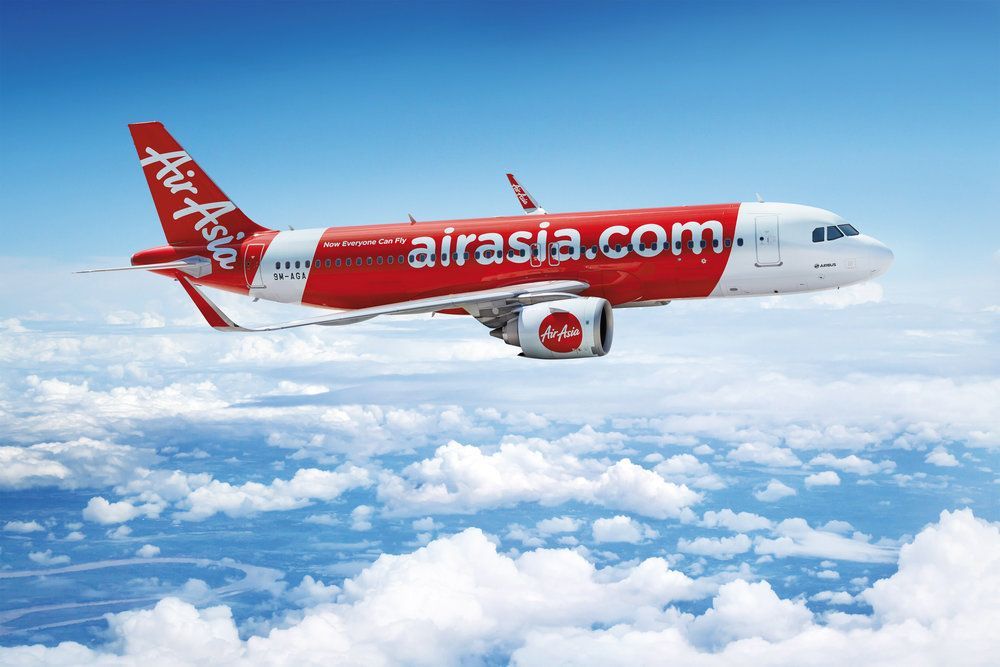
AirAsia
AirAsia Aviation Group said that its network optimisation is expected to be completed by the second quarter of 2025, and introduce more increases across high-demand routes beginning in the same period, driven by easing visa policies in key markets such as China, India, Thailand, and Malaysia.
AirAsia chief executive Tony Fernandes said on June 18 that the carrier, which has an existing order book of at least 350 planes, is also in talks to buy 50 to 70 long-range single-aisle jetliners, and 100 regional jets that could allow it to expand to more destinations but it did not sign any deals at the Paris show.
New routes
The airline began flights to Almaty, Kazakhstan, in March last year and will launch a new route to Tashkent, Uzbekistan on 15 October. Without AirAsia X, getting to Almaty could take up to 18 hours — with AirAsia X, it is eight hours on a direct flight.
The airline is also eyeing Turkiye, Azerbaijan and other Central Asian countries, with the hope that this will eventually serve as a platform for expansion into Europe.
AirAsia launched its fourth Fifth Freedom route on 15 June connecting Chiang Mai, Thailand and Sapporo, Japan with a stopover in Taipei.
AirAsia now operates four Fifth Freedom routes to Japan, serving three Japanese cities:
- Bangkok–Taipei–Okinawa (7 flights/week)
- Bangkok–Kaohsiung–Tokyo (Narita) (7 flights/week)
- Bangkok–Hong Kong–Okinawa (7 flights/week)
- Chiang Mai–Taipei–Sapporo (7 flights/week)
A new direct route from Bangkok-Don Mueang to Hai Phong, Vietnam, will be launched on July 16. The Hai Phong route offers access to Ha Long Bay. Thai AirAsia currently operates direct flights from Bangkok to six cities in Vietnam, including Hanoi, Ho Chi Minh City, Da Nang, Nha Trang, Phu Quoc and now Hai Phong.
AirAsia Malaysia announced a new route to Darwin, Australia, starting 27 June, making it the first airline in the region to offer direct connectivity between Kuala Lumpur and Darwin. Additionally, AirAsia Indonesia launched its inaugural Bali-Darwin service on March 22.
AirAsia Malaysia also launched two new direct flights from Kuala Lumpur to Palembang and Semarang. Their launch also coincides with the reopening of Palembang and Semarang airports for international flights, making AirAsia the first international carrier to return to both cities.
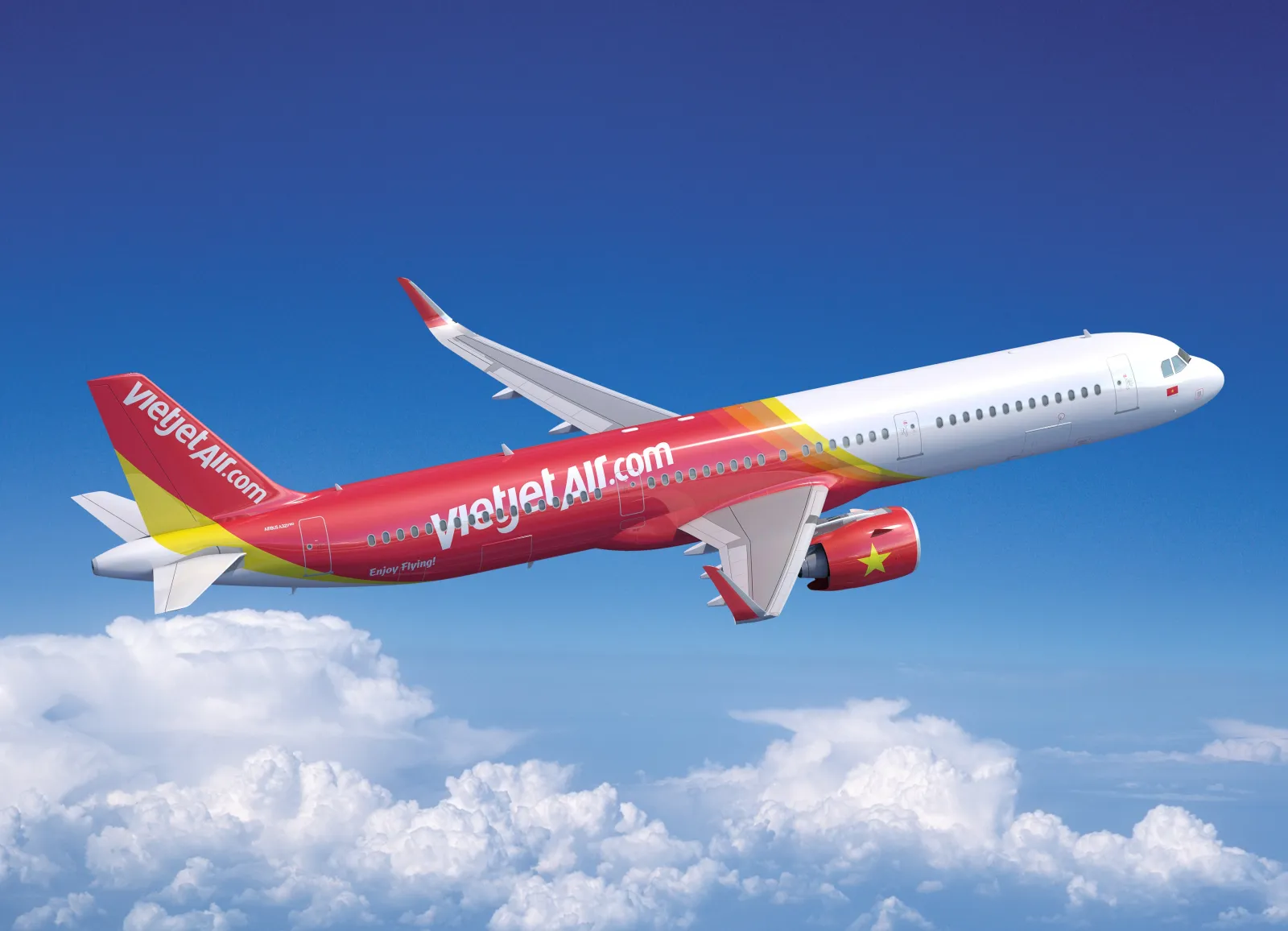
VietJet
According to the Civil Aviation Authority of Vietnam, the country’s aviation market is expected to continue recovering in 2025, with an estimated growth of about 8%.
VietJet on June 17 signed a provisional deal to buy up to 150 Airbus A321neo planes at the Paris Airshow, in a move it said was just the beginning as the airline pursues ambitious growth. The deal comes weeks after it ordered 20 A330neo wide-body planes, alongside an outstanding order for 200 Boeing 737 Max jets. This year, the airline expects to operate a fleet of 234 narrowbody aircraft.
New routes
Sales have opened for Vietjet Thailand’s first-ever direct service to South Korea, which connects Bangkok (Suvarnabhumi) with Seoul (Incheon) through daily flights starting 1 October.
Vietjet Thailand has announced plans to expand its flights to popular destinations in Japan this year, which include Bangkok (Suvarnabhumi)-Okinawa from 2 November and Bangkok (Suvarnabhumi)-Hokkaido from 17 December. Both flights will be via Taipei.
Flights that have just been launched this year include new routes from Hanoi to Beijing, Guangzhou, and Shanghai, and from Ho Chi Minh City to Beijing, Guangzhou and Hyderabad, Bengaluru.
Vietjet began flying a new route from Ho Chi Minh City to Nagoya in April as its Ho Chi Minh City-Fukuoka route. These two new routes will bring the total number of Vietjet’s weekly flights connecting Vietnam to Japan to 138, covering Tokyo, Osaka, Nagoya, Fukuoka, and Hiroshima.
On 30 May, Vietjet began operating a new route from Singapore to the resort island of Phu Quoc. This will be its fourth route connecting Singapore with Vietnam, following routes to Ho Chi Minh City, Hanoi, and Da Nang.
Strategic partnership
In May, Vietjet and Qazaq Air announced a strategic partnership to launch a new airline brand, Vietjet Qazaqstan, building on the existing Qazaq Air platform. Vietjet Qazaqstan is set to operate a fleet of at least 20 Boeing 737 aircraft. Vietjet will also acquire a strategic equity stake in Qazaq Air.
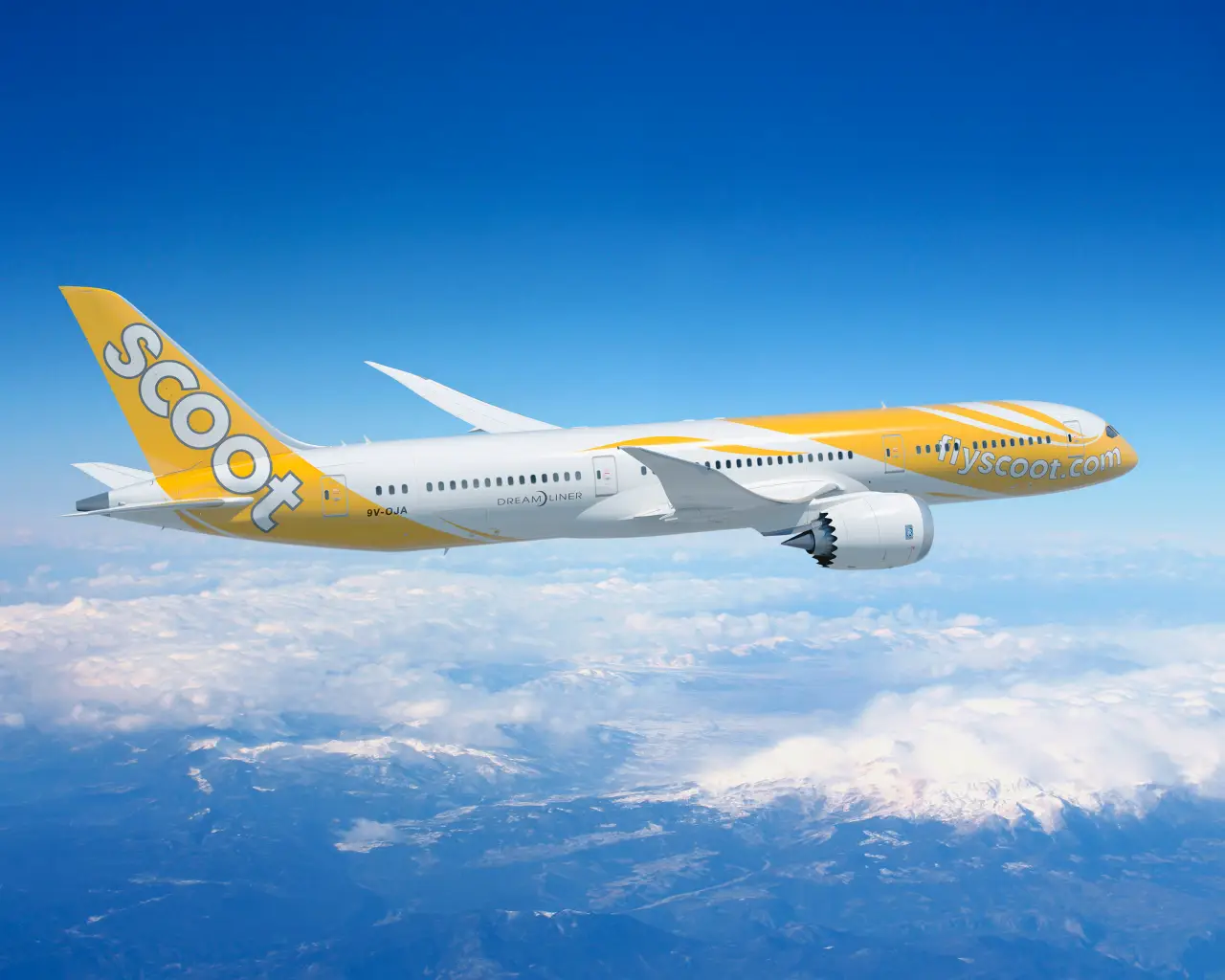
Scoot
Scoot is expecting to receive 14 to 16 new aircraft in 2025. The delivery will comprise four Embraer E190-E2 narrow-body jets, seven to nine narrow-body Airbus A320s, and three wide-body Boeing 787s.
Scoot has 12 Airbus A320s, six Airbus A321s, three Boeing 787s and four Embraer E190-E2s on order.
New routes
Scoot launched its Singapore-Vienna route on 3 June, operating three times a week using Boeing 787-8 aircraft with 329 seats across two cabin classes. Scoot is now the sole operator of nonstop flights between Singapore and Vienna. At the same time, it discontinued its service to Berlin.
In the summer 2025 season, Vienna and Athens will be Scoot’s only nonstop European routes. Meanwhile, Iloilo City will join Angeles/Mabalacat, Cebu, Davao, and Manila as the airline’s fifth destination in the Philippines.
It has also been announced that Scoot will take over the two routes vacated by JetStar which are to Labuan Bajo, the gateway to Komodo National Park, Indonesia and to Okinawa, Japan.

Cebu Pacific
Cebu Pacific continues to grow its footprint across Asia and the Middle East, while investing heavily in fleet expansion and route development.
In the past year, the airline opened two new hubs at Davao International Airport and Iloilo International Airport, bringing its total to five alongside Manila, Cebu, and Clark. With more than 120 routes now in operation, Cebu Pacific launched 15 new international services in 2024, including destinations in Taiwan, Thailand, Japan, and Palawan.
Cebu Pacific will also be operating 82 Philippine routes by summer 2025. The airline has demonstrated its commitment to expanding its network with 152 aircraft on order, marking the biggest deal in Philippine aviation history.