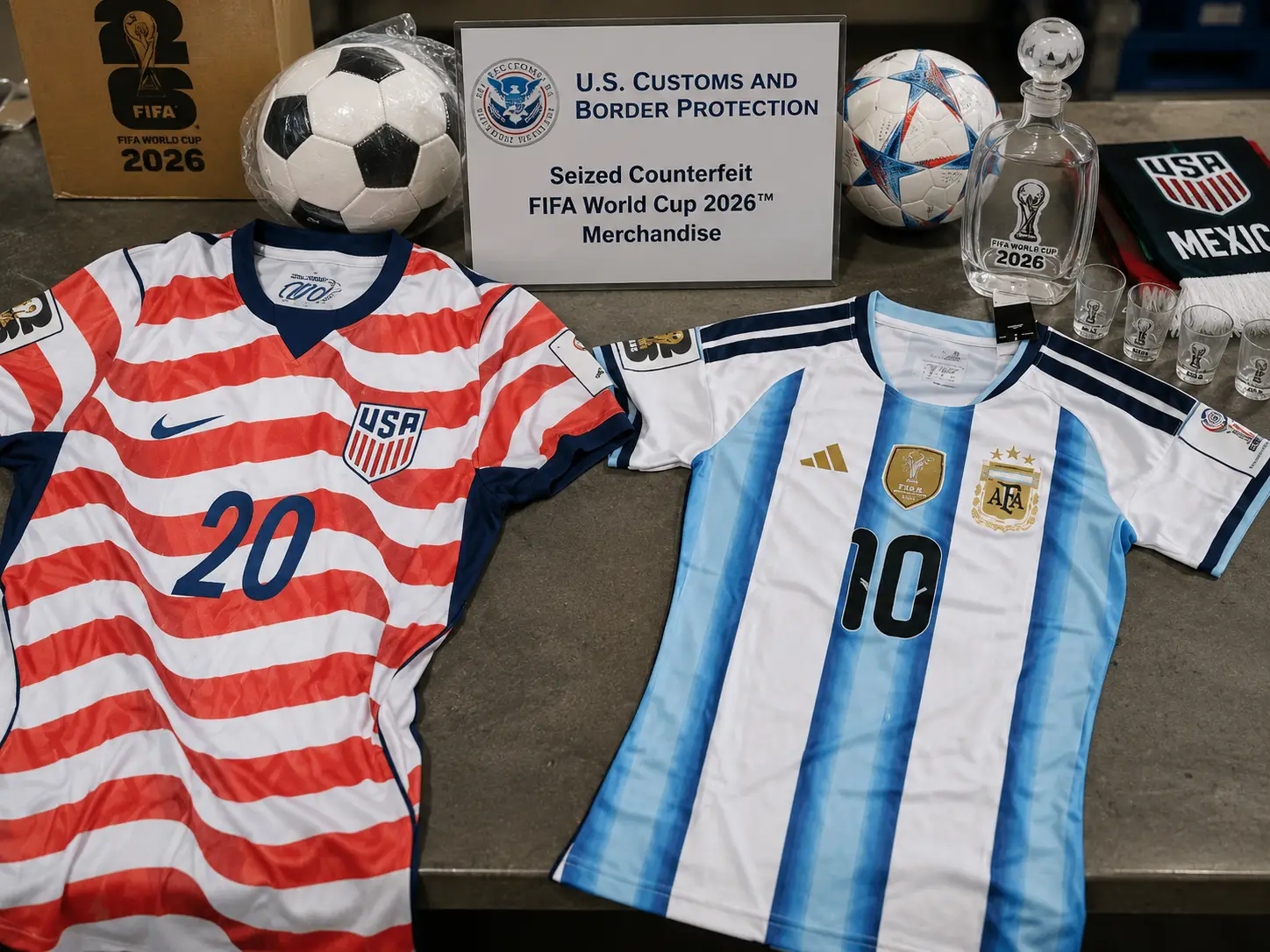
U.S. Customs and Border Protection (CBP) officers at George Bush Intercontinental Airport in Houston have seized nearly 20,000 counterfeit FIFA World Cup 2026 products with a combined manufacturer’s suggested retail price of almost $9 million. The operation targeted shipments containing merchandise that infringed intellectual property rights linked to the upcoming tournament.
The seized goods included fake football jerseys, shorts, soccer balls, shot glasses, hand fans, whiskey decanters and even jerseys for dogs. According to CBP, the counterfeit products featured trademarks owned by FIFA and represented several participating national teams, including the United States, Mexico, Portugal, France, Germany, Brazil, Spain, Argentina and Ecuador.
The enforcement action was carried out by the IAH Trade Enforcement Team as part of the agency’s ongoing efforts to combat intellectual property rights violations ahead of major sporting events. Officials said counterfeit goods not only deceive consumers but also support criminal organisations while harming legitimate businesses and brand owners.
Roderick Hudson, CBP Area Port Director, said protecting consumers remains a key priority as counterfeit products continue to enter the market through online shopping channels.
“CBP has a significant role in protecting American consumers from low quality and potentially dangerous counterfeit items,” said Roderick Hudson.
“Consumers should always be informed and know where they are buying their products. Too many global criminal networks are very deceptive in scamming sports fans and harming American consumers and businesses. CBP works tirelessly every day to protect the public, our local economy, and those who play by the rules.”
Investigators said most of the shipments originated in China and were destined for locations both inside and outside the United States. The operation focused on importers receiving goods that violated trademarks and copyrights associated with the FIFA World Cup 2026.
CBP said it routinely increases intelligence gathering and enforcement before, during and after major international sporting events such as the FIFA World Cup and the Super Bowl. Similar operations across the United States have resulted in thousands of counterfeit products being removed from circulation.
The agency warned that the rapid expansion of e-commerce has made it easier for counterfeit goods to reach consumers. More than 90% of counterfeit seizures occur in international mail and express courier environments, where low-value packages ordered online are shipped directly to customers.
Officials cautioned that counterfeit products often fail to meet quality or safety standards. Beyond fake sports merchandise, commonly seized goods include counterfeit medicines, perfumes, cosmetics, children’s toys, fashion items, jewellery, luxury products and electronic or automotive parts that may present health and safety risks.
With the FIFA World Cup 2026 approaching, demand for official merchandise is expected to increase significantly. The tournament will be hosted jointly by the United States, Canada and Mexico, creating a large global market for licensed jerseys, souvenirs and fan merchandise.
CBP encouraged consumers to buy products only from reputable retailers and authorised sellers to reduce the risk of purchasing counterfeit goods. Officials said verifying the legitimacy of online stores and avoiding offers that appear unusually cheap can help protect buyers from fraud while supporting legitimate manufacturers and trademark owners.
The seizure also highlights the broader role of customs authorities in protecting intellectual property rights. By intercepting counterfeit shipments before they reach the market, CBP aims to safeguard consumers, protect businesses from unfair competition and disrupt criminal networks that profit from counterfeit trade.