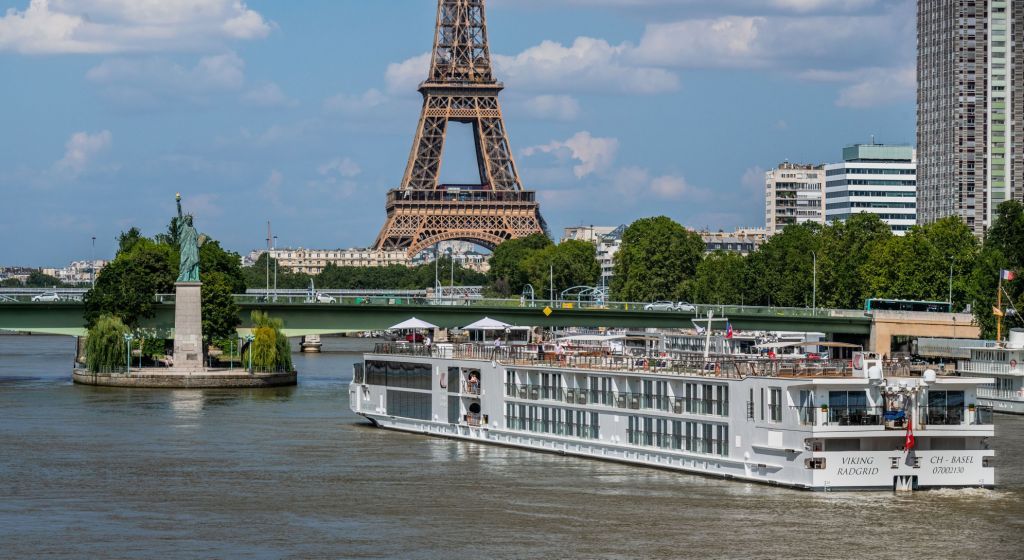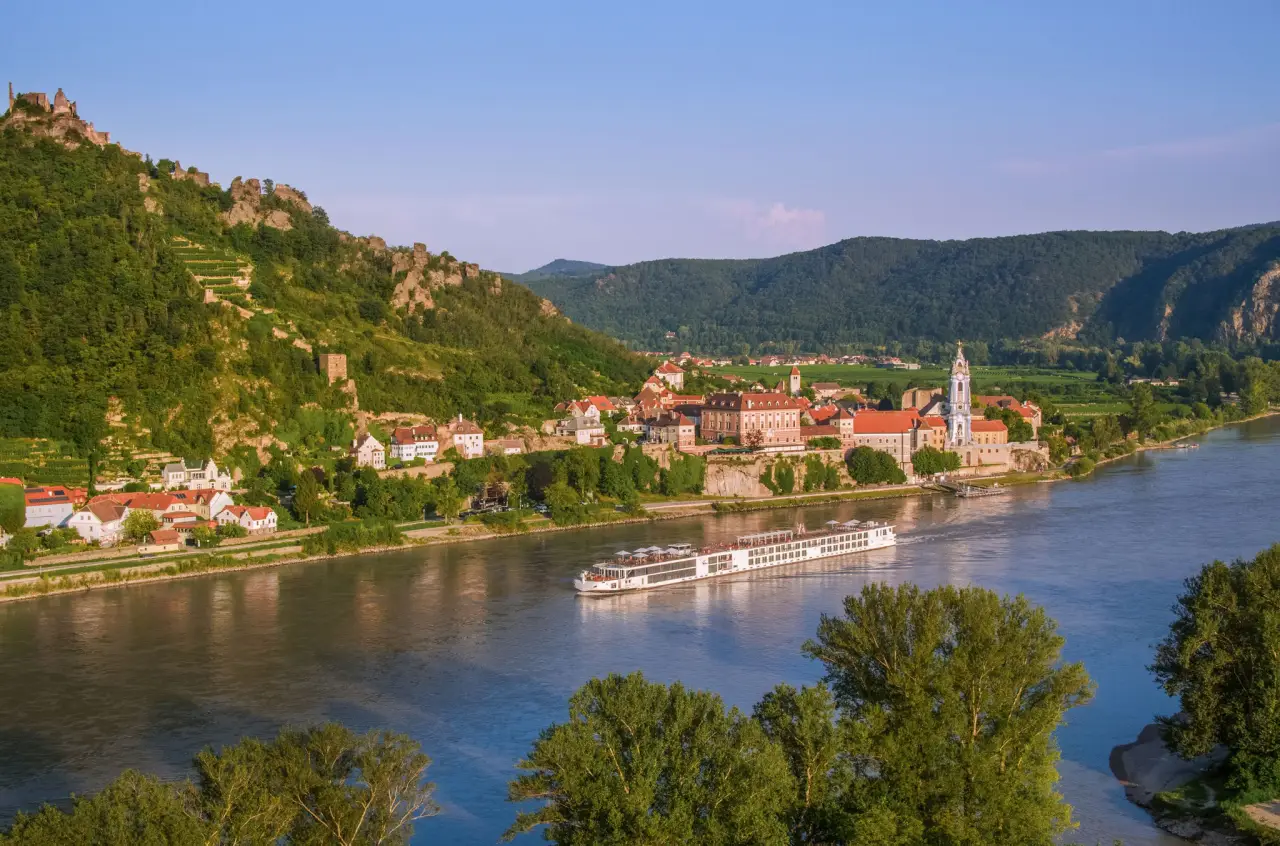
A drought has disrupted shipping on the Danube in Romania, leaving several cruise ships stranded because of low water levels and halting much of the river traffic in a key section near the border with Bulgaria.
Hydrologists say the river has fallen to one of its lowest levels in the past two decades. Trade and tourism have both been hit, while operators are now trying to move some passengers by bus as journeys cannot continue by water.
The problem is most severe around the port of Bechet, where freight vessels carrying grain cannot leave and the ferry service to Bulgaria has been suspended for days. Several cruise ships travelling from western Europe, including routes from Budapest towards the Danube Delta, are also stuck there.
“The ship traffic on the Danube has come to a standstill, and we do not know when it will resume”, said Constantin Ionele, operator of the pontoon at the port of Bechet, speaking to Euronews. “Every year, cruise ships come from the west. But this year they have major problems because they cannot reach their final destination.”
At least some tourists have already been rerouted. “Our passengers are travelling to Bucharest because the entire travel programme had to be changed because of the lack of water”, said Ayman Ismail, representative of one of the stranded cruise ships, to Euronews.
Low water is also affecting other parts of Europe, including Germany, where the Rhine, Elbe and Danube are all reporting very low levels. The Federal Association of German Inland Shipping says vessels can carry less cargo in shallow water, though transport continues where it remains safe.
“Barges can currently take on less cargo than at higher water levels”, said Fabian Spieß, deputy managing director of the Bundesverband der Deutschen Binnenschifffahrt, or BDB, in comments to dpa. He added that there are no official closures by the federal waterways authority, and that shipping continues “as long as it is safely possible”.
The disruption in Romania adds to wider concerns about the effects of drought on European river travel. Cruise operators on the Danube rely on stable water levels to keep schedules moving, and prolonged low water can force route changes, delays and costly alternative transport.
For local businesses along the river, the impact is immediate. Ports lose traffic, ferries stop running and freight deliveries slow down, while tourists who expected to travel by ship are left waiting for revised plans.
Authorities and operators are now watching water levels closely, but there is no clear timetable for a return to normal service. Until levels rise, the Danube is likely to remain difficult for both cargo and leisure traffic in affected areas.