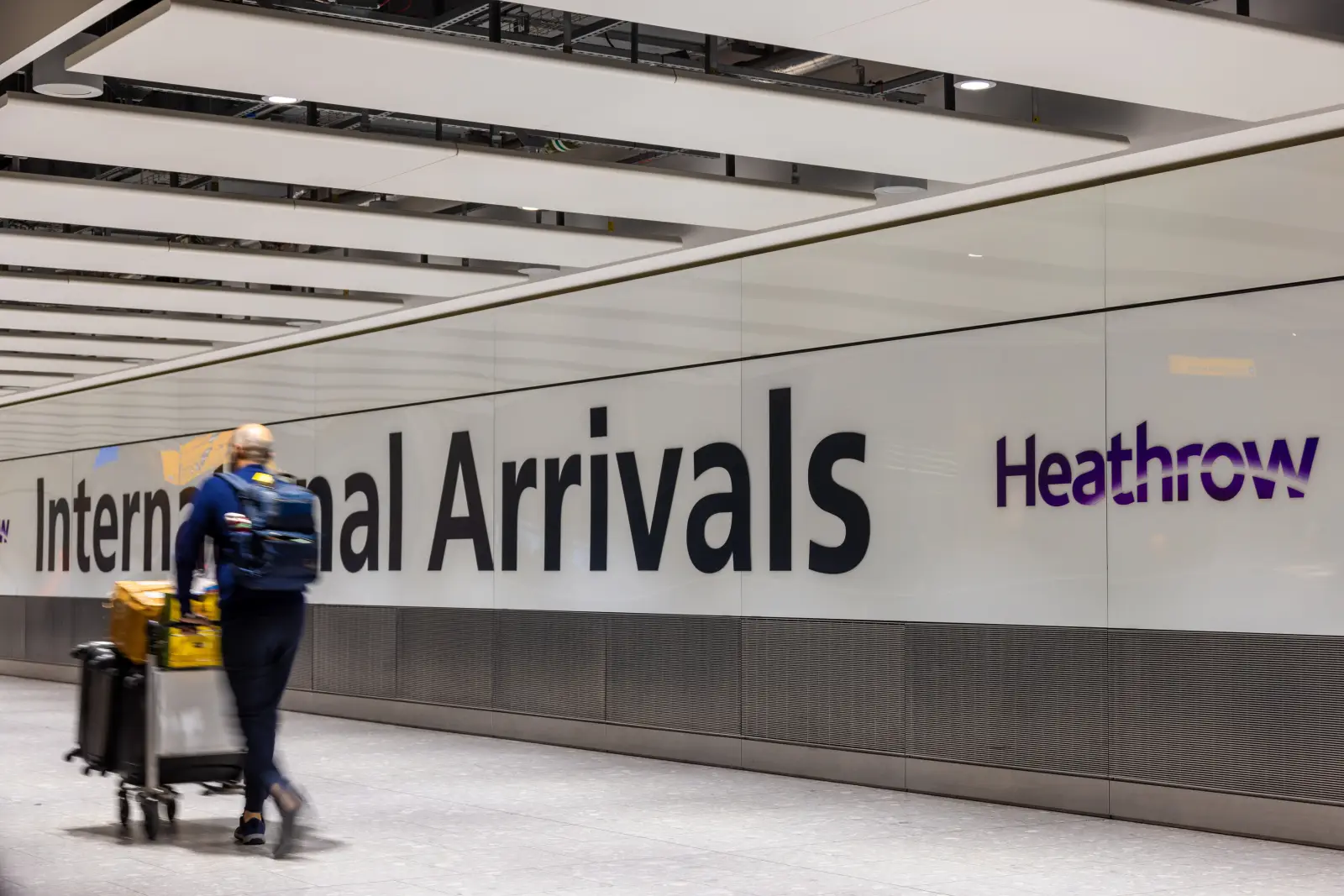
London Heathrow remained the busiest airport in Europe in 2025, handling 84.48 million passengers, according to data from Airports Council International World. It also ranked seventh globally for total traffic, underlining the scale of Europe’s main aviation hubs.
The figures count arriving and departing passengers, while transfer passengers are counted only once. Heathrow also kept its lead for international traffic, with nearly 79.9 million passengers, placing it second in the world behind Dubai.
Istanbul Airport came close behind Heathrow with 84.43 million passengers, while Paris Charles de Gaulle took third place with 72 million. Amsterdam Schiphol and Madrid-Barajas completed the European top five, as the continent’s largest airports continued to recover and expand after the pandemic slump.
Heathrow’s total passenger numbers rose 0.7% compared with 2024 and 4.4% compared with 2019. The London airport’s international traffic remained especially strong, reflecting its role as a major hub for long-haul flights and connections between Europe, North America and Asia.
Istanbul airport’s rise was one of the most striking in the rankings. It moved up from 28th place in 2019 to eighth globally in 2025, showing how quickly the Turkish hub has expanded as airlines have added routes and passengers have returned in greater numbers.
Paris Charles de Gaulle recorded 72 million passengers, up 2.5% from 2024, but still 5.4% below 2019 levels. Even so, it remained one of the most important airports in Europe and ranked 14th worldwide, helped by its role as the main international gateway for France.
Amsterdam Schiphol handled 68.77 million passengers, placing it fourth in Europe and 17th in the world. It was also the second-busiest European airport for international traffic, with 68.77 million passengers on overseas routes, as it continued to serve as a key transfer point for global travel.
Madrid-Barajas rounded out the top five with 68.11 million passengers. It grew 3% year on year and 10.4% compared with 2019, making it one of the strongest performers among Europe’s biggest airports.
The international rankings also highlighted the continued influence of other major European hubs. Frankfurt, Rome Fiumicino, Barcelona, London Gatwick and Munich all appeared in the global top 10 for international passengers, confirming Europe’s central place in long-haul air travel.
ACI World said many of these airports are now operating close to their capacity limits, even as demand continues to rise. That pressure reflects both the recovery in global aviation and the growing appetite for international travel across Europe and beyond.
For travellers, the data suggests that Europe’s largest airports remain as important as ever, not just for their size but for the routes they offer. Heathrow’s narrow lead over Istanbul also shows how competitive the race among the continent’s biggest aviation centres has become.
Photo Credit: Darren Baker / Shutterstock.com