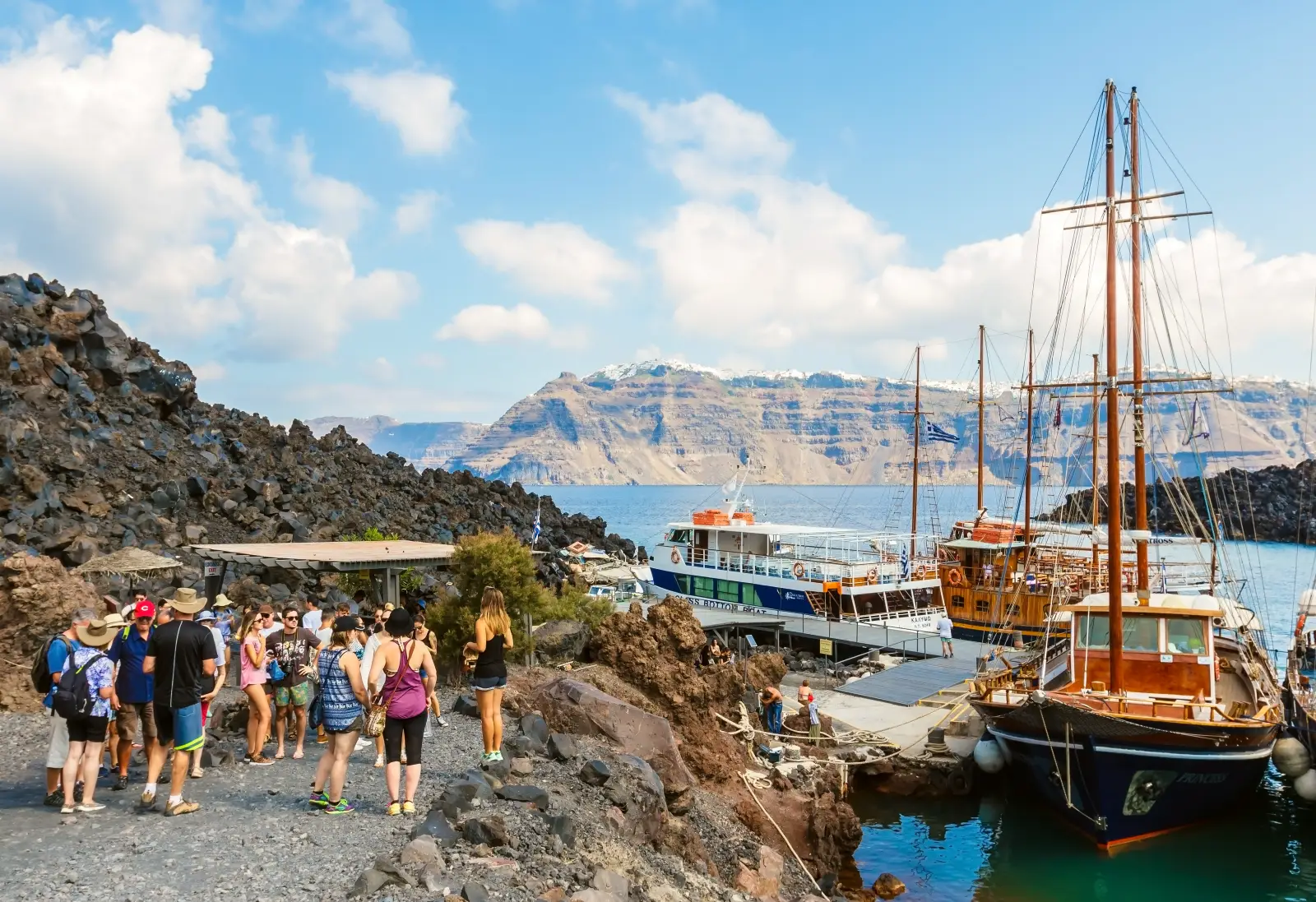
A bus strike on Santorini disrupted tourists and forced several cruise ships to cancel or postpone their calls to one of Greece’s busiest holiday islands. The industrial action took place on Monday, June 22, 2026, and brought cruise passenger transport on the island to a standstill.
The strike was launched by the Santorini Tourist Offices and Bus Operators Association in protest over a new passenger distribution system introduced by the Municipal Port Fund of Thira, which took effect on June 15, 2026. MSC Sinfonia and Norwegian Pearl cancelled their calls entirely, while Celebrity Ascent delayed its arrival by 24 hours to Tuesday, June 23.
The disruption affected around 8,500 cruise passengers across the three vessels. Norwegian Pearl carries 2,344 passengers, MSC Sinfonia carries nearly 2,000 guests, and Celebrity Ascent can carry up to 3,260 passengers. Celebrity Ascent had been scheduled to spend 15 hours in port as part of an 11-night Greece, Turkey and Italy voyage sailing from Civitavecchia.
Santorini welcomes about 3.4 million tourists a year but has a permanent population of only around 15,500. Local bus operators said they are being asked to manage thousands of daily visitors without the infrastructure needed to support them.
At the centre of the dispute is the so-called “70-30 rule”, which requires 70% of cruise passengers to disembark at the Old Port of Fira, also known as Ormos Fira, with the remaining 30% using Athinios Port. Passengers arriving at the Old Port must climb 588 steps, ride a donkey or use the island’s cable car to reach Fira.
The cable car can move about 1,200 passengers an hour, a capacity bus operators say is insufficient when multiple ships arrive at once. The association also cited a lack of suitable parking for tourist buses, no organised meeting points and weak traffic planning, which it said create congestion in Fira and damage the island’s reputation.
The Municipality of Thira called the strike “incomprehensible” and said it had been launched before all options for dialogue were exhausted. The municipality said it had already provided parking spaces in Oia and Fira at an annual cost of 72,000 euros, and that further talks on the remaining issues had been planned.
The Santorini Merchants and Professionals Association also criticised the action, calling it “unacceptable and damaging” to the local economy. The group said cruise tourism supports retail businesses, restaurants, tourist offices and the cable car service, and that the cancellations had already cost the island thousands of visitors. Business groups estimated the single day’s disruption cost Santorini approximately 425,000 euros in lost revenue.
The Bus Operators Association rejected the criticism, denying it had accepted the 70-30 system and saying it had submitted specific proposals to resolve the dispute. It described the strike as a “last effort” to highlight problems it said have remained unresolved for years.
Santorini has introduced several measures this year to manage visitor numbers. On June 1, Greece applied a 20 euro levy on every cruise passenger arriving on the island, regardless of whether they book a shore excursion. Authorities have also capped daily cruise arrivals at 8,000 passengers.
Even with those measures, the island continues to face overcrowding, water shortages during peak months and high volumes of waste. The latest strike has renewed concern over whether Santorini’s infrastructure can keep pace with demand, as cruise tourism remains a central pillar of the local economy.
Photo Credit: Littleaom / Shutterstock.com