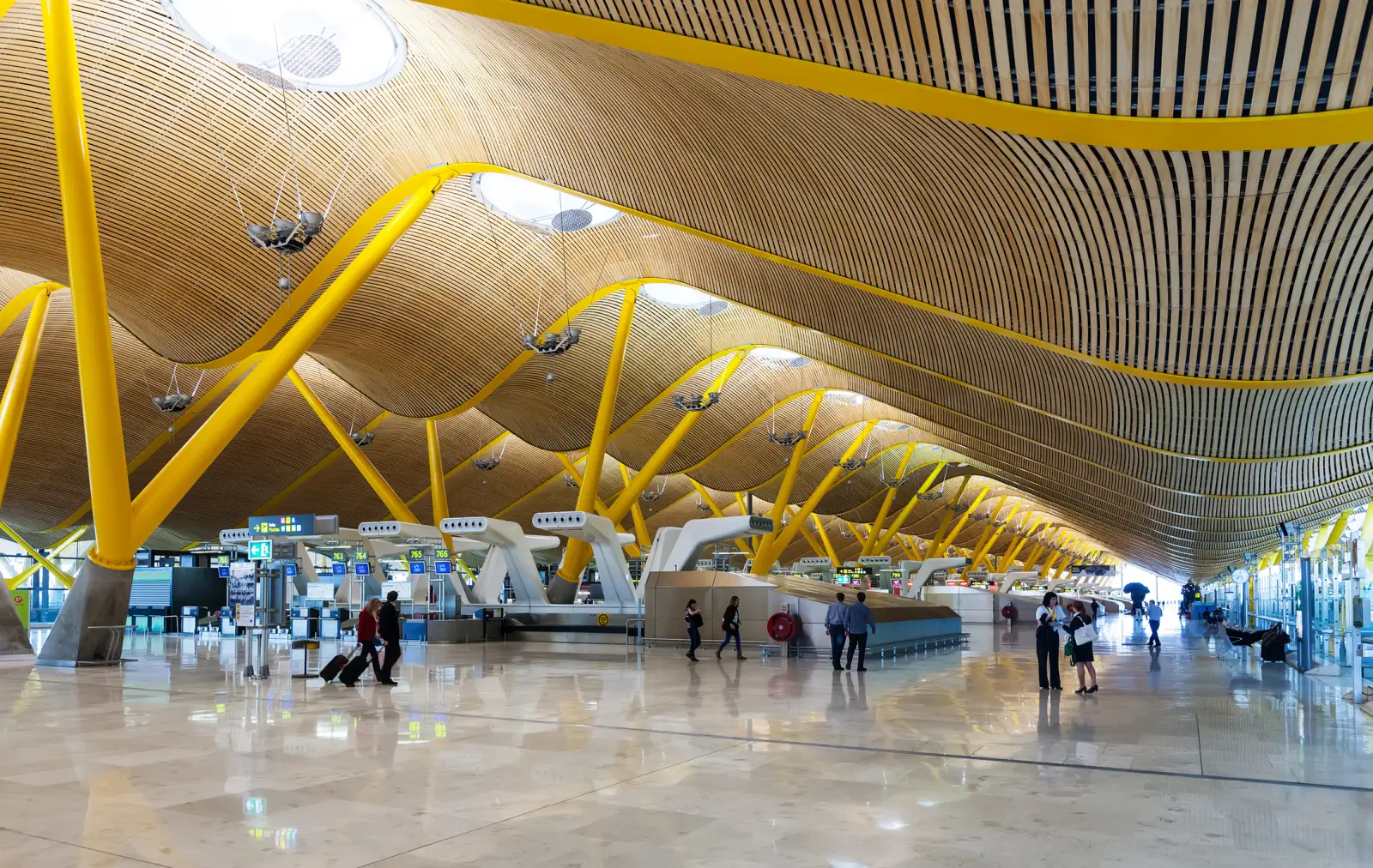
Spain’s airport operator will introduce terminal specific passenger limits at Madrid and Barcelona airports from the summer of 2027, as part of a broader effort to manage capacity ahead of major renovation works at the country’s two busiest hubs.
Aena said the new system will apply mainly to arrivals terminals during the summer season, allowing passenger flows to be better distributed at peak hours. The change marks the first time the operator has imposed any form of passenger growth cap across its network, aside from a one off measure previously applied to British passengers at Alicante-Elche.
The move comes as Madrid-Barajas and Barcelona-El Prat approach the limits of their existing infrastructure. Madrid-Barajas handled 68.18 million passengers in 2025, close to its capacity of 70 million. Barcelona-El Prat exceeded its own limit of 55 million, serving 57.5 million passengers over the same period.
Across its full network, Aena recorded 321.6 million passengers in 2025, up from 275 million in 2019. In the first five months of 2026, the operator’s airports handled 124.6 million passengers, an increase of 3.7 percent compared with the same period last year. Madrid alone handled 6 million passengers in May, up 4.8 percent year on year, while Barcelona welcomed 5.5 million passengers, a rise of 6.4 percent.
Until now, capacity at Spain’s largest airports has been measured primarily at runway level. Under the new approach, Aena will also publish and manage capacity by terminal and traffic type, reflecting congestion constraints during peak hours. The operator said the quality of the service to passengers is not affected and there is no need to reduce the current capacity of the terminals, but rather to make the most of it throughout the day.
Existing slot rights will remain unchanged under the new system, and the change is expected to primarily affect airlines seeking to add or shift operations during peak periods. Aena has already briefed carriers through coordination meetings organised via the Spanish slot allocation framework, known as AECFA.
The terminal capacity measure is designed to bridge the gap until infrastructure upgrades planned under the 2027 to 2031 Airport Regulation Document, referred to as DORA 3, come into service. The investment cycle includes almost 10 billion euros in regulated spending across the Spanish airport network.
Both airports are awaiting approval from Spain’s Council of Ministers in September before major construction can begin. At Madrid-Barajas, works worth 2.4 billion euros are planned, including the integration of Terminals 1, 2 and 3, the expansion of Terminal 4 and its satellite building, and runway works. The project aims to raise capacity from 70 million to 90 million passengers, and increase hourly operations from 100 to 120.
In Barcelona, expansion works budgeted at 3.2 billion euros will include a new satellite terminal to relieve congestion at Terminal 1. The project would raise passenger capacity from 55 million to 80 million, and increase hourly operations from 78 to 90.
The wider national investment package, worth close to 13 billion euros for the 2027 to 2031 period, was first unveiled by Spanish Prime Minister Pedro Sanchez during a visit to Alicante Airport in September 2025.