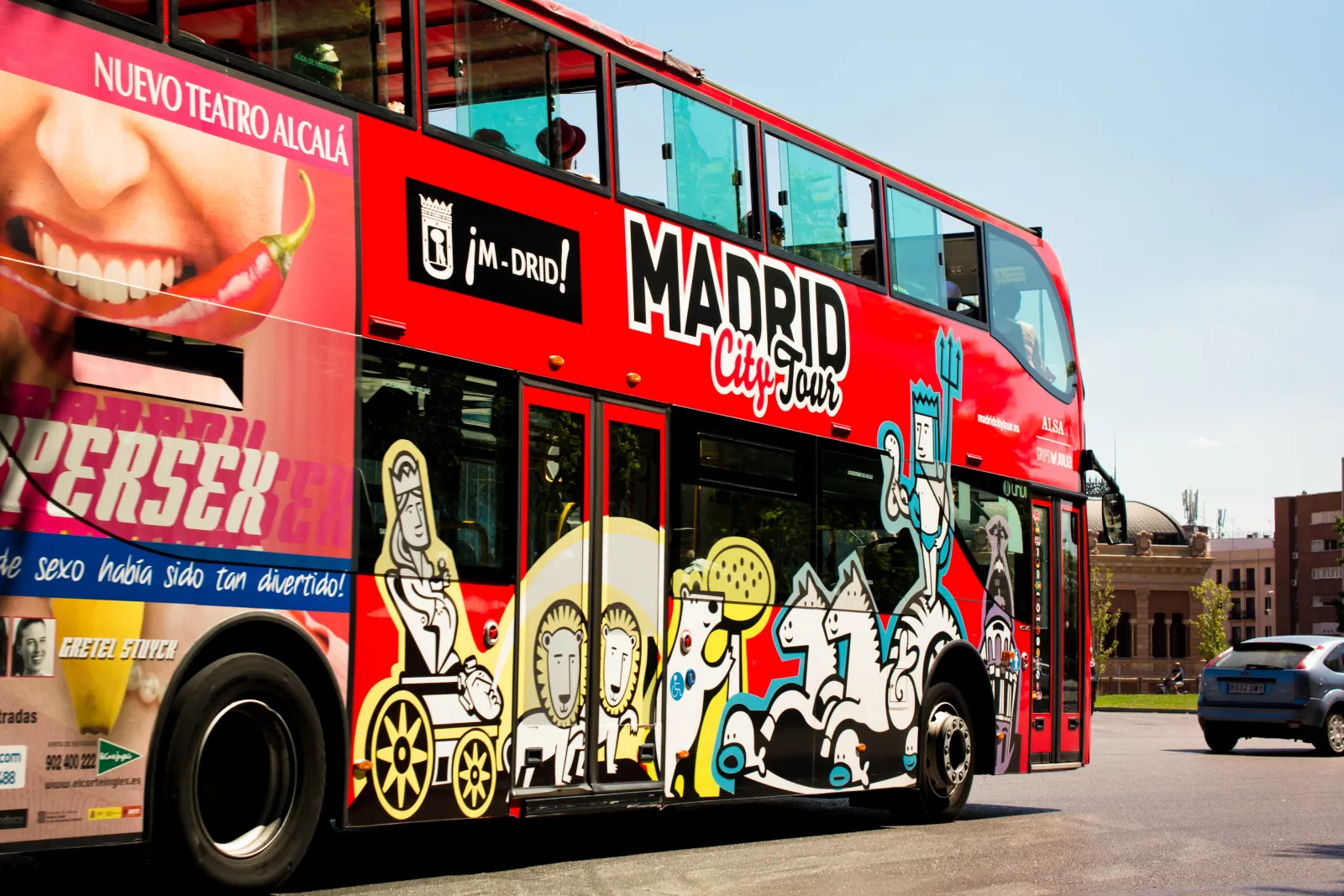
New Madrid tourist bus routes revealed in a city-wide initiative seek to transform the way visitors experience Spain’s vibrant capital while tackling traffic congestion. The Madrid City Council has introduced a sweeping overhaul of sightseeing bus services, marking a new era of urban tourism that prioritizes both visitor satisfaction and local mobility.
Following extensive studies that highlighted the disruption caused by double-decker tourist buses in high-traffic corridors, the city has restructured routes and licensing. This approach aims to deliver a quality service to tourists while ensuring Madrid’s public transportation system runs smoothly for its residents.
Revamping Madrid’s Sightseeing Bus System
For years, Madrid’s famous double-decker tourist buses have offered sweeping views of Gran Vía, the Paseo del Prado, and other landmarks. However, the city’s transport study showed these buses were running every ten minutes on already congested roads such as Gran Vía, Paseo de Recoletos, and Atocha. The frequent stops and overlapping routes caused a direct impact on the municipal bus lanes (EMT), leading to delays and incorrect stops for more than 10% of EMT buses because their bays were blocked by sightseeing buses.
To address this, the City Council has redesigned the entire licensing system for tour operators, requiring new routes and operating conditions. These new routes are designed to distribute traffic more evenly and reduce interference with public transport while preserving the appeal of Madrid’s most iconic sights.
The new authorizations will last for four years and demand that operators “compatibilize the use of public space by residents with the advantages that collective urban tourist transport offers for the city’s economy and mobility.” This policy shift reflects Madrid’s strategy of maintaining its tourism draw while prioritizing sustainable urban living.
Three Main Tourist Routes and a Festive Special
The city has introduced three main sightseeing bus routes, plus a special seasonal itinerary for Christmas lights. Each route has been carefully designed to highlight different aspects of Madrid while preventing overcrowding in sensitive areas.
Madrid Histórico Route: This route offers an 85-minute journey through the city’s grand historic quarter. Starting at Neptuno, it traverses the Paseo del Prado, Alcalá, Gran Vía, and a host of landmarks from Plaza de España to the Royal Palace and Plaza Mayor. In total, there are 14 key stops, including Cibeles, Moncloa, Teleférico, Templo de Debod, Barrio de las Letras, and the Paseo del Prado.
Madrid Moderno Route: Focusing on the city’s elegant, modern side, this 70-minute itinerary departs from Neptuno and passes through the Paseo del Prado, Plaza del Emperador Carlos V, Avenida Ciudad de Barcelona, and up the grand Paseo de la Castellana. Key stops include Cibeles, Colón, Museo Ciencias Naturales, Santiago Bernabéu, Nuevos Ministerios, Museo Sorolla, and Serrano. This route showcases Madrid’s commercial hubs and stylish boulevards.
Madrid Actual Route: Designed to reflect contemporary Madrid life, this 75-minute route also begins at Neptuno. It travels along Felipe IV, Alfonso XII, Alcalá, Roberto Domingo, Avenida de los Toreros, Goya, Colón, Bilbao, Malasaña, Callao, and Gran Vía. Stops include cultural and shopping districts such as Casa Árabe, Plaza de Toros, and the hip Malasaña neighborhood, giving tourists a window into Madrid’s vibrant present-day energy.
Christmas Lights Route: From late November to early January, tourists can enjoy a special 60-minute route without intermediate stops. Operating from 18:00 to 22:15, it departs from Alfonso XII and follows a route optimized to see Madrid’s dazzling festive illuminations, covering Avenida Ciudad de Barcelona, Plaza del Emperador Carlos V, Paseo del Prado, Gran Vía, Cibeles, Velázquez, Goya, Paseo de la Castellana, José Ortega y Gasset, and Serrano. This seasonal feature highlights Madrid’s reputation for magical Christmas decor while reducing pedestrian congestion in the most popular areas.
Key Features of the New Bus Service
The City Council’s new regulations do more than just reroute traffic—they impose clear, sustainable standards on all tourist bus operators. Each company winning one of the three service licenses must meet environmental and accessibility targets:
- All buses must have a CERO Emisiones or ECO classification.
- At least 25% of the fleet must be fully electric.
- Double-decker design with an open-top upper level and retractable cover for rainy conditions.
- Full accessibility for people with reduced mobility, including ramp systems.
- Audio guides in 10 languages: Spanish, English, French, German, Italian, Portuguese, Mandarin Chinese, Japanese, Korean, and Arabic.
This combination of technological requirements and service quality aims to align Madrid’s tourism offerings with environmental goals and global accessibility standards. Tourists can expect a quieter, cleaner ride through Madrid’s streets, while residents benefit from a better-managed public space.
Operational Improvements to Reduce Traffic
To further avoid traffic bottlenecks and ensure smoother flow for EMT buses, the city has implemented new operational rules. Each route will operate between 10:00 and 18:00 as a minimum, with optional extensions from 9:30 to 20:30 depending on demand. Frequency requirements are set to maintain order and prevent overcrowding:
| Requirement | Details |
|---|---|
| Minimum Frequency | One bus per route every 60 minutes |
| Maximum Frequency | One bus every 15 minutes |
| Staggered Departures | Operators must avoid starting or overlapping route segments simultaneously |
This carefully designed schedule reduces the risk of tourist buses piling up at popular stops or slowing traffic in busy lanes. It also allows tourists more flexibility in planning their day while ensuring EMT buses can serve local passengers without interruption.
Applying for the New Licenses
The city has opened a competitive bidding process for companies interested in running these new routes. The call for proposals began on a Monday and will remain open for 30 calendar days. Operators will be selected based on a scoring system that prioritizes service quality, environmental commitments, and operational plans.
Ultimately, only the top three scoring companies will receive the four-year licenses to run Madrid’s sightseeing bus network. This competitive approach is intended to raise standards across the sector, promote sustainable transport, and safeguard the city’s mobility goals. For tourists, it means a better, more reliable experience tailored to the modern traveler’s expectations.
Madrid’s new tourist bus routes represent a model of how cities can adapt to tourism pressure without sacrificing quality of life for residents. By combining technological innovation, careful planning, and a commitment to sustainability, the city aims to offer visitors a rich and varied exploration of Madrid—while keeping its streets flowing for everyone.
Photo Credit: dmitro2009 / Shutterstock.com