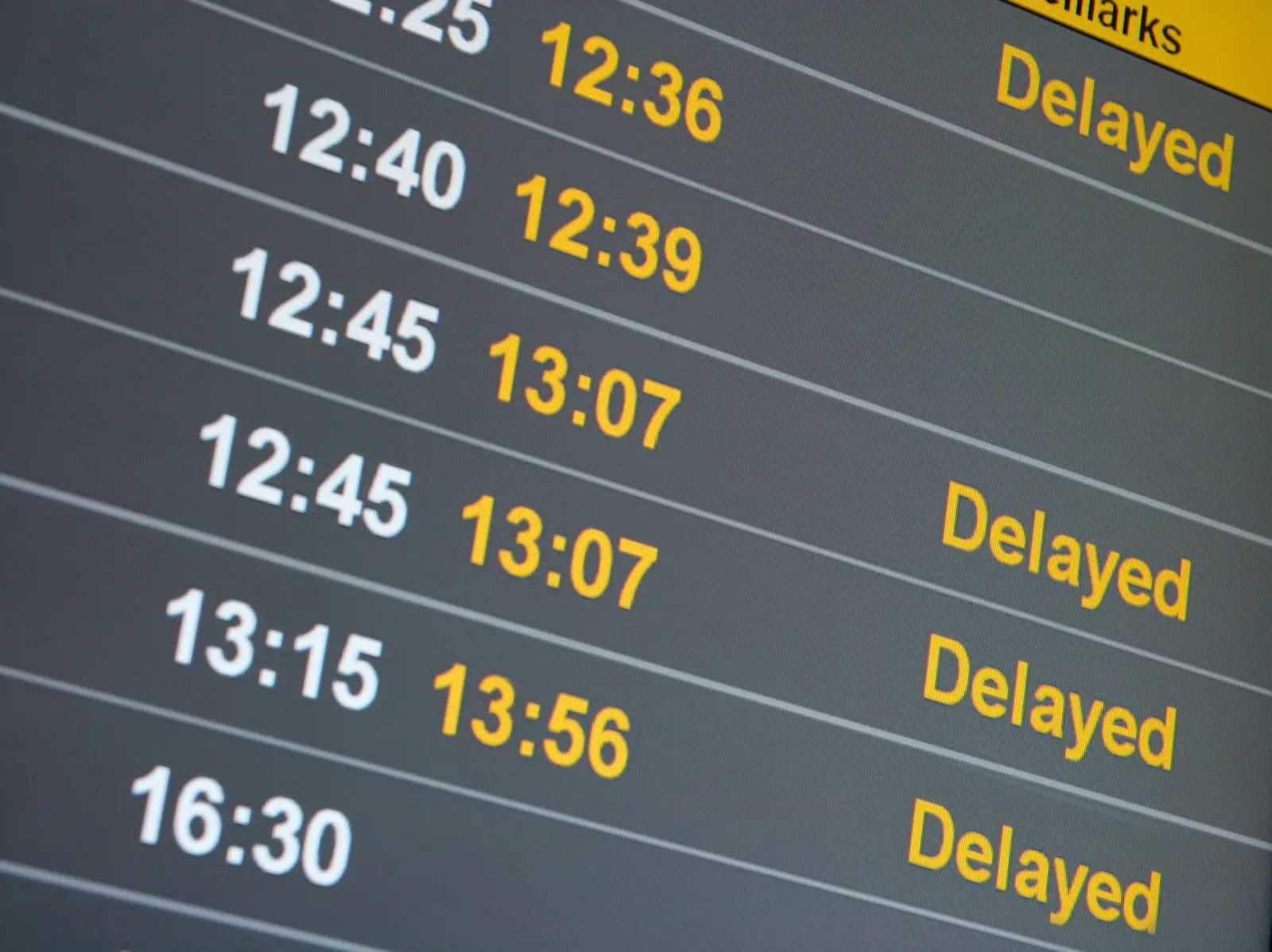
A routine travel day across Spain turns into widespread disruption on Monday, January 5, as hundreds of flights are delayed or cancelled at the country’s busiest airports.
By mid-day, 541 flights are delayed and 27 are cancelled nationwide, affecting major hubs including Madrid–Barajas, Barcelona–El Prat and, unexpectedly, Alicante–Elche Miguel Hernández Airport.
The disruption leaves thousands of passengers stranded in terminals, facing long waits and uncertain departure times as airlines struggle to recover schedules. Alicante, typically seen as a secondary hub, records 99 delayed flights and five cancellations, placing it among the most affected airports relative to its size.
Alicante emerges as an unexpected pressure point
While Madrid and Barcelona are no strangers to operational strain, Alicante’s position at the centre of Monday’s disruption catches many travellers off guard. Despite handling fewer flights overall, the airport experiences significant delays, with knock-on effects spreading quickly across European leisure routes.
Madrid–Barajas Airport records 207 delays and 12 cancellations, disrupting both domestic and international services. Barcelona–El Prat follows closely with 235 delayed flights and 10 cancellations, creating congestion throughout the terminal and affecting mainly short-haul European departures.
Alicante’s difficulties stem in part from its role as a major leisure gateway linking Spain with the UK and northern Europe. The airport relies heavily on tightly scheduled low-cost services, leaving little room to absorb disruption once delays begin to stack up.
As aircraft rotations fall behind schedule and crews are left out of position, recovery proves slow. Missed connections and last-minute gate changes add to the strain, while packed departure halls and long queues at airline desks test passenger patience.
Airlines under strain as delays ripple across Spain
Several major carriers bear the brunt of the disruption as operational pressure builds across European airspace. Vueling Airlines records the highest number of delayed flights, with 122 delays and seven cancellations, particularly affecting services in Barcelona and Alicante.
Dutch carrier KLM reports the most cancellations overall, grounding 13 flights and delaying six more, disrupting international connections in and out of Spain. Iberia, Spain’s national airline, faces five cancellations and 37 delays, largely centred on Madrid–Barajas.
Low-cost airlines are also heavily impacted. Ryanair logs 85 delayed flights, easyJet reports 31, and British Airways records 21 delays. Wizz Air sees a combined total of 31 delayed flights across Spanish airports, underlining how widespread the disruption has become.
Although no single official cause is confirmed, aviation sources point to operational congestion and knock-on delays across Europe as contributing factors. Once delays spread through interconnected routes, airlines struggle to reposition aircraft and crews quickly enough to stabilise schedules.
Airlines advise passengers not to travel to the airport without checking their flight status, as conditions continue to change throughout the day. Travellers are urged to allow extra time, keep booking information accessible and follow airline guidance rather than relying solely on departure boards.
At Alicante in particular, delays on European leisure routes are expected to continue into the evening. As airlines work to clear backlogs and restore normal operations, for many passengers the priority is no longer a smooth journey, but simply getting home.