Egypt’s Ministry of Tourism and Antiquities confirmed that a precious ancient bracelet has disappeared from the restoration laboratory of the Egyptian Museum in Cairo.
The gold bracelet, decorated with lapis lazuli beads, dates to the reign of Pharaoh Amenemope of the 21st Dynasty (1070–945 BC). An investigation has been launched and alerts have been issued to border points across the country.
The disappearance was discovered several days earlier during an internal inventory of objects held in the laboratory, according to local media reports. Authorities delayed making the incident public to ensure what they described as a “favorable climate” for the investigation. The ministry announced on September 16 that a full inventory of the museum’s collections is underway.
Investigation and security response
The ministry stated that an internal inquiry has been opened to determine how the bracelet went missing. A security alert has been circulated to archaeological units stationed at airports, seaports, and land border crossings to prevent the artifact from being smuggled out of the country. Officials have not yet provided further details about potential suspects or the progress of the inquiry.
The bracelet, described in the ministry’s statement as “a gold bracelet adorned with spherical lapis lazuli beads,” is considered an important piece from the reign of Amenemope, a little-known pharaoh of Egypt’s Third Intermediate Period. The piece’s disappearance raises renewed concerns about security in one of the world’s most important archaeological collections.
Significance of the Egyptian Museum
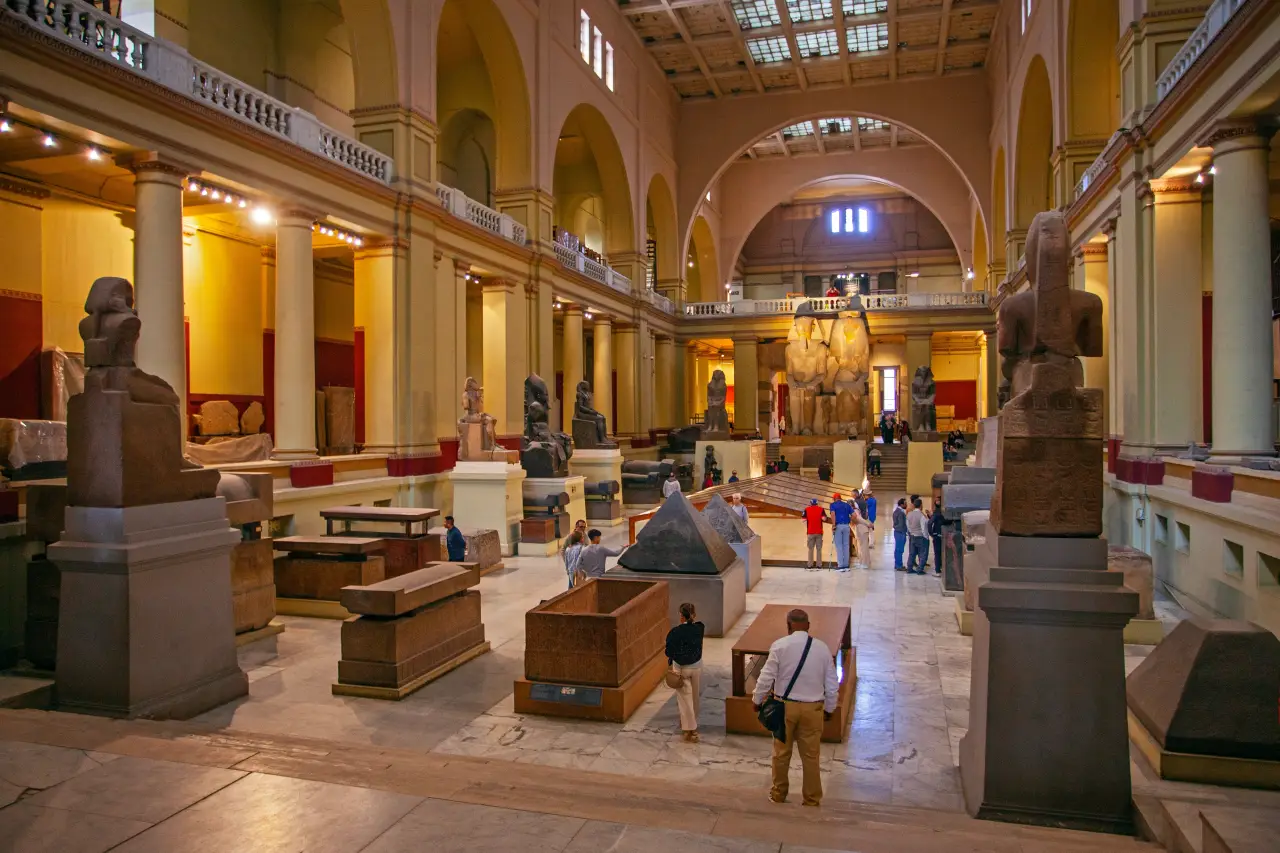
The Egyptian Museum, located on Tahrir Square in central Cairo, opened in the early 20th century and houses approximately 170,000 artifacts. Among its most famous holdings are treasures from the tomb of Tutankhamun and the funerary mask of Amenemope. Some of these collections are currently being transferred to the new Grand Egyptian Museum (GEM), which is scheduled to open officially on November 1.
The museum has been a cornerstone of Egypt’s cultural heritage presentation for over a century. However, the loss highlights challenges in safeguarding objects during restoration and transfer processes. The ministry’s decision to carry out a comprehensive inventory reflects an attempt to reassure both domestic and international observers of its commitment to preserving Egypt’s antiquities.
Recent museum activity
This latest development follows high-profile events in Egypt’s museum sector. In 2021, 22 royal mummies, including those of Ramses II and Queen Hatshepsut, were transferred in a widely broadcast procession from the Egyptian Museum to the National Museum of Egyptian Civilization (NMEC) in Fustat, Old Cairo. The transfer was part of Egypt’s long-term strategy to redistribute collections and modernize the display of its archaeological heritage.
The Egyptian Museum’s laboratory plays a key role in conserving fragile items before they are placed on public display or relocated to other institutions. According to officials, the bracelet was stored there as part of routine restoration and preservation procedures. The discovery of its disappearance during an inventory highlights the importance of internal audits in monitoring the integrity of the museum’s holdings.
The missing bracelet has drawn public attention not only because of its monetary and historical value but also because it reflects broader concerns about the protection of cultural heritage. Egypt has repeatedly stressed its determination to safeguard its antiquities, and officials emphasize that the investigation will be pursued until the artifact is located.
For now, the Egyptian Museum remains open to visitors, continuing to display its extensive collections despite the ongoing inquiry. The ministry underscored that the search for the bracelet is part of a broader effort to secure Egypt’s archaeological treasures for future generations, even as the country continues major projects such as the launch of the Grand Egyptian Museum and the expansion of cultural tourism.
Photo Credit: Alexandra Lande / Shutterstock.com