The ongoing conflict in the Middle East is starting to cause major disruptions to global energy markets, affecting many countries and businesses around the world. Over the past few days, several countries have enforced austerity measures and brought back work-from-home mandates, urging employees to work remotely to save fuel.
Vietnam
Vietnam’s Ministry of Industry and Trade has encouraged businesses to adopt remote working arrangements to conserve fuel. Citizens and businesses are advised to use fuel efficiently. The public is also urged to limit the use of private vehicles, prioritise carpooling or use public transport.
Domestic petroleum consumption in 2025 is estimated at about 28.6 million cubic meters. Although Vietnam operates two oil refineries, the country still depends heavily on imported fuel to meet demand.
The ministry acknowledged the country as one of the hardest hit by fuel supply disruptions following the U.S.-Israeli attack on Iran. According to state-owned Petrolimex, gasoline prices have surged 32%, diesel 56%, and kerosene 80% since airstrikes on Iran began on 28 Feb.
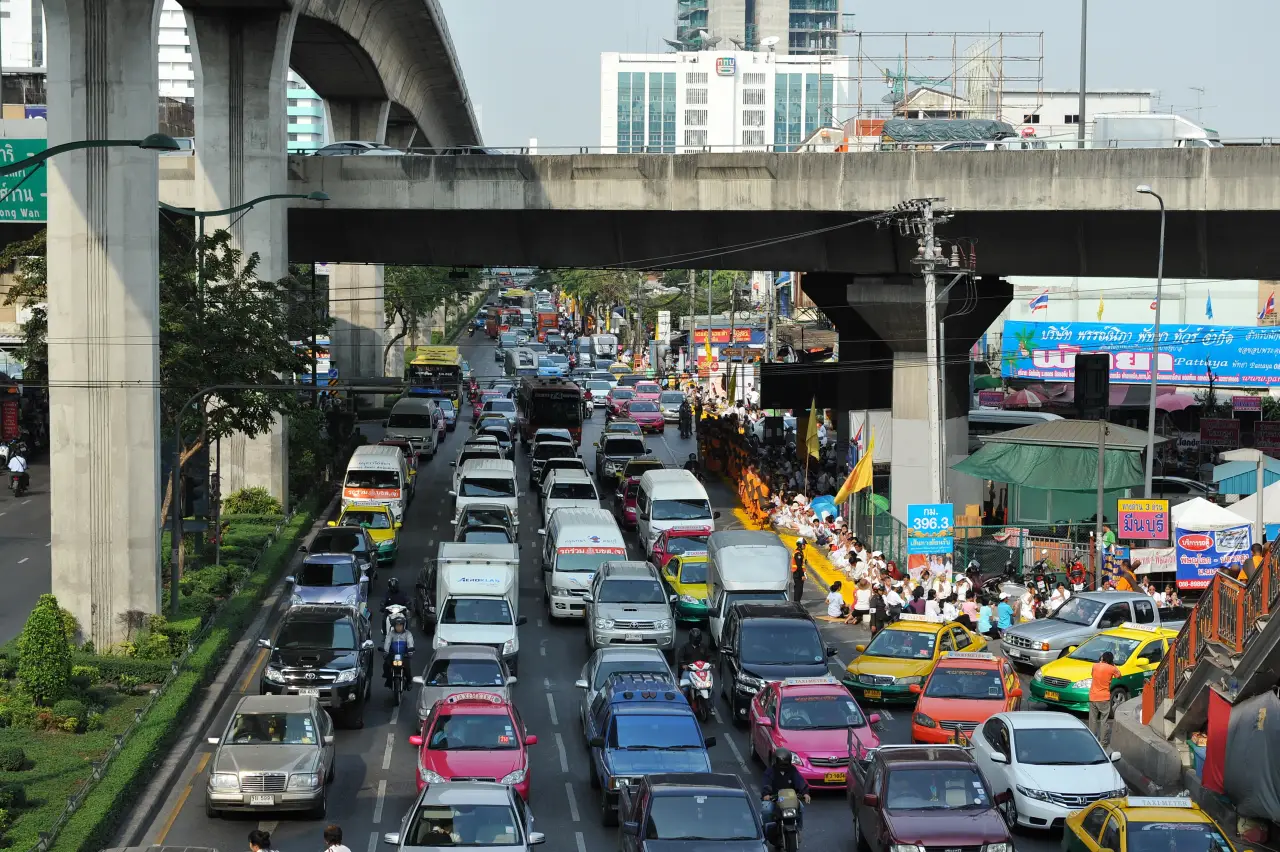
Long lines of vehicles and motorcycles formed at gas stations in Hanoi and other major cities seeking fuel, while dozens of small gas stations temporarily closed or reduced hours due to supply shortages.
Thailand
Caretaker Prime Minister Anutin Charnvirakul has ordered officials at government organisations and state enterprises to work from home and suspend overseas trips, as part of measures to cope with the Mideast war’s impact.
Civil servants are urged to conserve energy by using stairs instead of elevators, a government spokesperson said, adding that exceptions would be made for officials who must serve the public. Air conditioning in government buildings is also restricted to 26 degrees Celsius.
Authorities are considering mandatory measures including turning off signage lights after 10 p.m. and limiting gas station operating hours if supply disruptions worsen.
The Philippines
Since last week, all government agencies except essential personnel such as police and firefighters have adopted a four-day workweek, with mandatory 10-20% reductions in fuel and electricity consumption. In-person meetings that can be held online have been completely banned.
Pakistan
Pakistan has ordered sweeping austerity measures to curb travel including closing schools for two weeks and enforcing a four—day work week and work-from-home mandates for half of the public sector workforce government with the private sector, except the banking sector, urged to do the same.
As part of the fuel-saving measures, all schools and universities have been closed for at least two weeks, and educational institutions have been directed to shift to online classes while people have also been asked to restrict social gatherings.
Bangladesh
Bangladesh brought forward the Eid-al-fitr holiday, allowing all universities to close early, a move that officials said will not only reduce electricity consumption but also ease traffic congestion, which leads to fuel wastage.
Malaysia
Possible cost-saving measures for the Human Resources ministry and the private sector will be discussed in an upcoming special Cabinet meeting. Among the possible measures that are being considered is the implementation of work-from-home for the ministry’s employees and the private sector.
One netizen also pointed out that Malaysia already has policies allowing flexible work arrangements under employment law, but said the challenge often lies with employers. “Actually Malaysians already have policies for WFH or flexible work arrangements under amendments to the Employment Act. The issue is that some employers are still hesitant to allow it”.
Photo Credit: 1000 Words / Shutterstock.com