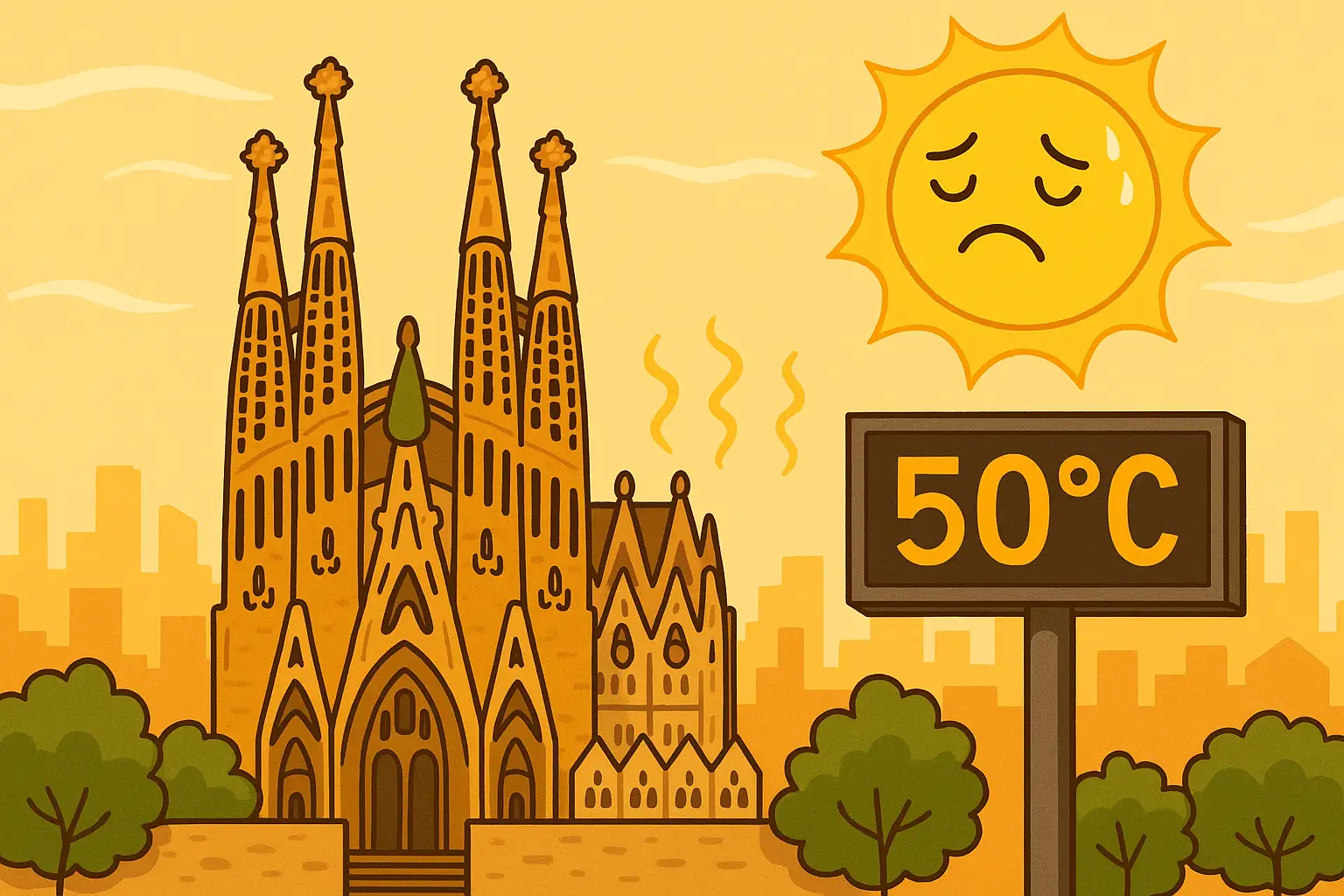
Parts of southern Europe are tightening travel rules as a severe heatwave pushes temperatures to 40C and beyond, with authorities moving to protect workers, residents and holidaymakers. Spain, Italy and France are among the countries introducing or expanding safety measures as the hot weather continues across major tourist destinations.
In Spain, bars and restaurants must close outdoor terraces during official heat alerts unless they have effective cooling measures such as shade or misting systems. Employers in the hospitality sector must also provide cold water, lighter work clothing and more frequent shift changes, under a new collective agreement.
Spain has also restricted some public events. In Madrid, officials cancelled a planned public viewing of the Spain v Saudi Arabia World Cup match because of heat risks, while regional warnings remain high in many parts of the country.
The measures come as Europe faces a sustained spell of extreme temperatures that is affecting beaches, cities and inland areas during the peak holiday season. In several destinations, visitors are being told to avoid large crowds, seek out shaded areas and use designated cooling spaces.
In Spain, the new hospitality rules apply when official heat warnings are in place and no adequate cooling is available. Employers face fines of more than 50,000 euros if they break the rules, and work that is particularly demanding in the open air, including construction, rubbish collection and farming, should be avoided during the hottest part of the day.
Authorities in Barcelona have increased the number of heat shelters, while the Basque Country has issued its highest alert level. Andalusia is also expected to see temperatures of around 40C, adding pressure on emergency and public health services.
Italy is taking a longer term approach in Rome, where temperatures have repeatedly reached 38C since late May. City officials, the health ministry and civil protection teams are focusing on more greenery and extra water features to reduce the urban heat effect and create “climate refuges” for people without air conditioning.
Rome already has about 3,600 public drinking fountains, which officials say can help residents and visitors cope during hot spells. The city is also looking at reducing paved surfaces as part of wider climate adaptation plans.
France has also responded to the heat, with the weather service issuing its highest or second highest alerts for many regions. In 35 departments, including Paris, the top red warning level was in force, and authorities banned alcohol at the traditional Fete de la musique for safety reasons. The Eiffel Tower closed earlier yesterday.
The aim across southern Europe is to reduce health risks during the heatwave and ease pressure on emergency services. Officials are warning that similar restrictions may return later in the summer if temperatures remain high as more tourists arrive and holiday travel peaks.