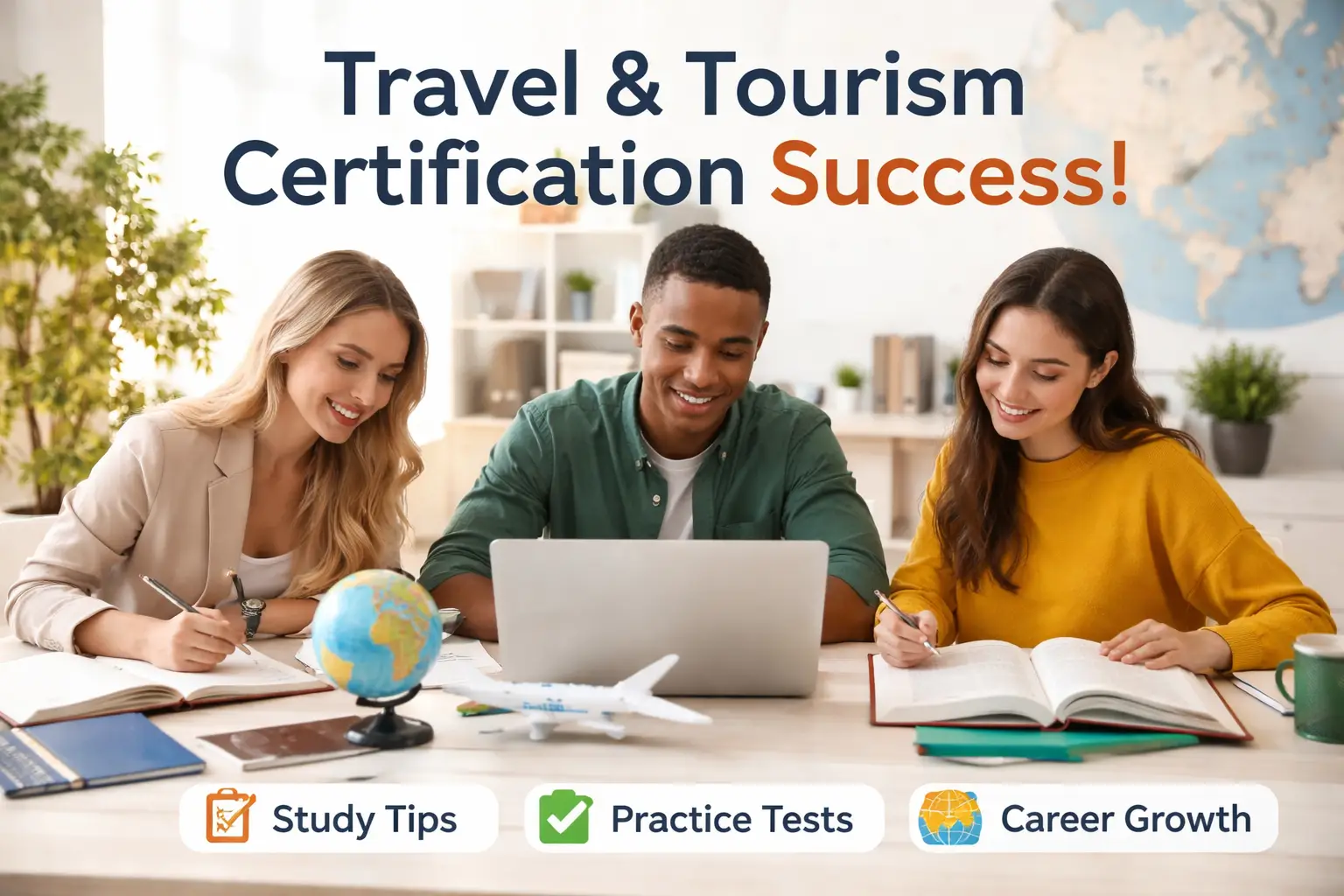
In today’s fast-paced and competitive world, professional certifications in travel and tourism have become a key factor in career advancement. Whether you are an aspiring travel agent, a hospitality professional, or someone looking to break into the aviation and tourism industry, certifications can significantly enhance your credibility and open doors to new opportunities. However, passing travel and tourism certification exams is not an easy task. It requires a well-structured plan, consistent effort, and access to reliable study resources. In this comprehensive guide, we will explore effective strategies that can help you succeed in travel and tourism certification exams and achieve your career goals.
Why Certifications Are Important
Certifications validate your knowledge and skills in travel, tourism, and hospitality. Employers such as airlines, hotel chains, and travel agencies prefer certified candidates because they bring proven expertise to the workplace. Certifications not only improve your job prospects but also increase your earning potential. In sectors such as aviation, tour operations, and destination management, certifications are often essential for career growth. They also help you stay updated with the latest travel industry trends, regulations, and global tourism developments.
Building a Strong Study Plan
The foundation of successful travel and tourism exam preparation lies in a well-structured study plan. Start by understanding the exam objectives and syllabus, which may cover areas such as geography, airline operations, hotel management, or destination knowledge. Break down the topics into smaller sections and allocate time for each. Consistency is key, so make sure you study regularly. Use a variety of learning resources such as industry guides, destination manuals, videos, and practice tests to gain a comprehensive understanding of the travel and tourism sector.
The Importance of Practice
Practice plays a crucial role in travel and tourism exam preparation. It helps you understand the exam format, improve your time management skills, and identify your weak areas—whether that is fare calculation, itinerary planning, or destination geography. Regular practice builds confidence and reduces exam anxiety. Make it a habit to solve practice questions daily and review your mistakes to improve your performance ahead of the actual certification test.
Leveraging Travel Industry Resources for Effective Preparation
Using reliable platforms and study materials can make a significant difference in your travel and tourism exam preparation. Industry-recognised resources such as IATA training portals, WTTC study guides, and tourism board publications provide updated study materials, practice questions, and detailed explanations. These platforms help candidates simulate real exam scenarios, making it easier to understand the format and difficulty level. By using Exam Collection consistently, travel and tourism candidates can identify their weak areas and improve their performance effectively.
Understanding the Role of Travel and Tourism Exams
Exams and questions are the core components of any travel and tourism certification test. Understanding the pattern and type of questions—ranging from destination knowledge and airline ticketing rules to hotel grading systems and tour operator regulations—can help you prepare more effectively. Practice questions allow you to assess your knowledge and identify areas that need improvement. Working through different question types also helps you develop problem-solving skills and improve your accuracy under timed conditions.
The Value of Test Preparation
Test preparation for travel and tourism certifications is not just about studying—it is about preparing strategically. Effective test preparation involves planning, practicing, and evaluating your progress across all relevant subject areas. It helps you become familiar with the exam environment and improves your ability to manage time under pressure. By focusing on test preparation, you can enhance your confidence and perform better in the actual exam.
Proven Study Techniques
To maximize your chances of success in travel and tourism certification exams, it is important to use effective study techniques. Set clear goals and create a study schedule tailored to the specific certification you are pursuing, whether it is IATA, CLIA, or a national tourism board qualification. Use active learning methods such as note-taking, summarizing destination profiles, and discussing concepts with fellow industry learners. Practice regularly and take mock exams to evaluate your readiness. Stay consistent and avoid procrastination. Maintaining a positive mindset is also essential for success.
Common Mistakes to Avoid
Many travel and tourism certification candidates fail due to avoidable mistakes. One common mistake is relying solely on memorization of destination facts instead of understanding the broader concepts such as tourism economics, route planning, or hospitality operations. Another mistake is neglecting practice tests. Some candidates also use outdated study materials, which is particularly damaging in a fast-changing industry where airline alliances, visa regulations, and destination rankings shift frequently. Avoid these mistakes by focusing on understanding, practicing regularly, and using updated resources.
Benefits of Certification Success
Achieving travel and tourism certification success comes with numerous benefits. It enhances your professional credibility with employers such as airlines, cruise lines, tour operators, and hotel groups. Certified professionals are often preferred for senior customer-facing and operational roles, and typically command higher salaries than their non-certified peers. Certifications also help you build confidence when advising clients or managing travel logistics, and gain recognition as a trusted expert within the travel and tourism community.
FAQ
Why are travel and tourism certifications important?
Travel and tourism certifications validate your industry skills and improve your career opportunities with airlines, hotels, and travel agencies.
How should I start preparing for a travel and tourism certification exam?
Start by understanding the certification syllabus and creating a structured study plan that covers all relevant travel and tourism topics.
Are practice tests necessary for travel and tourism exams?
Yes, practice tests are essential for improving performance and familiarising yourself with the exam format used by bodies such as IATA or CLIA.
How long does it take to prepare for travel and tourism certification exams?
Preparation time varies depending on the specific travel and tourism certification and your prior experience in the industry.
Conclusion
Preparing for travel and tourism certification exams is a journey that requires dedication, discipline, and the right approach. Certifications in this field are not just about passing an exam—they are about gaining knowledge of the global travel industry, building practical skills, and advancing your career. By using reliable resources, focusing on exams and questions, and investing time in proper test preparation, travel and tourism candidates can significantly improve their chances of success. It is important to approach your preparation with a clear plan and a positive mindset. Consistency plays a crucial role in achieving your goals, so make sure you study regularly and revise frequently. Avoid common mistakes such as relying on outdated materials or neglecting practice tests, as these can hinder your progress. Certification success in travel and tourism also brings long-term benefits, including better job opportunities at airlines, hotels, and tour operators, higher salaries, and professional recognition. As the global travel industry continues to evolve—shaped by new destinations, shifting passenger demand, and digital transformation—staying updated with certifications can give you a competitive edge and help you remain relevant in your field. Remember that success does not come overnight—it requires continuous effort and perseverance. Stay focused on your goals, remain disciplined in your preparation, and keep pushing forward. With the right mindset, proper planning, and access to quality resources, achieving travel and tourism certification success becomes an attainable goal that can transform your professional journey and open doors to a brighter future in one of the world’s most dynamic industries.