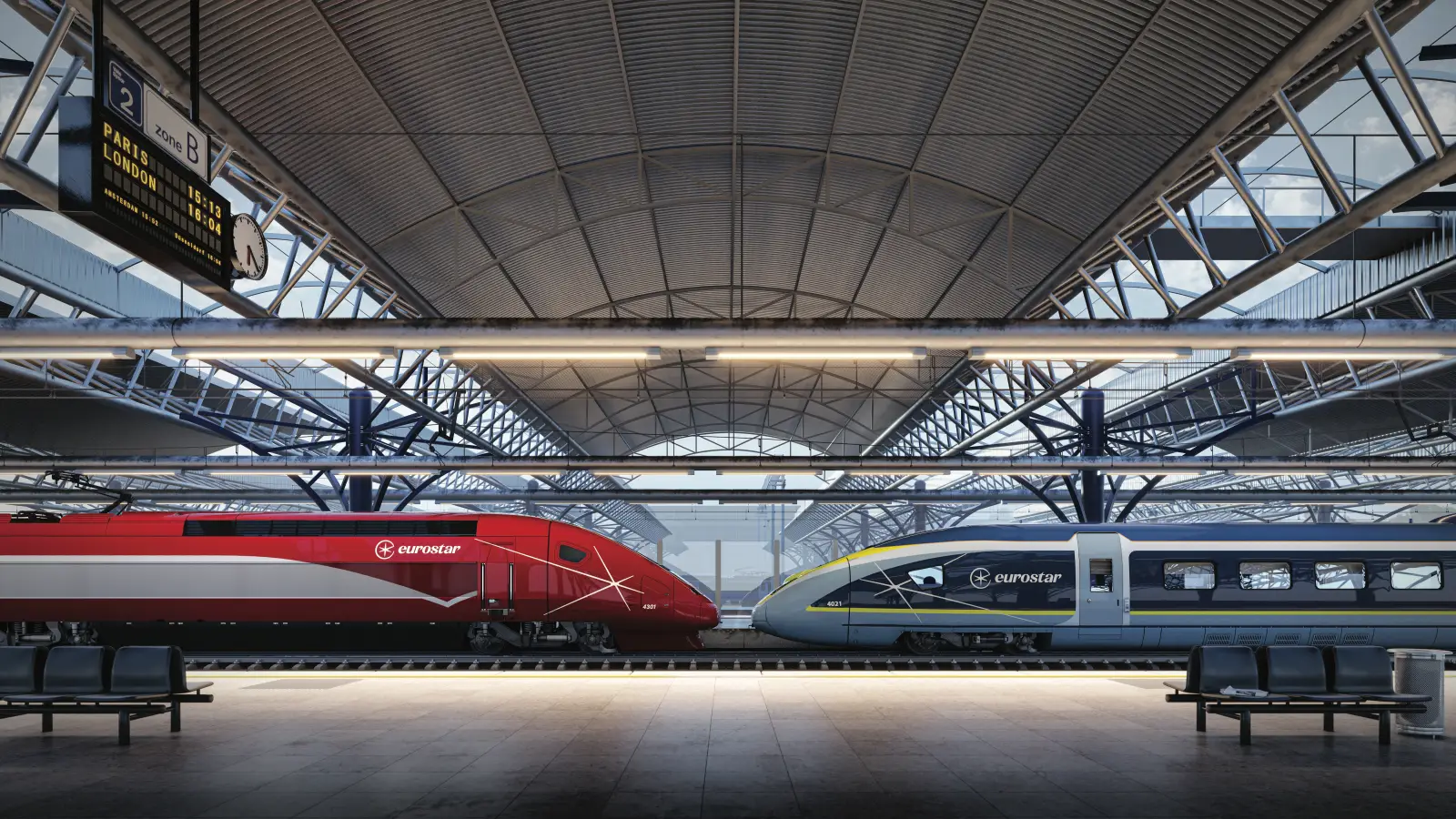
Eurostar has raised the heat specification for its new trains from 45°C to 55°C as it prepares for increasingly severe European summers. The trains are expected to enter service from 2030 and remain in operation for about 30 years, potentially carrying passengers into the 2060s.
The international rail operator ordered up to 50 new Alstom trains last year under a contract worth €2bn. The agreement allowed Eurostar to change the temperature requirements before finalising the order, with the revised specification expected to affect mainly the trains’ air-conditioning systems.
The company made the change after a period of intense heat across Europe reinforced concerns about the conditions its future fleet could face. It initially planned for the new Alstom trains to operate in temperatures of up to 45°C.
However, Eurostar chief executive Gwendoline Cazenave told the Financial Times that the operator had reconsidered that limit as heatwaves became more frequent and severe.
“This year, the heatwave has been earlier, longer, hotter than ever,” said Gwendoline Cazenave, Eurostar chief executive.
Cazenave said summer conditions in the United Kingdom and continental Europe were moving closer to those more commonly associated with Saudi Arabia. The comparison reflected the challenge facing transport companies that are buying equipment designed to remain in service for several decades.
The higher limit does not mean temperatures across Europe are expected to reach 55°C regularly. It gives the operator additional protection against extreme heat in Europe and allows equipment, particularly air-conditioning units, to continue functioning during unusually hot conditions.
The timing of the decision comes as several European countries contend with wildfires and repeated periods of intense heat. Devastating fires have affected parts of France and Spain, while areas of the Netherlands have faced the prospect of a third heatwave of the season.
An earlier Dutch heatwave developed into what was described as a superheatwave, with temperatures rising above 40°C. The conditions prompted the Netherlands to issue its first code red weather warning for heat.
Eurostar has already introduced short-term measures intended to protect passengers and maintain services during hotter European summers. Staff now follow a protocol requiring the air-conditioning system in every carriage to be tested each day.
The company has also reserved more maintenance capacity for repairing faulty cooling units. Bottled water is carried on board during hot weather as an additional precaution for passengers.
These measures address immediate operational pressures, but the new train specification reflects a much longer planning horizon. Trains entering service around 2030 will need to perform reliably through changing summer conditions for decades.
“I have to confess that before last week I would never have thought that we would need to buy up to 55 degrees Celsius,” said Gwendoline Cazenave, Eurostar chief executive.
The updated Alstom train order forms part of Eurostar’s preparations for the future of international rail travel. By increasing the maximum operating temperature before production specifications are completed, the company aims to avoid locking its next generation of trains into assumptions based on cooler past conditions.
The first new Eurostar trains are due to arrive by 2030. If they remain in service for the planned 30 years, their cooling systems and other temperature-sensitive equipment will need to cope with summer conditions extending well into the second half of the century.