Travelers in Spain face significant disruptions this week as wildfires sweep through multiple regions, forcing train cancellations, detours, and delays across the country. The most severe impact is in Galicia, where a blaze in the Barreiros Industrial Estate in Ourense has cut off high-speed rail service between Madrid and Galicia, and between Santiago de Compostela and Ourense.
The fire, which continues to burn in a forested area near the Seixalbo road, is being tackled by emergency services as it advances toward a local soccer field. Authorities suspect the flames may have been sparked by a train braking on a nearby track. A smaller fire was also reported in O Pino, close to the railway lines.
High-Speed Rail Disruptions
Rail operator Renfe confirmed that communication between Ourense and Taboadela remains severed, affecting AVE high-speed trains on key northern routes. As a temporary measure, a special shuttle service is running between Madrid and Zamora, with stops in Segovia and Medina AV, while passengers traveling between A Gudiña and Ourense are being transported by bus. Free changes and cancellations have been implemented for affected routes.
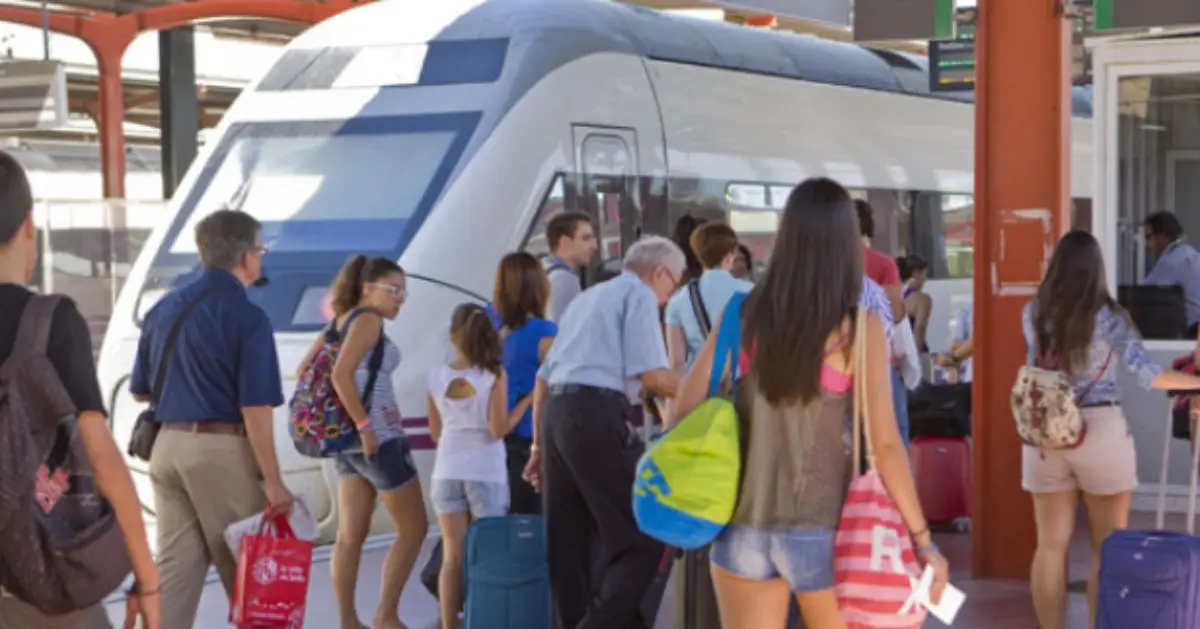
Despite these measures, hundreds of passengers at Santiago de Compostela station report being stranded without alternative means of reaching their destinations. Officials acknowledge the challenge of replacing AVE capacity on short notice and are working to identify further solutions.
Fires Affecting Tourism Regions
The Galician regional government has declared a provincial emergency level 2 in Ourense, where nine of Galicia’s twelve large wildfires are currently burning. The most severe include the Requeixo fire in Chandrexa de Queixa, which has destroyed 3,000 hectares, and the Santiso fire in Maceda, burning close to several villages. Smaller blazes are also active in A Mezquita and Cartelle.
Elsewhere in Spain, flames have forced evacuations near León, Tarifa, and Tres Cantos in Madrid. In León, the fire has damaged parts of Las Médulas, a UNESCO World Heritage site known for its dramatic red cliffs and ancient Roman gold mines. Around 800 residents have been evacuated or confined to their homes.
Wildfire Season by the Numbers
According to Spain’s Ministry for the Ecological Transition (MITECO), 39,155 hectares had burned nationwide by August 3—already surpassing last year’s total when compared to European Forest Fire Information System (EFFIS) estimates of 60,000 hectares in 2025. While this year’s total is still below the decade average, the figures do not include the latest wave of fires affecting tourist-heavy regions.
The majority of damage has occurred in the northwest and Mediterranean regions, with wooded areas, scrubland, and pastures all impacted. Experts attribute the severity to a combination of high temperatures, strong winds, dense summer vegetation, and limited fire prevention, alongside human negligence or deliberate ignition.
Advice for Travelers
Tourists planning trips to Galicia and other affected areas are advised to monitor official updates from Renfe, the Ministry of the Interior, and regional emergency services. Flexible travel arrangements are essential, as train routes may change with little notice and road transport options can be limited.
For those already in the region, consider adjusting itineraries to avoid affected provinces and prioritize safety over sightseeing. While Galicia’s coastal areas and cities like A Coruña remain open to visitors, inland travel toward Ourense, Santiago de Compostela, and León may involve significant delays or cancellations.
Spain’s wildfire season typically peaks in July and August, but climate conditions mean disruptions can occur earlier and last longer. Travelers should pack accordingly for heat, stay hydrated, and follow local guidance if visiting rural or forested areas.
Despite the challenges, much of Spain’s tourism infrastructure remains open, with unaffected cities and coastal destinations welcoming visitors. However, those heading to northern Spain in the coming weeks should remain prepared for rapid changes to transport schedules and potential detours in their travel plans.