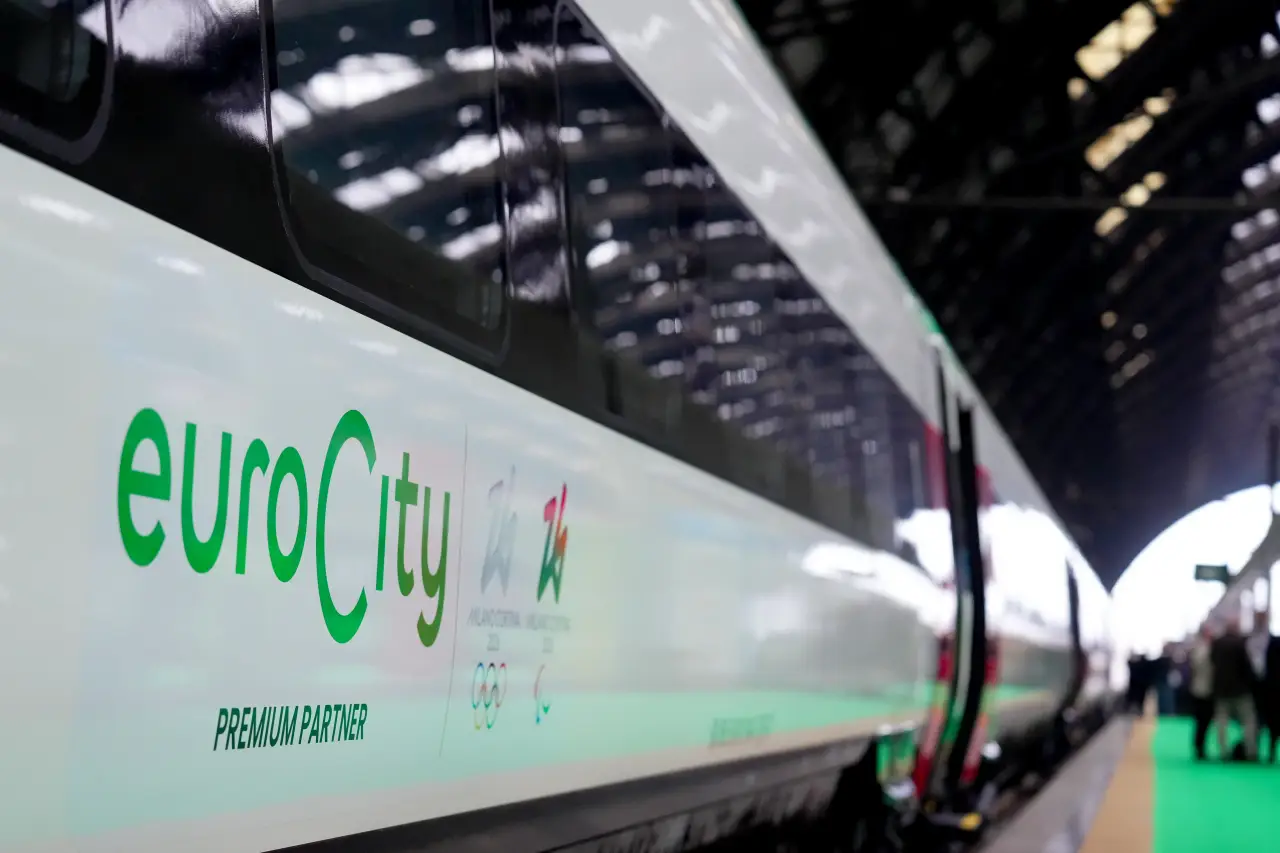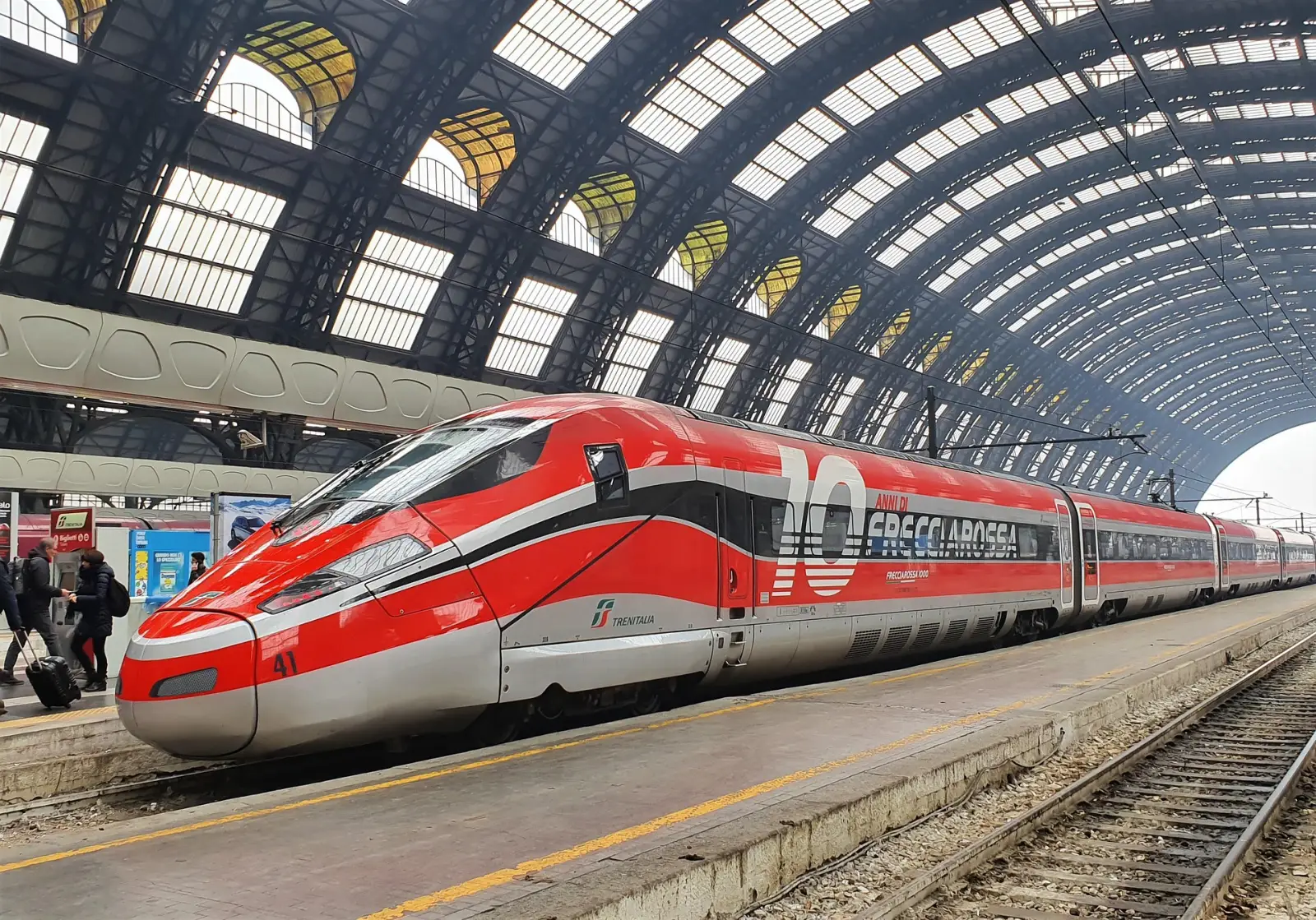
Trenitalia introduced the next-generation Frecciarossa 1000 high-speed train with a preview journey on the Rome–Naples line on September 26, 2025.
The new fleet, part of Gruppo FS Italiane’s strategic investment plan, will enter official service on September 28. Designed to operate at up to 300 kilometers per hour and homologated for 360, the train is promoted as faster, more sustainable, and more technologically advanced than its predecessor.
The €1.3 billion program will deliver 36 new trains by 2029, with an option for 10 more, averaging 10 units per year. The fleet renewal supports Gruppo FS’s 2025–2029 Strategic Plan, which emphasizes modernization, international growth, and sustainability. The unveiling included a special run attended by Stefano Antonio Donnarumma, Chief Executive Officer and General Manager of Gruppo FS, and Gianpiero Strisciuglio, Chief Executive Officer and General Manager of Trenitalia.
International Reach and Green Technology
The Frecciarossa 1000 trains were designed by Hitachi Rail and manufactured in Pistoia and Naples. They are certified to operate not only in Italy but also across seven European rail networks: France, Spain, Germany, Austria, Switzerland, the Netherlands, and Belgium. This international capability is intended to strengthen Trenitalia’s cross-border services and position the company as a more competitive player in the European rail market.
The new fleet advances environmental performance, featuring a recyclability rate of 97.1% and a materials recovery rate of 98.2%. Both figures are higher than the previous generation by 2.7 and 2.4 percentage points, respectively. Energy efficiency is further enhanced by the adoption of advanced electric traction systems designed to reduce consumption and environmental impact.
Although the exterior retains the current design and livery, the interiors incorporate significant updates. The trains feature high-quality materials, ergonomic furnishings, and more welcoming passenger environments. Advanced digital systems improve journey management and onboard information, underscoring the emphasis on combining innovation with passenger comfort.
Fleet Renewal and Strategic Objectives
The arrival of the Frecciarossa 1000 forms a central element of Gruppo FS’s fleet renewal strategy. The company has outlined investments in rolling stock as a means of ensuring long-term competitiveness, enhancing passenger experience, and reducing environmental impact. The new trains are expected to improve service quality while responding to increasing demand for sustainable mobility solutions in both domestic and international markets.
“The Frecciarossa 1000 of the new generation represents a decisive step forward in sustainability, technology, and international integration,” said Stefano Antonio Donnarumma, Chief Executive Officer and General Manager of Gruppo FS. He highlighted the role of the trains in meeting the company’s strategic targets for 2025–2029. “This fleet renewal is essential to deliver modern and efficient service while reducing environmental impact.”
Gianpiero Strisciuglio, Chief Executive Officer and General Manager of Trenitalia, emphasized the importance of customer experience. He noted that the updated interiors, digital tools, and energy-efficient systems would contribute to “a more comfortable and sustainable journey, reflecting the best of Italian design and technological innovation.”
The Frecciarossa 1000 will continue to serve as Trenitalia’s flagship on high-speed lines while expanding into cross-border corridors. By combining enhanced technical specifications with sustainability improvements, the company aims to consolidate its position in European passenger rail and support broader goals of reducing carbon emissions in transport.
The introduction of the new fleet marks a milestone for Italian and European rail transport. With its speed potential of up to 360 kilometers per hour, increased sustainability metrics, and international certification, the Frecciarossa 1000 represents both continuity and progress for Trenitalia as it prepares for the next decade of high-speed travel.