The Prix Versailles has named 16 of the world’s most beautiful restaurants for 2026, recognising dining spaces that stand out for architecture and design as much as for food. Announced on 1 June 2026 in collaboration with UNESCO in Paris, the selection spans destinations from Hong Kong and Dubai to Vienna, Gstaad, Helsinki, Beijing, Beverly Hills, Cape Town and Egypt.
Now in its twelfth edition, the Prix Versailles is one of the world’s most closely watched architecture and design award series, covering categories that include airports, hotels, museums and restaurants. Secretary General Jérôme Gouadain described the 2026 restaurant selection as a reflection of the extraordinary variety of global culinary heritage, noting that architecture both serves and is inspired by that vision. The 16 winning venues, he said, each have a decor in perfect harmony with their environment and their menu, where the art of hospitality goes hand in hand with the art of cultivating unforgettable experiences.
Three of the 16 restaurants will receive additional World Titles at the end of 2026: the Prix Versailles, the Interior Award and the Exterior Award.
Hong Kong Claims Four Places on the List
Hong Kong is the most represented city in the 2026 selection, with four entries, three of them inside the same landmark tower.
Peridot, perched atop The Henderson, was designed by Studio Paolo Ferrari following a philosophy described as Natural Futurism. The bar and restaurant resembles a deconstructed disco ball, with over 20,000 hand-crafted lights filling the space with an expansive glow. Its signature green colour runs throughout, from the frosted mirror-chrome cylinders lining the bar to the green grand piano that presides over the room. Vegan dishes are paired with a seasonal cocktail menu inspired by terroir-driven regions across the globe.
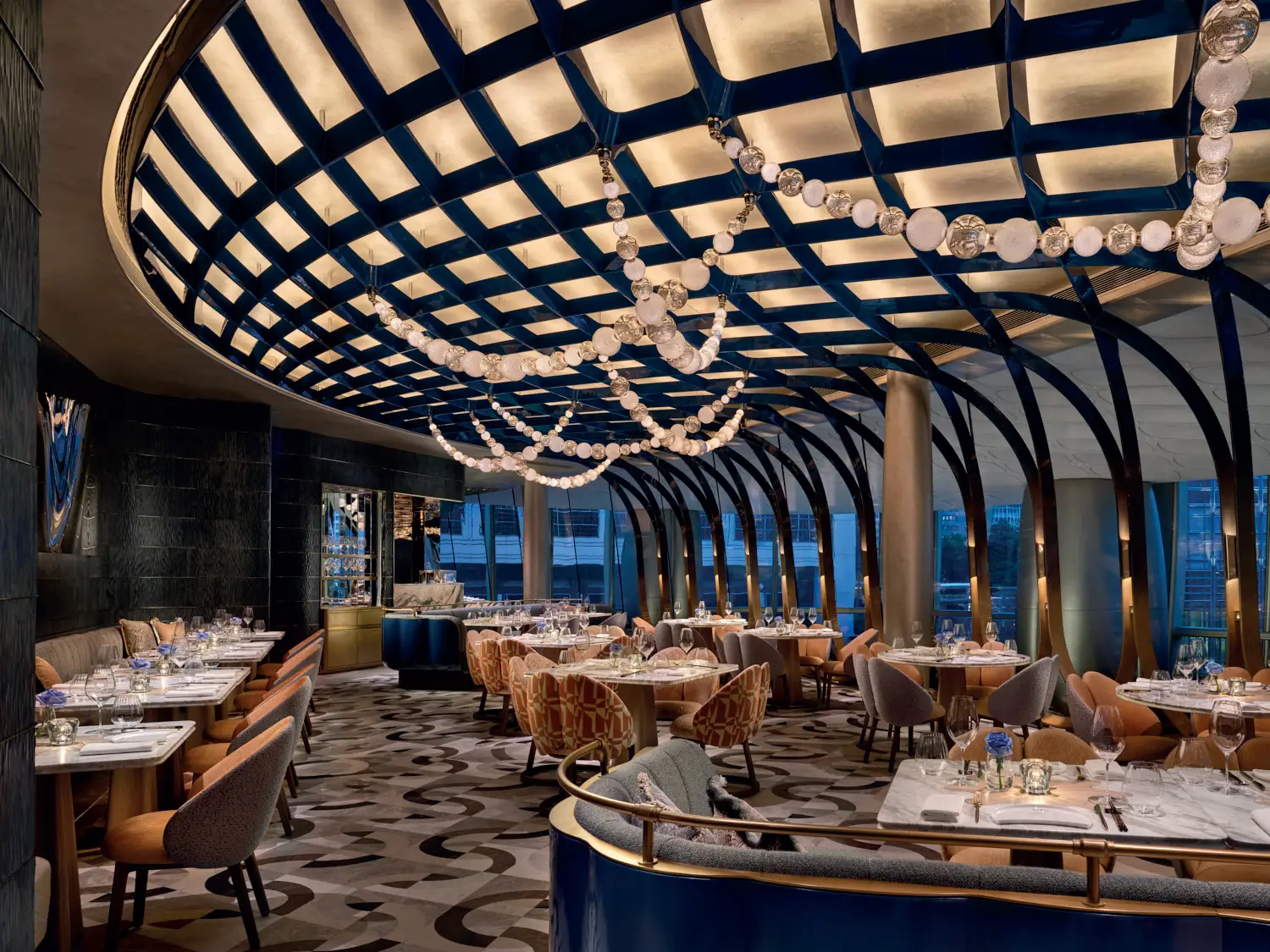
Also inside The Henderson, on the fifth floor, is Akira Back. Designed by AB Concept within a tower conceived by Zaha Hadid Architects, the restaurant creates a multisensory experience in which flavours, design and staging work together. Its rounded lines, sophisticated lighting and delicate timber posts that disappear into a sculptural ceiling reflect the career of Chef Akira Back, a former professional snowboarder whose fusion cuisine blends Korean and Japanese traditions with global influences. A private dining room within the space features wall art inspired by the chef’s mother, Young Hee Back.
Higher still in The Henderson sits Hana no Kumo, meaning flower cloud, a kappou restaurant with just 24 seats divided between two rooms. Designed by Hirsch Bedner Associates for Chef Ogawa Masaru, the space honours the Japanese spirit of shokunin: a disciplined devotion to craft, seasonality and the dialogue between chef and guest. Soft timber tones, washi paper accents, stone surfaces and a crystal-clear illuminated resin ice cube sculpture at the entrance combine to bring the memory of Kyoto’s cherry blossom season into the sky above Central.
Dubai: Dining 100 Metres Above the Ground
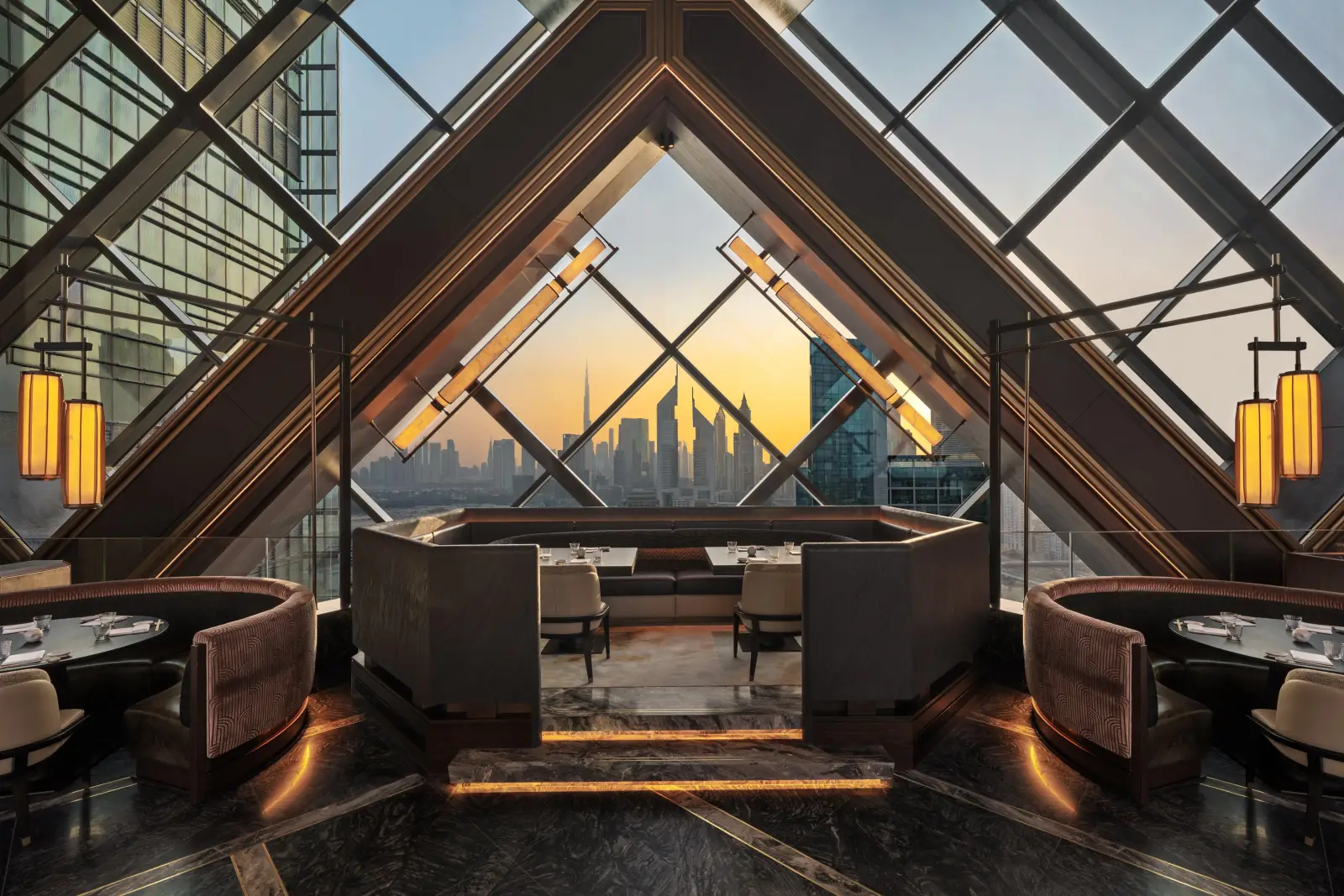
Nobu One Za’abeel in Dubai is one of the most striking entries on the 2026 list. Suspended 100 metres above the ground on the cantilevered sky concourse linking the two towers of the One Za’abeel complex, the restaurant pairs Japanese culinary tradition with South American influences in the style made famous by Chef Nobu Matsuhisa. Rockwell Group‘s design capitalised on high ceilings and crisscrossing geometries to devise a monumental custom lighting system that unifies the space from the entrance to the private dining room. Panoramic city views define the daytime experience, while resident and international DJs and signature cocktails animate the evening.
Europe: Alpine Refinement, Nordic Heritage and Theatrical Vienna
Monti in Gstaad, Switzerland, takes the conventions of Alpine architecture and elevates them with a clean contemporary sensibility. Created by architect Jakob Sprenger and creative director Antonia Crespí, the restaurant uses warm wood tones, woven bronze room dividers that echo basket-weaving techniques, customised carpets and banquettes draped in mohair. Fine Italian-inspired cuisine and an open terrace with mountain views complete a space designed to conjure the spirit of Gstaad in every detail.
Le Fou in Vienna was conceived as a spatial narrative. Founder Alexander Schrack and interior designer Theresa Obermoser set out to translate the attitude of Parisian nightlife into a contemporary Viennese context. The bar and restaurant unfolds as a sequence of distinct yet interconnected rooms, each with its own character, using silk, mohair velvet, natural stone and patinated metal surfaces. The main lounge in rust and terracotta tones forms the emotional core of the project, while a golden lounge and private leopard-print area embrace a more theatrical language. Luxury here, the designers say, is defined by substance and longevity rather than surface polish.
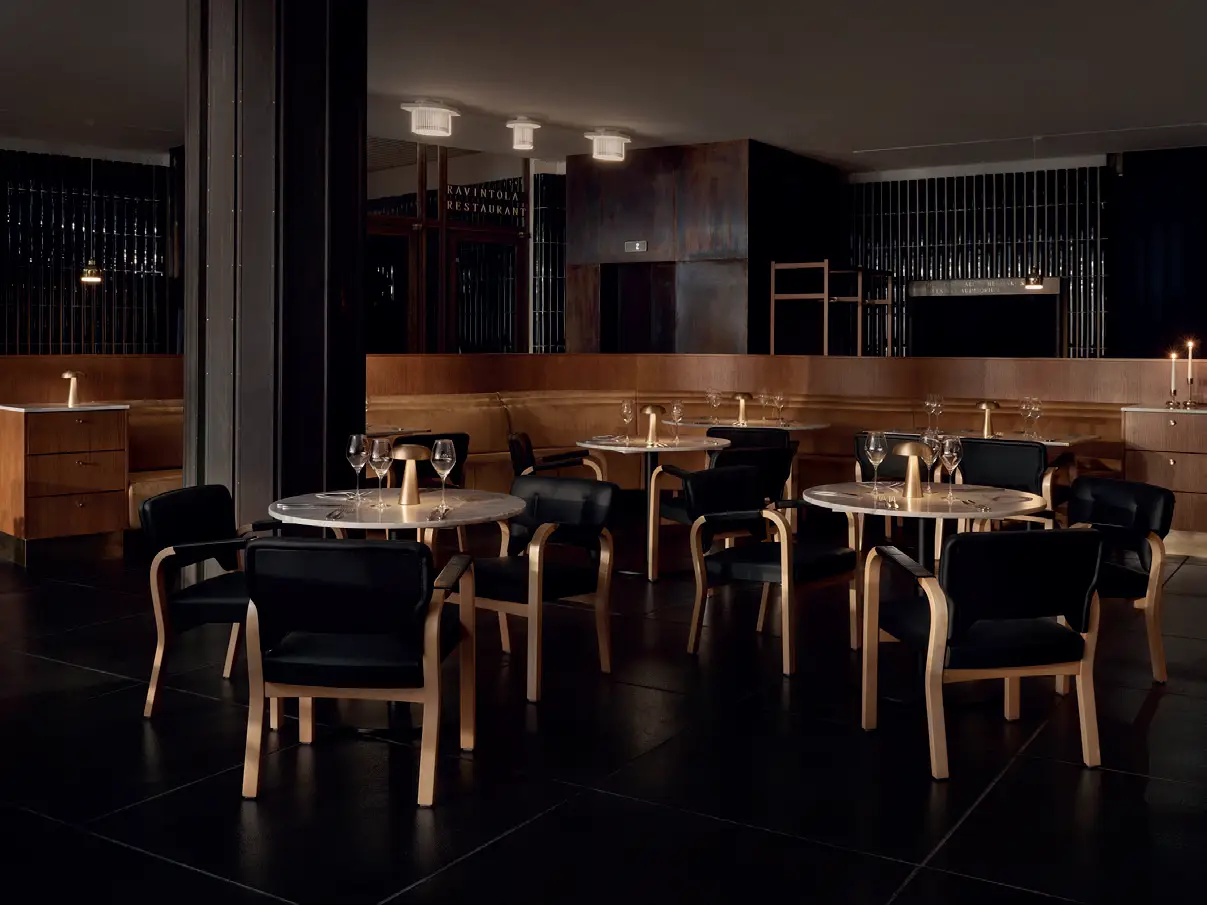
Finlandia Bistro in Helsinki occupies a setting of significant historic weight: Finlandia Hall, the 1971 masterpiece by Alvar Aalto overlooking Töölönlahti Bay, where the Helsinki Accords were signed in 1975. A comprehensive renovation of the venue launched in 2021 entrusted design agency Fyra with reimagining its dining areas. Existing Aalto-designed furniture was preserved and complemented by new bespoke pieces, with the muted atmosphere of the bistro emerging from a dynamic contrast between the original features and more contemporary layers.
Marlow in Monaco occupies the main square of Mareterra, a new district of Monte Carlo reclaimed from the sea. Artist and architect Hugo Toro drew on the long history of British visitors on the Riviera, creating a warm, sophisticated and almost eccentric setting built around a sculptural central bar. Each space functions as its own cabinet of curiosities, blending a club atmosphere with contemporary custom-made furniture. The cuisine reinterprets British classics in a way that feels rooted in a very specific place and time.
Beijing and Beverly Hills: Dior Takes Fine Dining Global
The House of Dior secured two places on the 2026 list, on opposite sides of the world.
In Beijing‘s Sanlitun district, inside the new House of Dior whose sculptural facade was designed by Christian de Portzamparc, Monsieur Dior by Anne-Sophie Pic builds a bridge between China and France. Each dish by the chef is conceived as a poetic retelling of the legacy of the house, set against black and white photographs, a reproduction of a painting by René Bouché and three commissioned works by Chinese artist Hong Hao that celebrate the power of red, described by Christian Dior as the colour of life.
In Beverly Hills, on the third floor of a second new House of Dior, Monsieur Dior by Dominique Crenn was designed by Peter Marino as an ode to sunshine and light. Vivid colours inspired by the gardens dear to Christian Dior, a green wall, and a monumental 2025 painting titled Gardens of Courances by Nicole Wittenberg connect the space to nature. The bar, crafted in ebony and onyx beneath a ceiling of sculpted rose petals, opens onto a terrace with panoramic views of Rodeo Drive, where the Parisian spirit meets the modern ease of California.
The Americas: Los Angeles, Coral Gables and the Caribbean
Lucia in Los Angeles is the city’s first Afro-Caribbean restaurant. Founded by Sam Jordan and led by Chef Cleophus Hethington, the venue was designed by Preen, Inc. with lush tropical textiles, bold patterns, and sculptural moments in shell and palm form. Music is central to the experience, with a DJ visible through the smoked glass of the kitchen window. The concept celebrates Caribbean cool and mid-century glamour in equal measure.
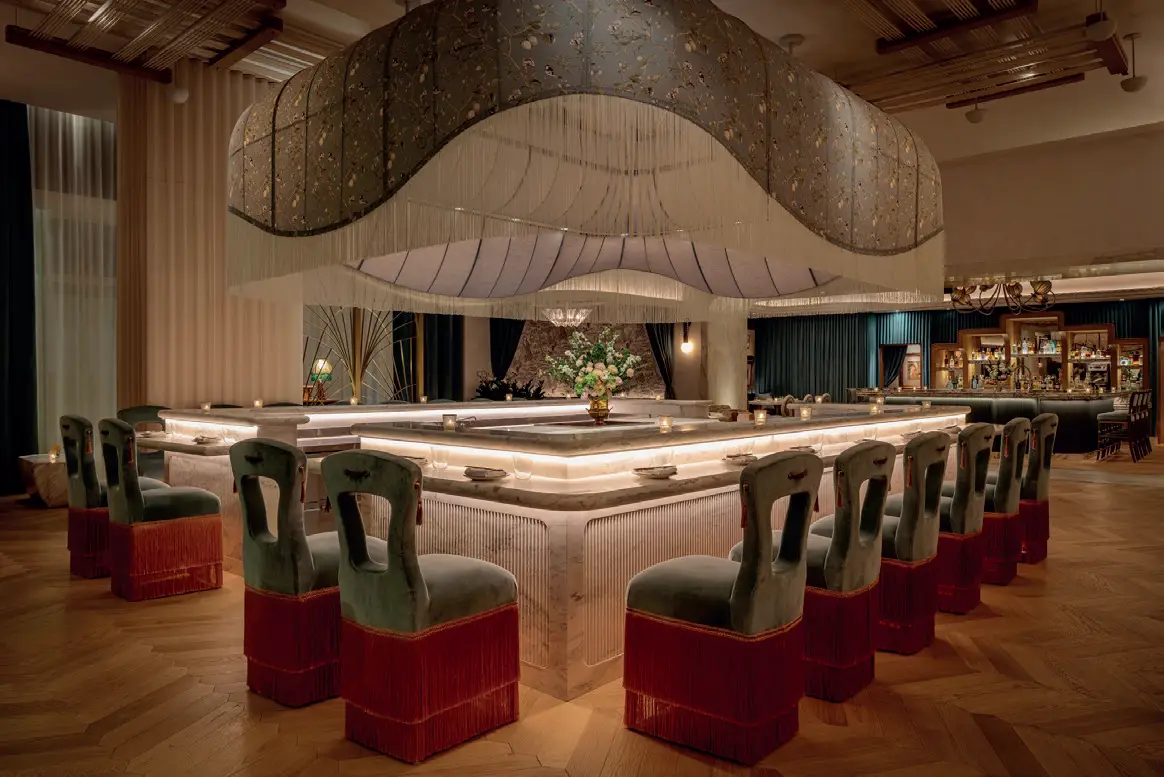
Mottai in Coral Gables, Florida, was created by Chef Brian Nasajon in collaboration with Saladino Design Studios. The restaurant is arranged around an open sushi bar beneath a delicate canopy at the centre of the room, echoing traditional Japanese spatial philosophies of discipline and minimalism. Custom furniture with curved forms and tactile materials frames a culinary experience that fuses Japanese and French aesthetic sensibilities in a fluid and contemporary way.
Egypt, India, London and Cape Town Complete the Global Picture
Escā Playa in Ras El Hekma, Egypt, was designed by Cairo-based architect Mohamed Badie to look as though it had been shaped by wind, sun and tides. Its contemporary architecture rises from the sand like a living organism: fluid, porous and sculpted by elemental forces. The building’s mineral coatings and coral aggregations echo the coastline, reinforcing the sense that the structure is an extension of the landscape itself rather than an imposition upon it.
Rosso at Hotel Irada in Hinganigada, India, sits within a working winery set in 270,000 square metres of land cradled by 16 square kilometres of reserve forest in Pune Wine Country. Designed entirely by the architectural firm Humming Tree, the restaurant focuses on Southern Italian cuisine in a setting where warm-hued furniture, green marble and Solomonic columns of polished wood create a cultural encounter between India and the Mediterranean.
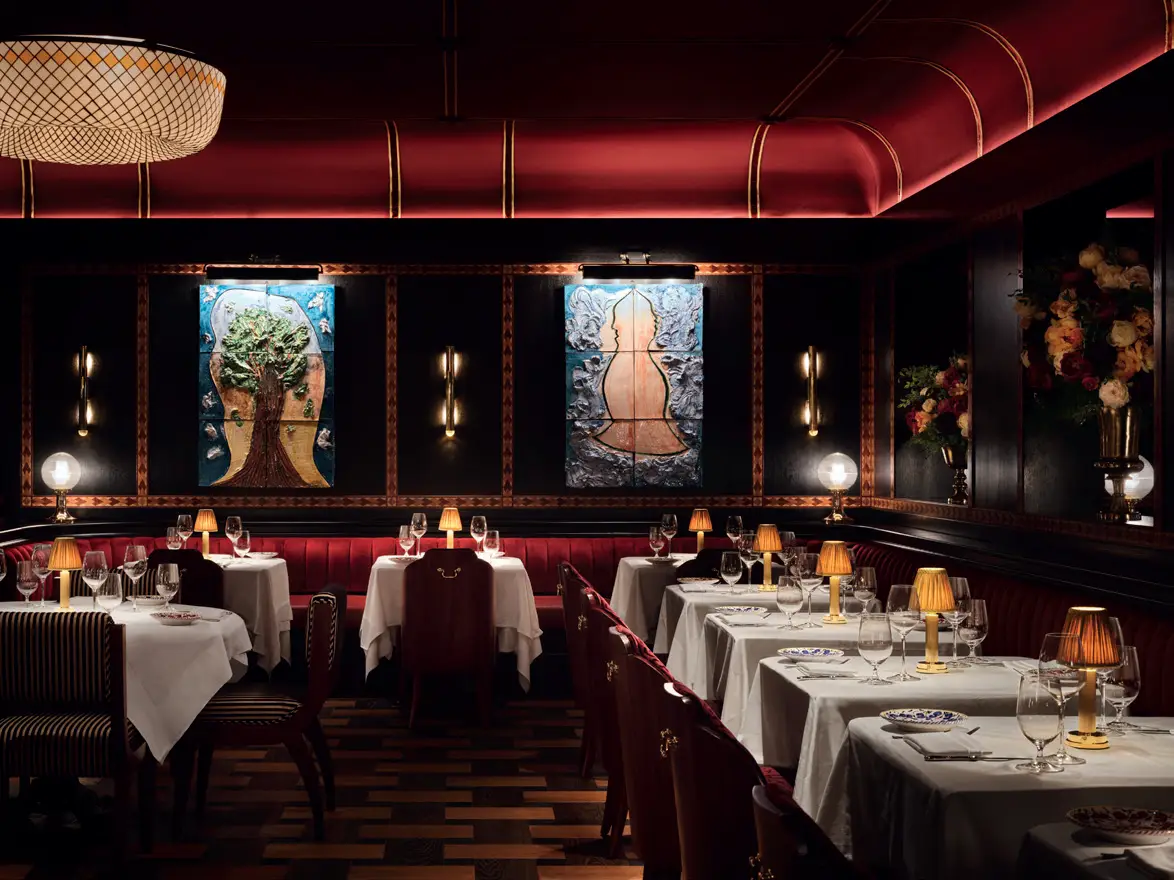
Carbone in London‘s Mayfair marks the European debut of the iconic New York institution. Set within the former American Embassy building, the restaurant was designed by Ken Fulk and draws on the romanticism of 1950s American supper clubs. Velvet banquettes, mosaics and lacquered woodwork provide the backdrop for works by artists including Ai Weiwei and Lola Montes. A grand staircase adorned with a hand-painted mural leads guests to the bar, lounge and main dining room below.
Amura by Ángel León in Cape Town, South Africa, was designed by interior architect Tristan du Plessis and inspired by the biodiversity of the Cape coastline where the Indian and Atlantic Oceans meet. Chef Ángel León, known internationally as the chef of the sea, guides guests through a tasting menu that celebrates the flavours of Cape Town with a Mediterranean perspective. The open-plan kitchen, framed by deep green hues, woodwork and bronze details, is the theatrical heart of the restaurant.
The 2026 Prix Versailles World’s Most Beautiful Restaurants
- Nobu One Za’abeel — Dubai, United Arab Emirates
- Le Fou — Vienna, Austria
- Monti — Gstaad, Switzerland
- Akira Back — Hong Kong, China
- Hana no Kumo — Hong Kong, China
- Monsieur Dior by Anne-Sophie Pic — Beijing, China
- Peridot — Hong Kong, China
- Escā Playa — Ras El Hekma, Egypt
- Finlandia Bistro — Helsinki, Finland
- Carbone — London, United Kingdom
- Rosso — Hinganigada, India
- Marlow — Monaco
- Lucia — Los Angeles, United States
- Monsieur Dior by Dominique Crenn — Beverly Hills, United States
- Mottai — Coral Gables, United States
- Amura by Ángel León — Cape Town, South Africa
The next Prix Versailles World Selections for 2026 will be released on 15 June for Airports, 29 June for Emporiums, 27 July for Campuses, 28 September for Passenger Stations and 19 October for Sports.