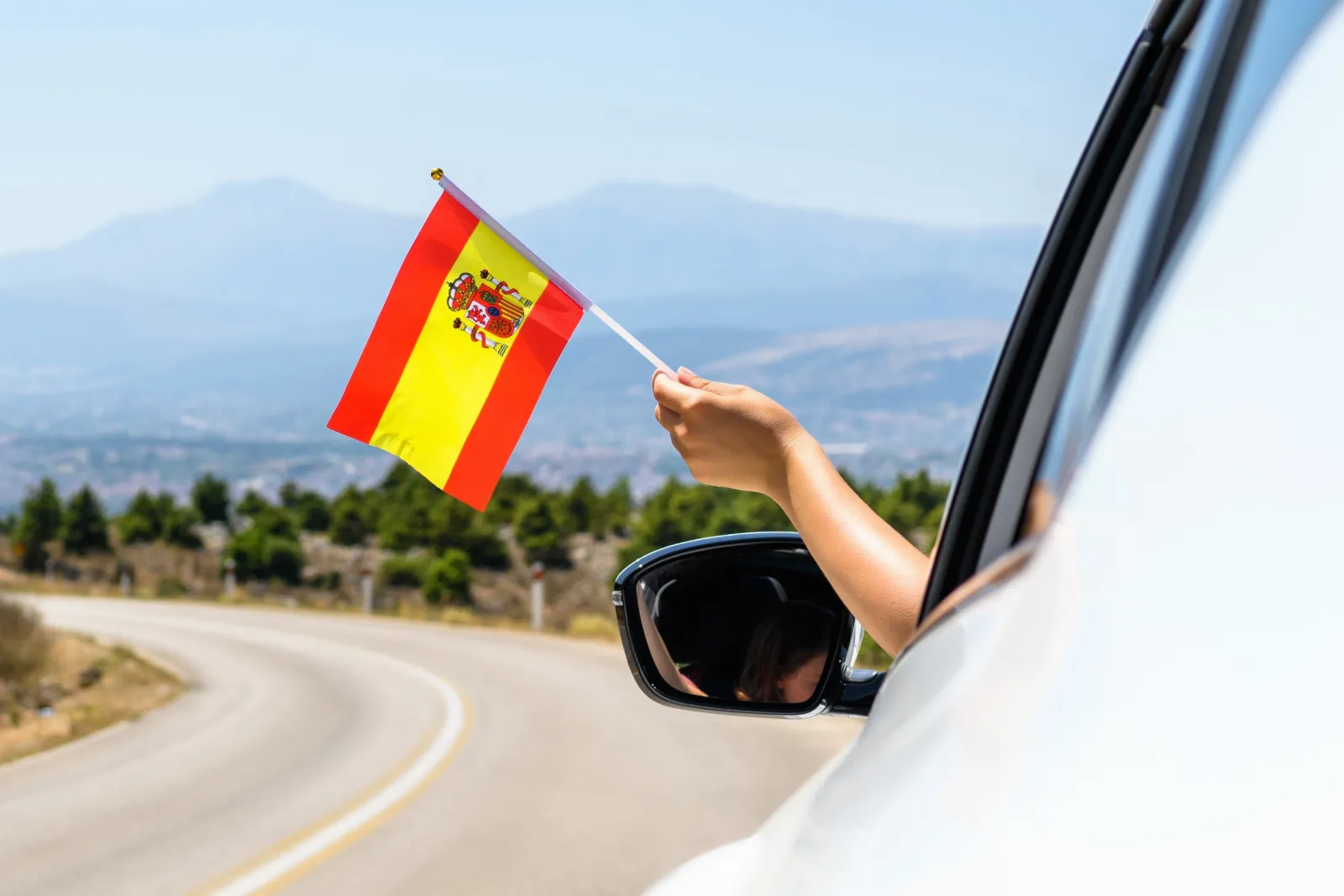
Traffic in Spain is about to look a little different. From July 1, motorists cruising through the Pyrenees, skirting the Atlantic coast, or winding toward Mediterranean beach towns will begin spotting unfamiliar pictograms beside the road. Over the next twelve months, those fresh blue, red, and white panels will multiply, signalling an ambitious nationwide effort to modernise the country’s road language before the older versions disappear for good in 2026.
For road-trippers, camper-van explorers, and city-to-city holiday drivers, the change adds a new layer of discovery: learning to decode symbols that reflect twenty-first-century mobility—electric cars, e-scooters, shared spaces, and low-emission zones—while still honouring Spain’s long relationship with the open road. The General Directorate of Traffic (DGT) has published two colourful infographics that preview both freshly minted signs and refreshed classics, giving travellers a head start before the real-world rollout begins.
Why Spain Is Redrawing the Map
Spain’s last full catalogue of road signs dates back more than twenty years, a period in which personal mobility devices, zero-emission engines, and shared micro-transport moved from novelty to mainstream. The DGT argues that the existing signbook—still peppered with steam locomotives, vague smoke clouds, and generic silhouettes—no longer mirrors how people move or the safety cues they need at 120 km/h. Updating the visual vocabulary, officials say, will make the network clearer, safer, and more inclusive for everyone who uses it.
Five Reasons From the DGT
- New vehicles: Electric scooters and e-bikes require their own rules and warnings.
- Technology & sustainability: Low-emission zones and charging stations must be easy to spot.
- Clarity: Some symbols cause confusion or rely on outdated imagery.
- Gender perspective: Stereotypes are removed—children-at-play signs now show a younger brother and older sister, reversing the old roles.
- International alignment: Spain wants full harmony with the Vienna Convention so tourists recognise symbols at first glance.
New Signs You’ll See This Summer
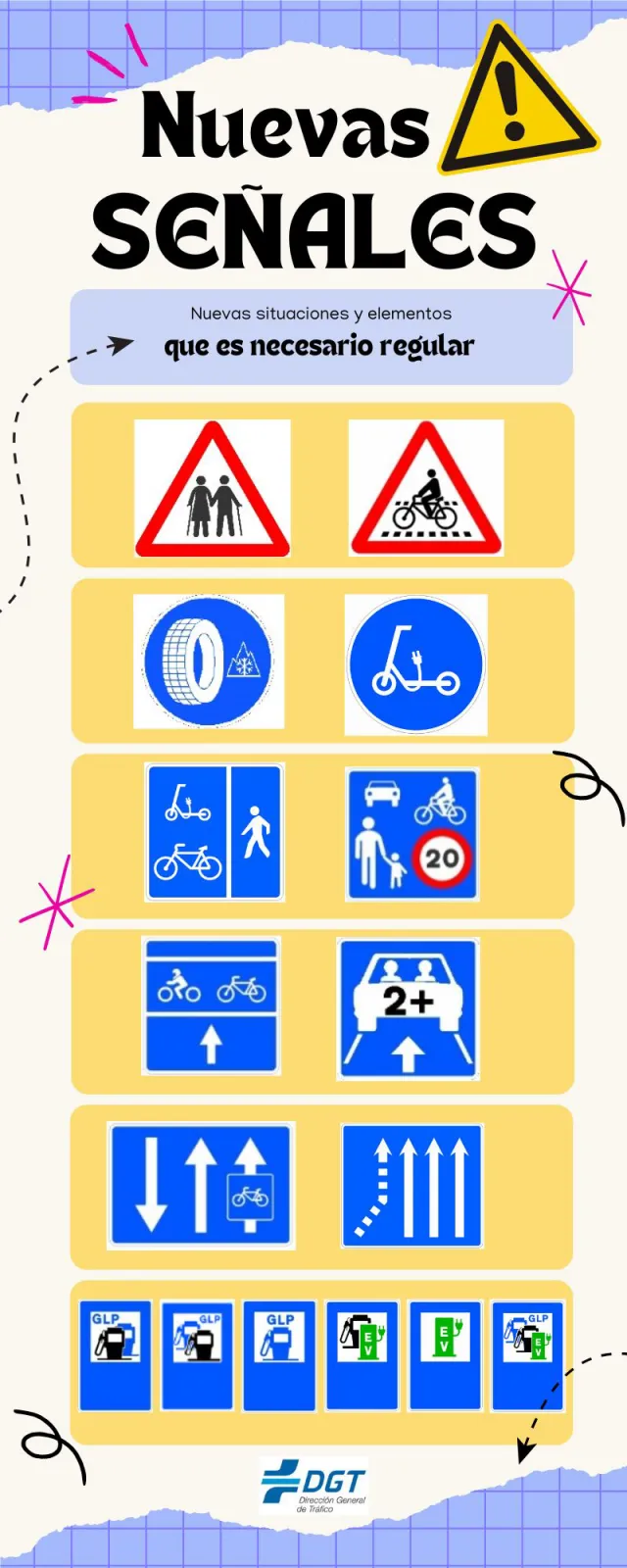
The most eye-catching additions highlight situations that barely existed when the current code was printed. At the top of the list is the P-22, a red triangle featuring a cyclist on a dedicated path: a direct warning to motorists that a cycle lane merges or crosses ahead. Close behind is R-420, a blue circle declaring lanes reserved exclusively for scooters and bicycles. In a first for Spain, an entire family of EV-related icons now directs drivers to charging stations, hydrogen pumps, and LPG taps—essential intel for anyone renting an electric vehicle at Málaga, Madrid, or Barcelona airports.
Winter drivers heading for the Sierra Nevada will meet R-412b, a tyre flanked by a snowflake that obliges motorists to fit special snow tyres or chains before proceeding. Meanwhile, holidaymakers strolling beachfront promenades may step onto the S-47 zone, a blue square showing a car, a cyclist, two pedestrians, and the number 20 in a red circle. Here, traffic must crawl at 20 km/h, and children have right of way—a boon for families and a gentle reminder to out-of-town drivers who might be unfamiliar with Spain’s “shared street” culture.
Goodbye to the Classics: Redesigned Symbols
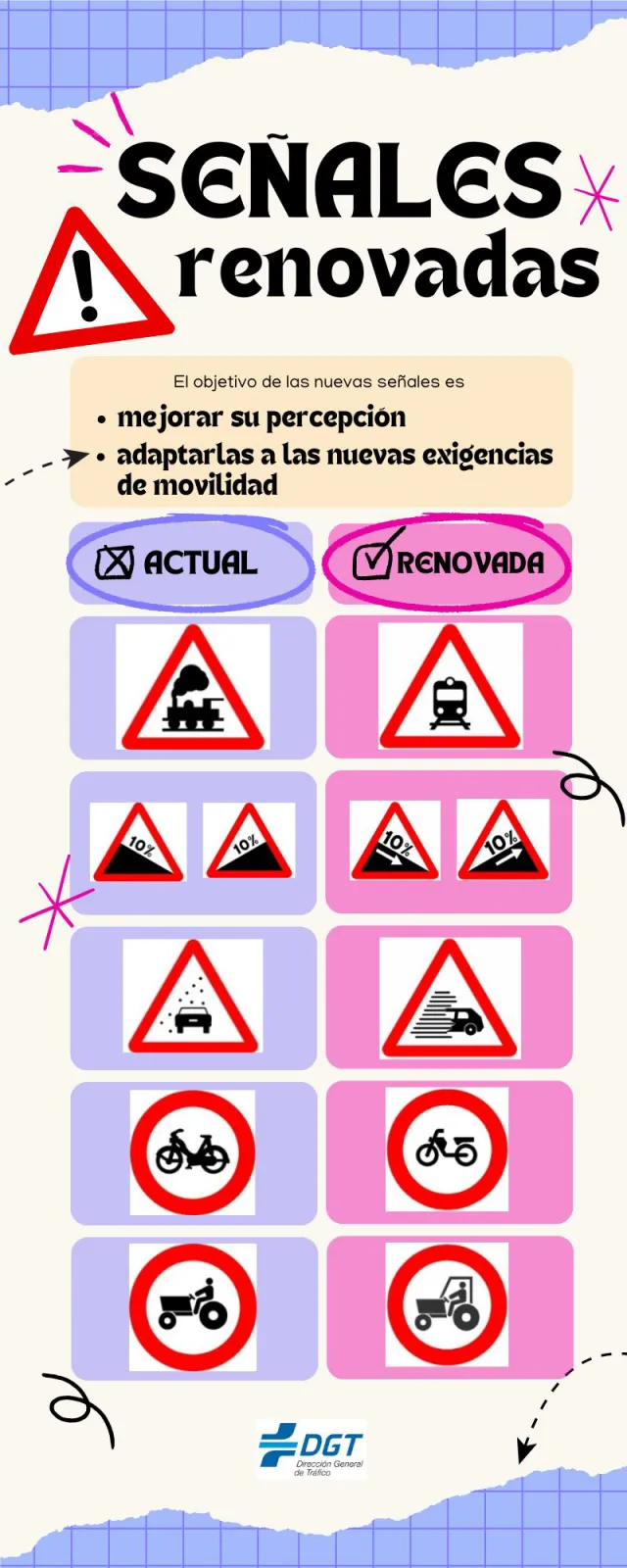
Not every change introduces a brand-new concept; some simply refresh icons that felt stuck in the analogue era. The venerable level-crossing warning—a steam engine chugging through a cloud—has been replaced by a sleek electric train silhouette, reflecting the high-speed AVE network that now criss-crosses the country. Gradient signs receive arrows that spell out whether the road climbs or descends. Fog-hazard panels trade cartoonish dots for a half-shrouded car, while mopeds and agricultural tractors get sharper outlines that pop against modern LED signposts.
Although the new catalogue enters force on July 1, drivers will experience a two-year transition. Municipalities and regional authorities have until July 2026 to phase out legacy panels, meaning summer visitors could encounter both vintage and modern graphics on the same stretch of asphalt. The DGT insists dual signage will not cause confusion: symbols follow the same colour logic, and the physical context—near a school, before a tunnel, beside a scooter lane—helps motorists understand the message instantly.
What Tourists Need to Know
Whether you are planning a Basque pintxo crawl by rental car or a cross-country camper adventure, brushing up on the newest icons is a smart safety move. Below is a cheat sheet that highlights the symbols most likely to appear on popular tourist routes:
| Icon | Meaning | Where You’ll See It |
|---|---|---|
| P-22 (Cyclist in triangle) | Approaching cycle lane or heavy bike traffic | Urban arteries in Valencia, Seville, Zaragoza |
| R-420 (Scooter/bike blue circle) | Lane reserved for scooters & bicycles only | Madrid Río, Barcelona’s Diagonal, coastal promenades |
| S-47 (Mixed zone 20 km/h) | Pedestrian-priority shared street | Old quarters of Córdoba, Toledo, Girona |
| EV/GLP/H₂ icons | Charging or alternative-fuel stations | Service areas on the AP-7 and A-1 motorways |
| R-412b (Snow-tyre symbol) | Winter equipment compulsory | Mountain passes in the Pyrenees, Sierra Nevada |
For foreign licence-holders, Spain’s points-based penalty system remains unchanged. However, fines for ignoring new restrictions—such as driving a petrol car into a low-emission zone clearly marked by the updated signs—can start at €200. Rental agencies are already briefing customers, and many GPS apps plan updates that flag the symbols in real time. Still, nothing replaces visual awareness on the road.
One quirk worth noting is the gender-neutral approach in certain pictograms. The classic children-crossing sign now shows an older sister leading a younger brother, flipping the traditional depiction and aligning with guidelines to remove subconscious bias from public signage. It is a small shift, yet travel psychologists say such details can subtly influence how drivers perceive vulnerability in specific areas.
Visitors arriving by motorcycle or camper van should pay close attention to the redesigned “No mopeds” and “No agricultural vehicles” discs as rural regions update posts along narrow farm tracks and vineyard lanes. Disregarding those symbols might lead to a roadside conversation with the Guardia Civil de Tráfico, Spain’s highway patrol famed for zero-tolerance enforcement on safety breaches.
Ultimately, the refresh reflects a Spain that is racing into an electric, multimodal future while preserving the joy of the open road. Travellers who master the new code will glide from bustling plazas to secluded coves with confidence—whether steering an EV toward a swift recharge, cruising a scooter through a designated lane, or easing into a shared-street zone where café chatter replaces engine noise. By 2026, the vintage steam train sign will be a collector’s item; until then, consider it a parting snapshot of a country intent on keeping its traffic language as dynamic as its landscapes.
Photo Credit: FTiare/Shutterstock.com