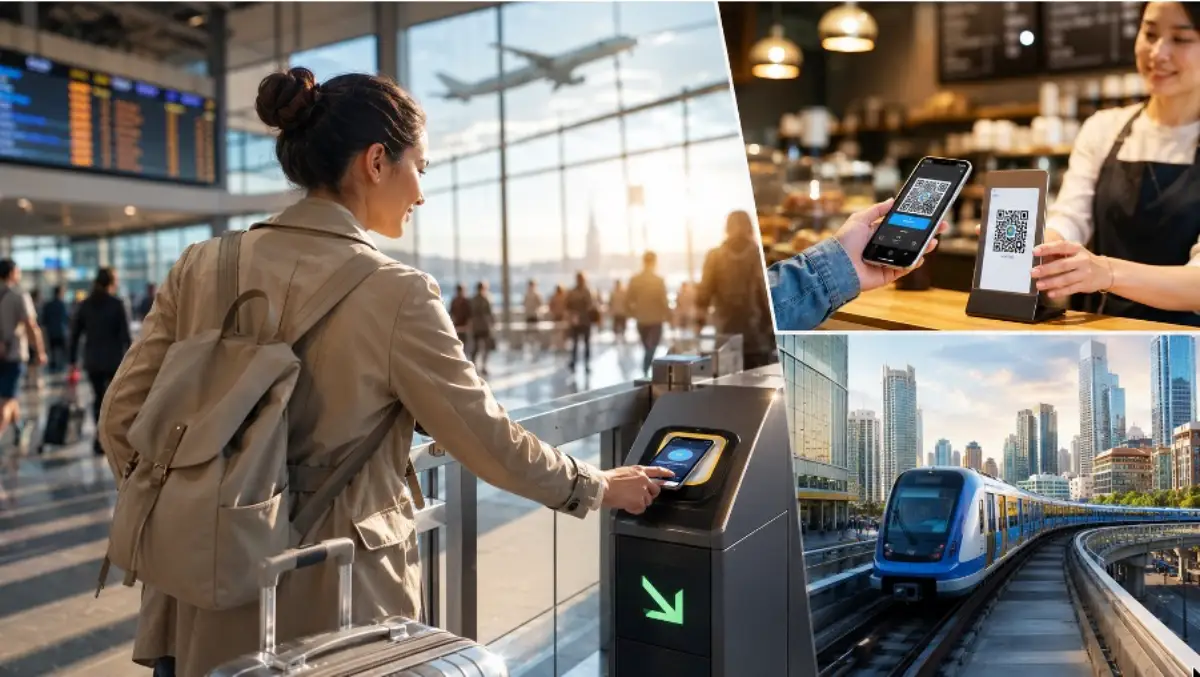
Paying abroad used to start with a familiar ritual: find an airport ATM, withdraw local cash, keep a few coins for ticket machines, and hope the bank card would not be blocked after the first foreign transaction. In many cities, that first payment now looks different. A card at a metro gate. A phone in a taxi. A QR code at a café.
The system becomes noticeable only when it fails. A station machine rejects foreign cards. A restaurant accepts only a local wallet. A ticket app asks for a domestic phone number. Suddenly, payment is no longer a background detail. It decides how easily a visitor can move through the city.
A Bigger Travel Market Makes Payment Friction Harder to Ignore
International tourism is growing again. UN Tourism reported a 2% rise in international arrivals in the first quarter of 2026, with about 307 million people travelling across borders. WTTC estimated that travel and tourism contributed $11.6 trillion to global GDP in 2025, or 9.8% of the world economy.
At that scale, small payment problems add up quickly. A failed card transaction can mean a missed airport train. A confusing ticket machine can push someone toward a hotel shuttle instead of public transport. Limited payment options can make an international chain feel safer than a local café.
The sharpest contrast appears in cities that already run on phones. Residents pay for the subway, lunch, ride-hailing, groceries and delivery without thinking about the process. Foreign guests may face a different reality if those same systems depend on domestic cards, local apps or identity checks built for residents.
A destination can be cashless and efficient for locals, yet still difficult for visitors.
The Phone Has Become the Centre of the Trip
The smartphone now carries much of the journey: boarding pass, hotel booking, airline app, map, ride-hailing account, restaurant reservation, museum ticket, loyalty card, insurance document and payment wallet.
IATA’s 2025 Global Passenger Survey shows how much expectations have changed. According to the survey, 78% of passengers want to use a smartphone that combines a digital wallet, digital passport and loyalty cards to book, pay and move through airport processes.
The point is not simply another payment option. People want fewer interruptions between booking, identification, loyalty and payment. They do not want a new queue, another form or a separate account every time they move from one part of the trip to another.
Airlines and airports have been moving in that direction for years. The harder test begins after arrival, outside the controlled environment of aviation. Can someone get from the airport to the centre without buying a special card? Pay for a SIM card, luggage locker, coffee, taxi or train with the wallet already on their phone?
When that works, the city feels easier from the first hour.
Transit Shows the Difference Immediately
Public transport is often the first test of how visitor-friendly a payment system really is. Nobody chooses Amsterdam or Seoul because of a fare gate, but the ability to tap a card or phone can remove one of the first irritations of a trip.
The Netherlands offers a clear example. With OVpay, passengers can check in and out of public transport using a bank card, smartphone or wearable device. Mastercard says at least 500,000 trips a day in the country are already made through open-loop payments. For visitors, the benefit is simple: no separate transport card, no guessing how much to load, no unused balance left behind.
Seoul is following a similar path. The city has announced EMV-based open-loop payments for international tourists, allowing overseas credit cards to be used directly on buses and subways. With 16.36 million international arrivals in 2024 and an expected rise above 20 million in 2025, transport payment is one of the first practical barriers the city has to reduce.
China presents the issue from another angle. Everyday payments there are built around mobile wallets and QR codes. The system works smoothly for residents, but foreign visitors have often faced card binding, identity checks and local app setup before completing even basic transactions.
Recent changes are narrowing that gap. A 2024-2025 report by the World Tourism Alliance, Mastercard and Trip.com Group found that inbound visitors using foreign bank cards for tap-and-go metro access in China rose sharply in early 2025. Usage in the second quarter was almost 60% higher than in the first. The important part is not only the growth, but the removal of steps: no local app, no complex account, just a foreign card at the gate.
Most people will not describe that as payment innovation. They will simply say the city was easy to use.
Local Wallets Are Opening to Foreign Cards
Transport is only one part of the change. Another is the connection between domestic payment systems and foreign cards or wallets.
China is again the clearest case. Alipay and WeChat Pay are used across restaurants, taxis, shops and services. For residents, they are ordinary tools of daily life. For international visitors, they can become a barrier when foreign cards or accounts are not supported.
In February 2025, American Express and Alipay announced that global American Express card members could link their cards to the Alipay digital wallet and pay at tens of millions of merchants in mainland China. In May 2026, Tencent said U.S.-based PayPal users would be able to make QR-code payments through WeChat Pay’s merchant network, with more markets expected to follow.
These partnerships are more than finance-industry news. They determine whether visitors can pay where locals pay, or whether they remain limited to hotels, large retailers and businesses used to serving foreigners.
The same challenge is likely to appear in more destinations as payment habits become more local and app-based. A system designed around residents can easily become a wall for visitors unless it connects smoothly with foreign cards, wallets and identity flows.
Spending Moves When Payment Becomes Easier
Digital payments do not automatically increase a traveller’s budget. Prices, exchange rates and the purpose of the trip still matter. What payment convenience can change is where that money goes.
A visitor who can pay easily is more likely to use public transport, buy tickets on the spot, stop at a smaller restaurant, book a last-minute tour or make a small purchase without searching for cash first. None of these transactions is dramatic. Together, they decide how much of the local economy a trip actually reaches.
Visa has noted that 67% of consumers make monthly e-commerce purchases while travelling. That matches how trips now work. A museum ticket can be bought from a phone outside the entrance. Dinner can be ordered through a local app after a late arrival. A ride, locker or event ticket can be paid for without touching a terminal. In the same way, some travellers who work across currencies or digital assets look for predictable conversion tools, including a permanent swap, not as a travel feature in itself, but as part of a broader move toward fewer payment interruptions.
Smaller businesses feel this most clearly. Tourists do not always avoid local places because they prefer chains. Sometimes they are simply unsure whether paying there will be easy. Familiar and secure payment options remove that doubt.
Security Is Part of the Travel Experience
Smoother payments also raise expectations around safety. A 2025 study by Outpayce from Amadeus found that 72% of travellers said a strong reputation for secure commerce would make them more likely to choose a travel company. At the same time, 35% said they do not trust travel companies to keep their payment details secure, and 64% believe payment fraud is increasing.
That creates a difficult balance for airlines, hotels, booking platforms and travel apps. Customers want fast checkout, but not weak authentication. They want app-based convenience, but not surprise fees, unclear currency conversion or suspicious payment pages. For travellers using digital assets, the concern can go further: public blockchains may expose transaction trails, which is why guides on how to transfer crypto privately have become part of the wider conversation around payment privacy. Fraud protection is welcome until it blocks a legitimate card at the hotel desk after a long flight.
Payment security now sits inside customer trust. A smooth checkout can support a travel brand. A declined card, unexplained extra charge or confusing payment page can damage it quickly.
Good payment design has to reduce steps, support familiar methods, protect stored details and avoid blocking genuine customers at the worst possible moment.
The Destination That Lets Visitors Stop Thinking About Payment Wins
Payment access has become part of what makes a destination ready for international tourism. Visa rules, flight capacity, hotels, museums, food and hospitality still matter. So do service, safety and price. But daily experience also depends on smaller questions. Can visitors board the train? Pay at a family-run restaurant? Book a local experience at short notice? Use the same card or wallet across the trip?
The Netherlands’ OVpay system, Seoul’s open-loop transit plans and China’s work to connect foreign cards with local payment habits all point in the same direction. Destinations are starting to treat payment convenience as part of the travel product.
Digital payments will not make a place worth visiting. They will not replace culture, scenery, service or safety. But they can remove the frictions that make visitors cautious.
The best version is almost invisible: land, tap into the train, buy lunch, visit a museum, pay for a taxi, book something for the next morning, and never stop to ask whether the card will work.
That may not sound like a travel revolution. It is the kind of quiet improvement that changes how a city feels.