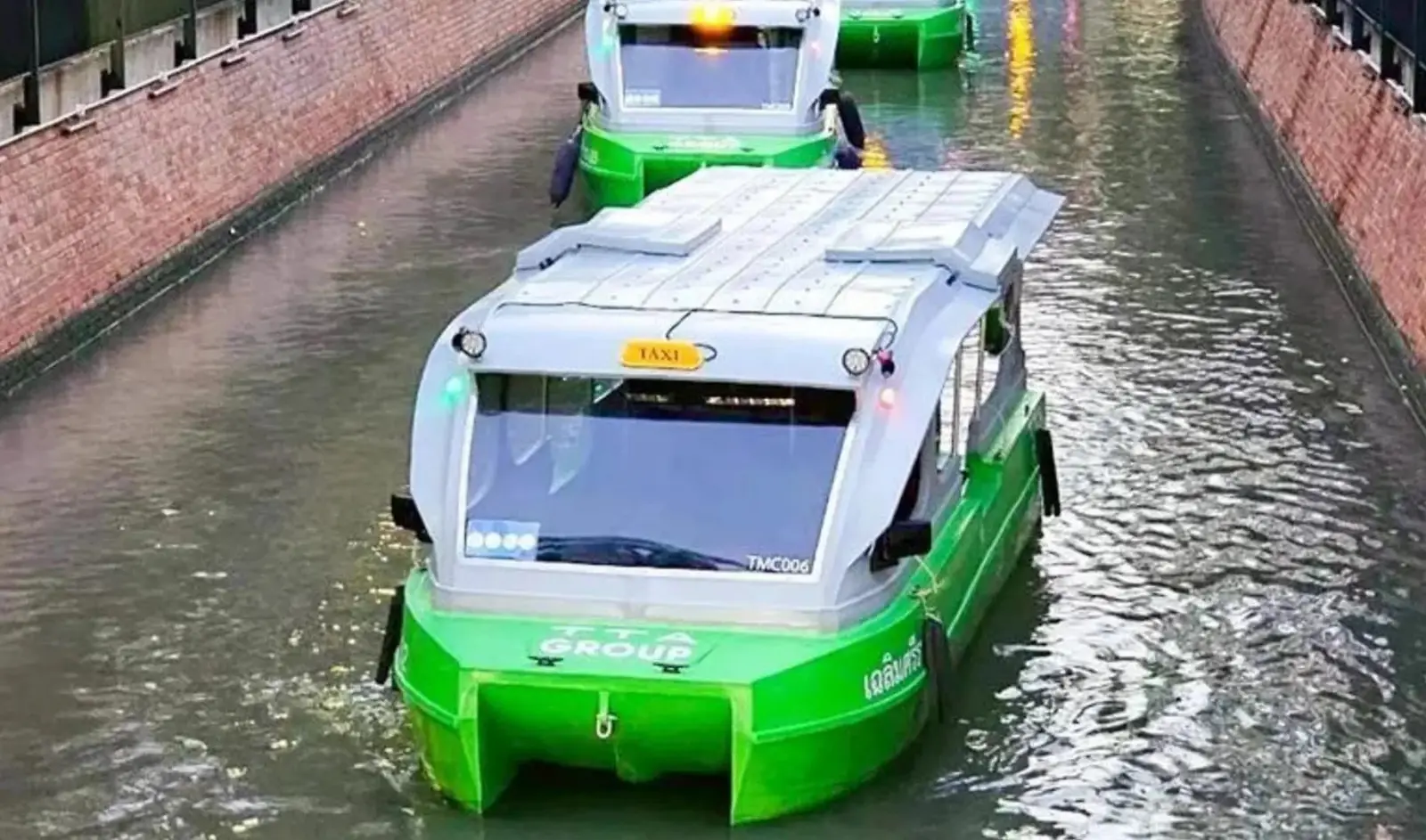
Bangkok’s canals, or khlongs, were once the city’s main transportation network. Now the city has introduced electric boat taxis along the waterway that runs through Bangkok’s historic district, linking 14 piers as part of efforts to improve urban mobility and reduce emissions. The vessels, TTA Mariner are owned and operated by Thoresen Thai Agencies (TTA).
Operating daily from 9am to 5pm, the current fleet consists of eight electric boats. Each vessel accommodates up to six passengers and travels at an average speed of 12km per hour. Rides are booked through the MuvMi app in the same way as its electric tuk-tuk service. Instead of hailing from the street, riders simply choose their departure pier and destination within the app.
Following a free trial run that will conclude in mid-April, standard fares will start at 35 baht (about US$1.07) per passenger. Prices increase in a tiered structure based on passenger volume and travel distance, with bookings made through the MuvMi application.
The MuvMi app is available in English and allows visitors to quickly select their pick-up and drop-off piers along the route. Users select a preferred pier on the application map and receive details of the assigned boarding point.
Visitors can charter an entire boat for a private group experience starting at 1,000 baht (about US$30.70) per hour
A quieter way to cross the city
Unlike traditional canal boats powered by diesel engines, these vessels run on electricity. That means less engine noise, no exhaust fumes, and a noticeably calmer ride. Passengers can glide past temple roofs, historic shophouses, and neighbourhoods that still look much the same as they did decades ago.
The project is also part of a broader push by the Bangkok Metropolitan Administration to modernise canal transport while reducing pollution from older boat fleets.
Old routes, new technology
Bangkok was once called the “Venice of the East” because canals functioned as the city’s primary transportation network. Roads gradually replaced waterways as the dominant infrastructure, leaving many canals underused.
Electric canal taxis suggest a different direction. By combining historic waterways with app-based booking and electric propulsion, the system blends old urban geography with modern mobility tech.
Whether it becomes a permanent part of the city’s transport network remains to be seen. But for now, if you’d rather float past temple spires than sit through another hour on the road, Bangkok’s canals are quietly back in business.