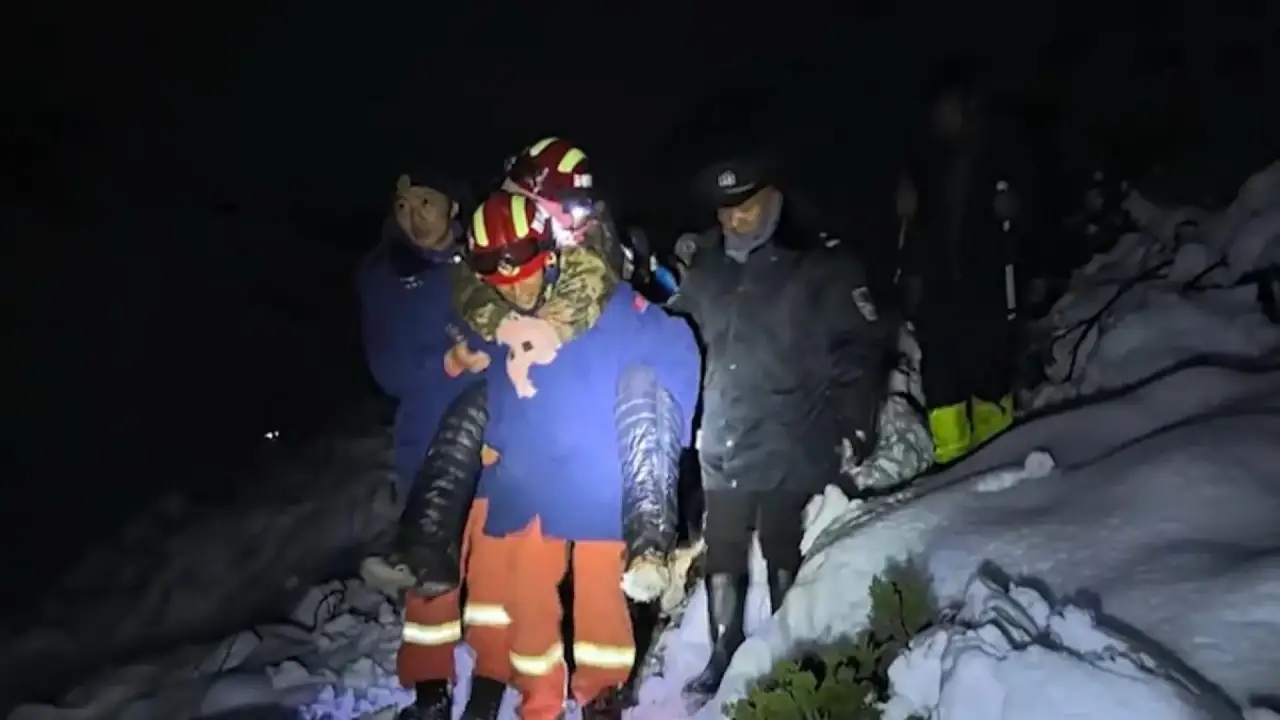
A powerful blizzard has trapped hundreds of trekkers on the Tibetan side of Mount Everest during China’s Golden Week holiday, killing at least one person and leaving scores stranded at high altitude.
The storm, which began on October 3, has disrupted travel and rescue operations across the Everest region, coinciding with extreme weather that has also killed more than 70 people in Nepal and India.
Authorities in Tibet confirmed that rescue teams have evacuated more than 350 people, while around 200 remain trapped in Laohugou and surrounding areas at altitudes exceeding 4,900 meters. Heavy snow, freezing temperatures, and blocked roads have slowed emergency operations despite the deployment of over 300 personnel, drones, and local volunteers, according to state broadcaster CCTV and the People’s Daily.
Rescue Operations Intensify Amid Extreme Weather
China’s Ministry of Emergency Management said rescuers were working continuously to reach hikers and tourists stranded in isolated valleys near the Everest Scenic Area. The snowstorm buried tents and blocked mountain passes, forcing climbers to take shelter in limited high-altitude camps. Some trekkers were rescued on horseback and by drone-assisted teams, while others remained without communication as snow and ice cut off access routes.
Police in Qinghai province reported one fatality from hypothermia and altitude sickness in Laohugou, where snowfall has reached record levels for early October. “Continuous snow has hampered the rescue operation,” officials said in a statement carried by Chinese state media. Local authorities added that more than 137 people had been successfully evacuated as of Monday morning, with further efforts under way to reach others stranded in remote areas.
Witnesses described severe and unexpected conditions during what is normally a stable weather window for high-altitude trekking. “The guide said he had never encountered such weather in October. And it happened all too suddenly,” said trekker Chen Geshuang, who was among those rescued, according to The Guardian. Another traveler, Eric Wen, told Reuters that visibility had dropped to zero. “We only had a few tents and hardly slept,” he said.
Golden Week Crowds Heighten Impact
The timing of the storm coincided with China’s Golden Week holiday, one of the country’s busiest travel periods. Thousands of domestic tourists had traveled to the Himalayas during the week-long national break, with many drawn to the Everest Scenic Area and nearby trekking routes in Tibet. The influx of visitors, combined with sudden weather changes, has made evacuation and resource allocation more difficult for local authorities.
According to the official People’s Daily, approximately 350 tourists were rescued from high-altitude zones over the weekend, while 200 remained cut off as of early Monday. Emergency shelters have been set up in lower towns such as Qudang, where evacuees have been provided with food, heating, and medical assistance. Drone footage from the region showed roads buried under meters of snow, with long convoys of vehicles stranded along mountain passes.
The Tibet Autonomous Region government has temporarily suspended ticket sales and closed the Everest Scenic Area to tourists until weather conditions stabilize. Local tourism bureaus have been instructed to track missing visitors and coordinate with families as rescue operations continue. Authorities said hundreds of soldiers, police officers, and local residents have joined in clearing snow from access roads and guiding stranded trekkers to safety.
Wider Regional Impacts
The same storm system has battered South Asia, with heavy rain and flooding reported across Nepal and northern India. In Nepal, landslides and flash floods have killed at least 47 people, destroyed roads, and disrupted power supplies, according to local disaster management officials. In India’s Sikkim and Bihar states, overflowing rivers and mountain runoff have caused similar damage and travel disruptions.
Meteorologists in Beijing said the extreme weather was caused by a rare confluence of a western cold front and a moist air mass moving north from the Bay of Bengal. The resulting temperature plunge triggered heavy snow and blizzards across parts of Tibet and Qinghai, catching many tourists by surprise. Experts warned that changing climate patterns may increase the likelihood of such early-season storms in the Himalayas.
China’s National Meteorological Center said more snowfall and strong winds are expected in parts of Tibet through midweek, and urged travelers to avoid mountain routes until the weather clears. Rescue efforts are expected to continue for several days as teams work to reach all affected sites. State media reported that most stranded tourists are in stable condition and that supplies are being airlifted to isolated camps.
The Everest region, straddling the border between Nepal and China, remains one of Asia’s most visited adventure travel destinations. The ongoing storm has renewed concerns about safety management during peak tourism periods, especially as domestic travel surges following years of pandemic restrictions. Chinese authorities have pledged to strengthen weather monitoring and emergency preparedness for high-altitude destinations ahead of next year’s Golden Week.