Florida will open the gates to its state parks for four days of free admission this February, inviting residents and visitors to explore historic landscapes tied to the nation’s earliest chapters.
The Florida Department of Environmental Protection (DEP) announces that all eligible Florida State Parks will offer free day-use entry from Feb. 13–16, 2026, in honor of George Washington’s birthday and as part of the early commemorations of America’s 250th anniversary.
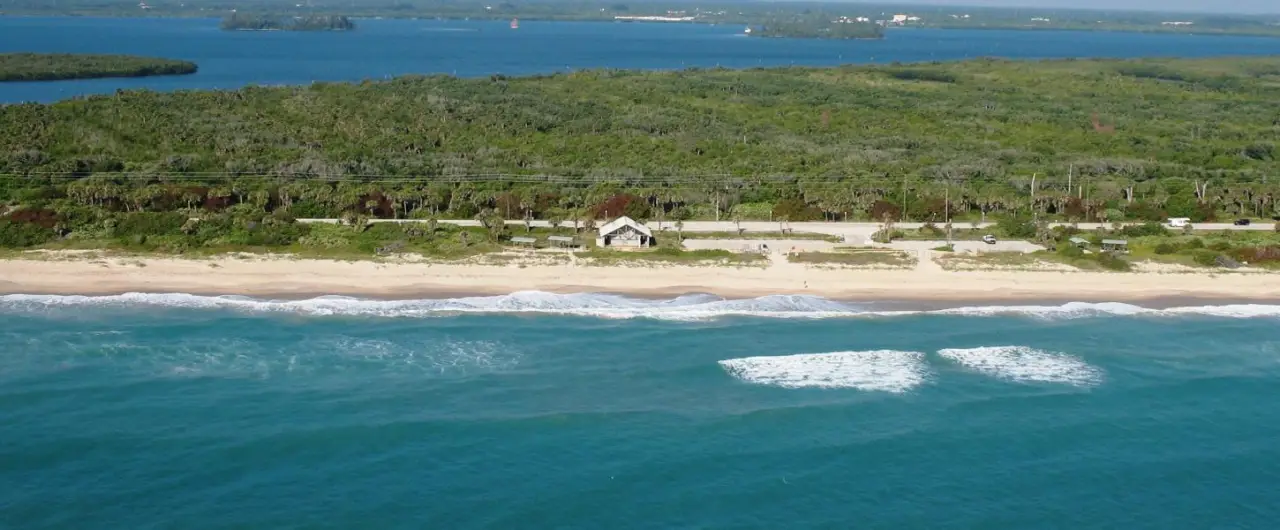
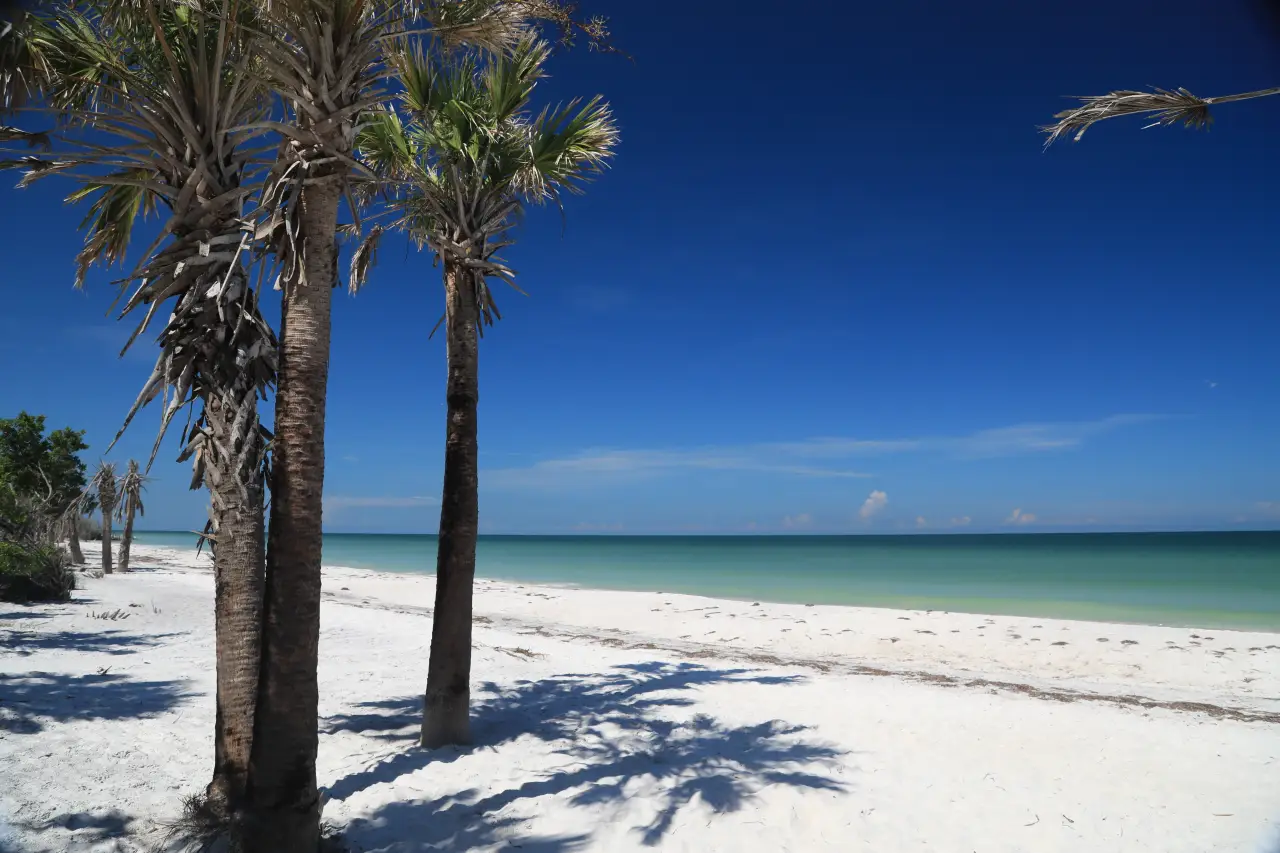
The offer applies statewide and is designed to encourage visitors to experience parks that preserve Revolutionary-era sites, frontier settlements, barrier islands, and riverbanks.
Free admission applies to day use only and excludes Skyway Fishing Pier State Park and Olustee Battlefield Historic State Park; other fees, such as overnight stays, rentals, concessions, and special events, remain in effect.
History without the entry fee
Florida’s state parks are positioning themselves as living classrooms during the anniversary year, emphasizing that history can be experienced outdoors rather than only in museums. According to the DEP, these landscapes offer tangible connections to people and events that shaped the nation long before independence was declared.
“As the nation reflects on 250 years of independence, Florida State Parks invite visitors to experience history not just through exhibits, but through the landscapes themselves,” said Alexis A. Lambert, DEP Secretary. “Our parks offer meaningful connections to the people and events that shaped our nation.”
While Florida is often absent from popular narratives of the American Revolution, the state played a complex role during the period. Parts of present-day Florida were once British West Florida, sometimes referred to as the “fourteenth colony,” and several current parks preserve sites connected to British rule, trade, and military activity in the 18th century.
Parks with Revolutionary-era connections
Several Florida State Parks highlighted by the DEP offer direct or indirect links to the Revolutionary period, giving visitors the chance to explore sites tied to colonial agriculture, trade routes, and shifting military control.
Big Talbot Island State Park and Fort George Island Cultural State Park were once home to plantations that produced indigo and Sea Island cotton, commodities that supported the British economy during the colonial era. These coastal landscapes now combine maritime forests and undeveloped shorelines with layered histories of labor and trade.
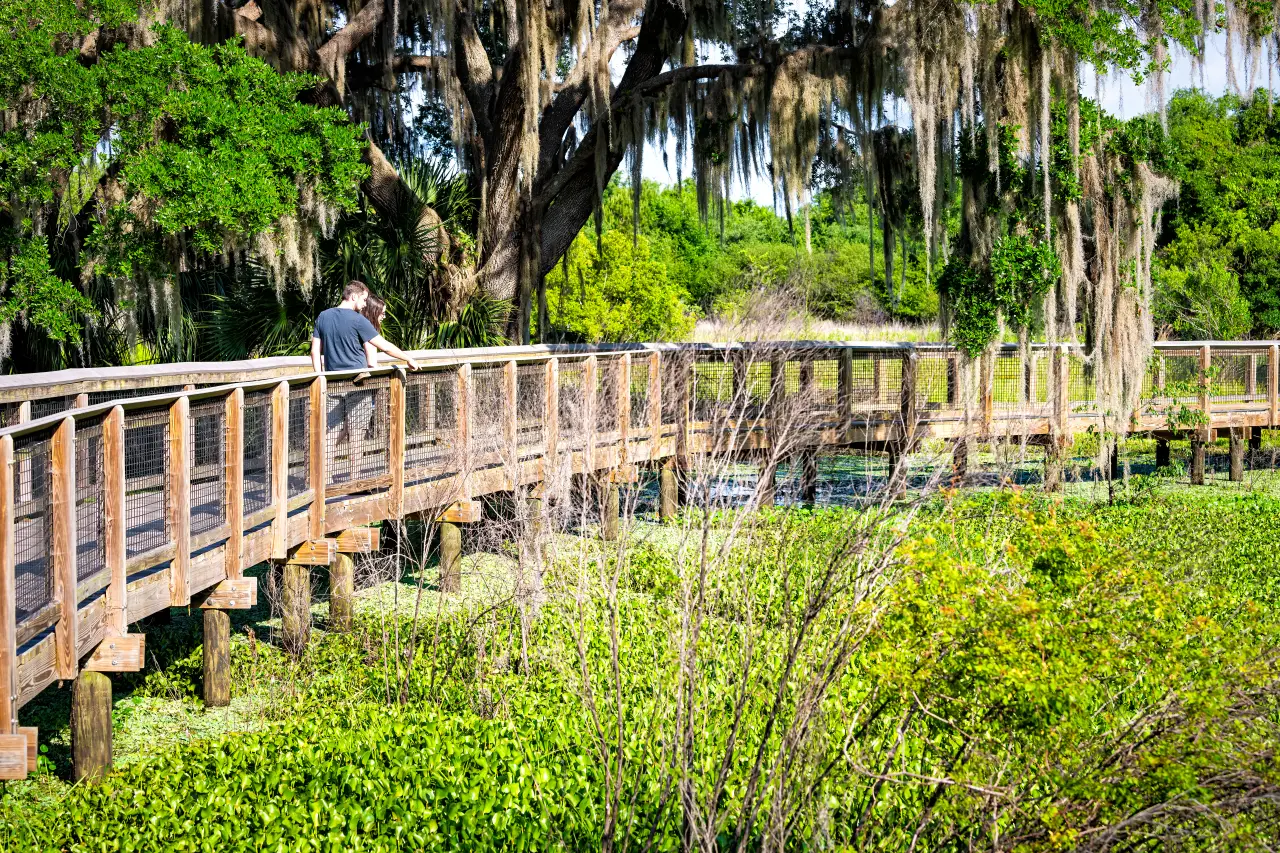
At Paynes Prairie Preserve State Park, visitors can walk through land that once hosted a frontier trading post facilitating commerce between Native American communities and British settlers. Inland waterways and grasslands here played a role in regional trade long before modern borders existed.
Tomoka State Park, set along the Tomoka River, preserves the site of a British indigo plantation, reflecting how Florida’s rivers connected agricultural production to international markets. The park today blends archaeological significance with popular paddling and wildlife viewing.
San Marcos de Apalache Historic State Park tells a more overt military story. Control of the fort shifted multiple times during periods of British rule, and the site illustrates how Florida sat at the crossroads of imperial competition in North America.
On Amelia Island and nearby areas, Fernandina Plaza Historic State Park, Amelia Island State Park, and Fort Clinch State Park are connected to small military conflicts and border tensions with the neighboring colony of Georgia. These parks highlight how Florida’s northeastern coastline became a contested zone during the late colonial period.
By opening its parks for free during the long Presidents’ Day weekend, Florida is using the lead-up to America’s 250th anniversary to spotlight a lesser-known side of national history. For travelers, families, and history enthusiasts, the four-day window offers an accessible way to explore how Florida’s landscapes intersect with the broader story of the American Revolution.
Top Photo Credit: Andriy Blokhin / Shutterstock.com