Tour guides who lead visitors up Sicily’s Mount Etna have gone on strike for the first time in decades, protesting tougher restrictions introduced after a new round of eruptions in recent weeks.
Local authorities in the city of Catania have suspended or limited excursions to view the volcano’s lava flows due to safety concerns, prompting walkouts and demonstrations by dozens of licensed guides.
The new rules restrict access to lava after dusk, keep visitors at least 200 metres away from active flows and strictly enforce a limit of 10 people per group, including monitoring by drones. Forestry police enforced the measures on Tuesday night, and local media reported that 21 people were referred to authorities for non-compliance, even as scientists confirmed the eruption is ongoing but cooling and no longer advancing.
Why Mount Etna’s access rules are changing
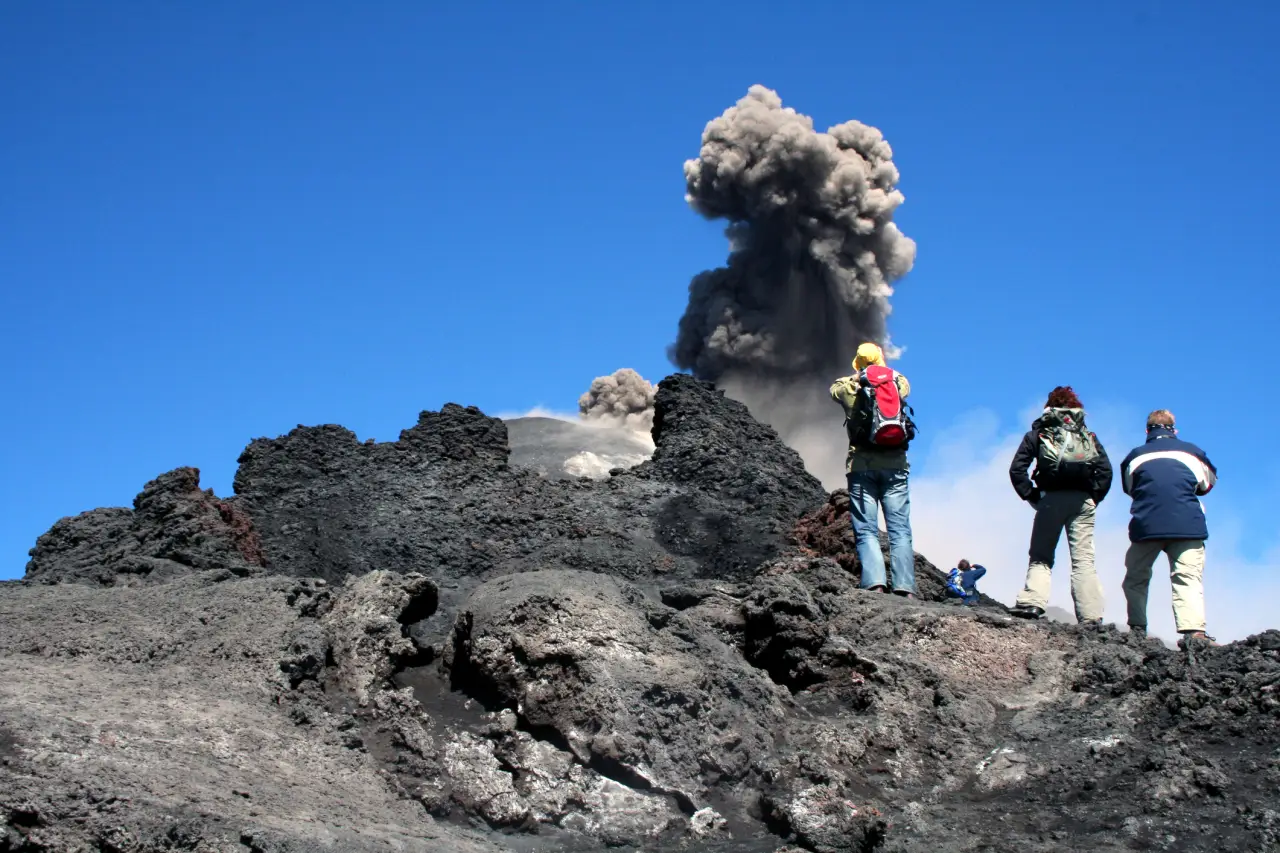
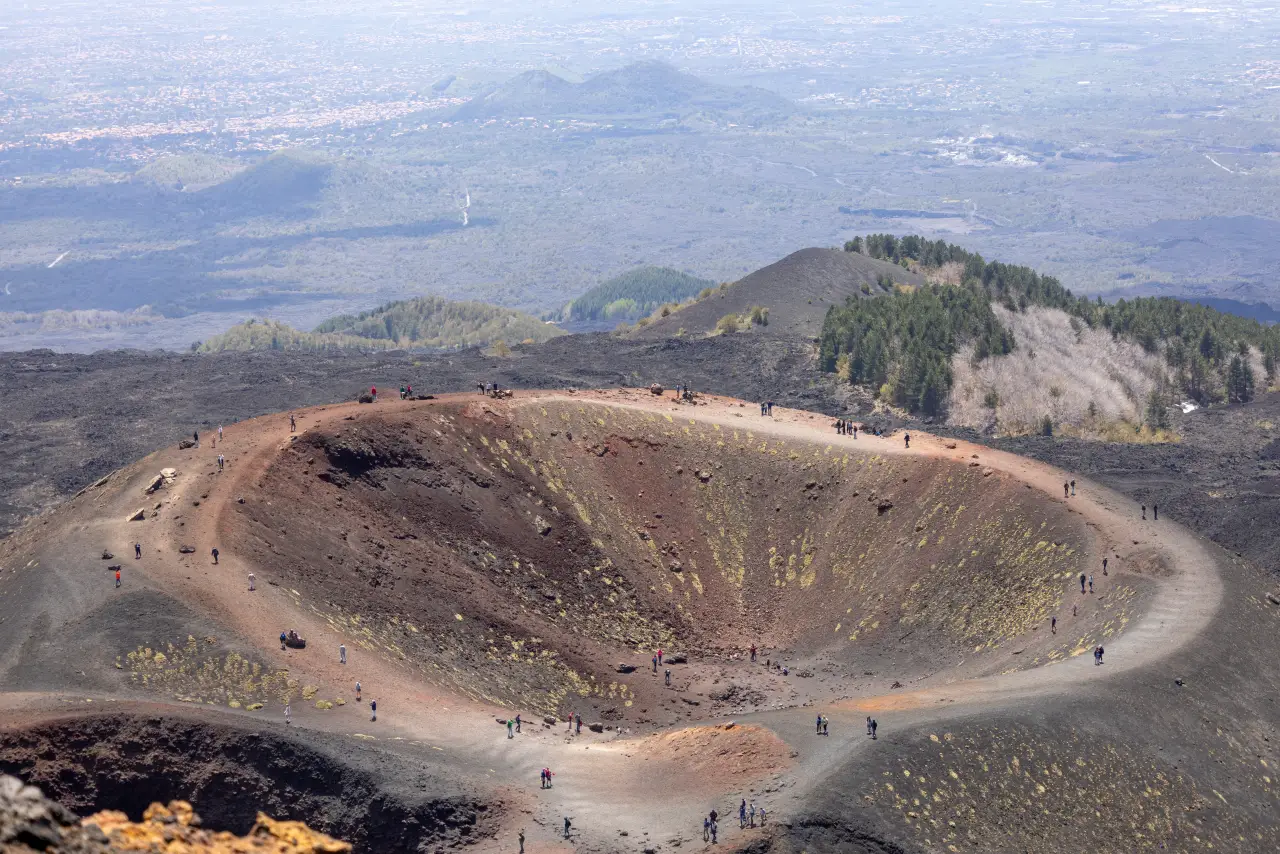
Mount Etna is Europe’s most active and largest volcano, drawing thousands of travellers each year who want to hike its slopes or watch glowing lava from a safe distance. Rising to 3,350 metres and stretching roughly 21.7 miles wide, the Sicilian giant regularly produces dramatic displays that can be seen from the Ionian Sea, making it a magnet for photographers, hikers, and cruise passengers alike.
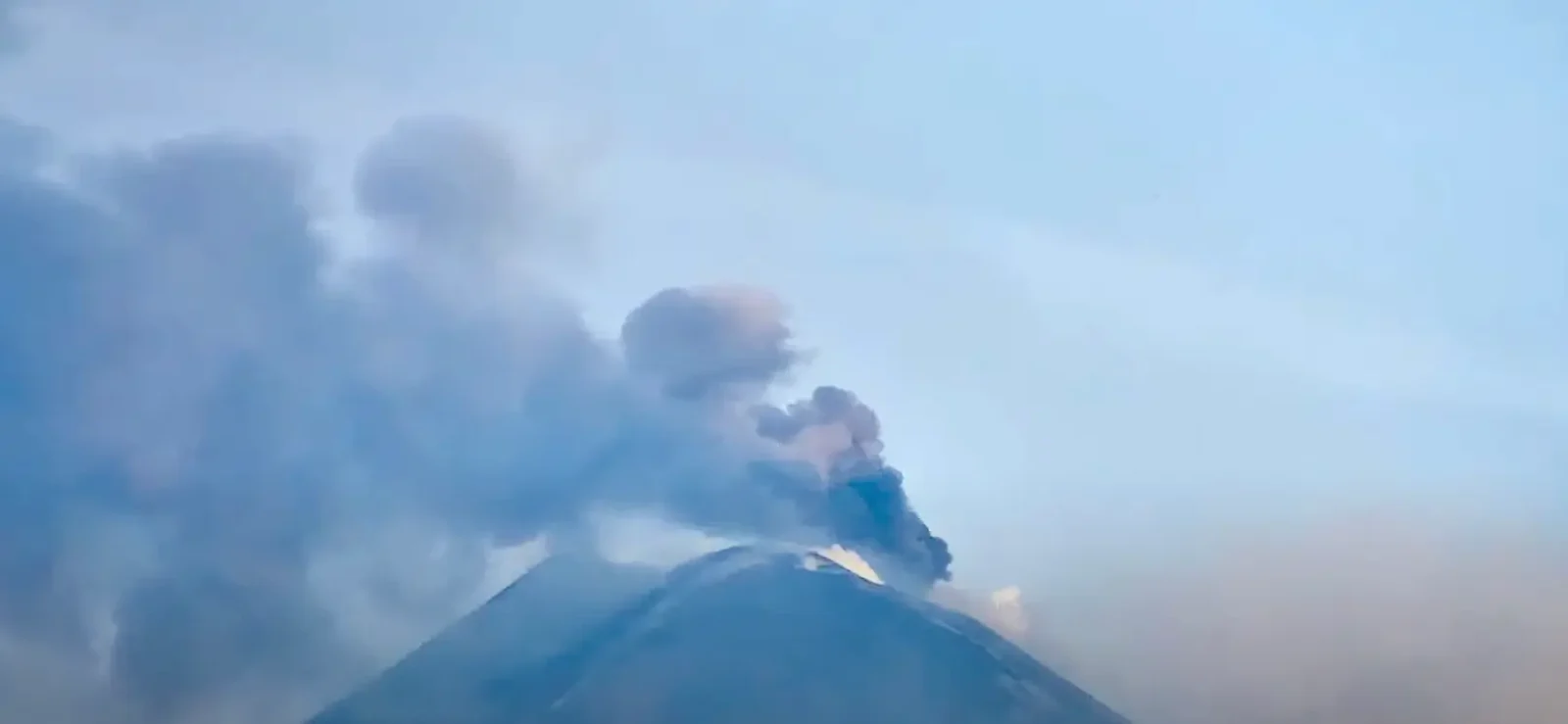
Above certain altitudes, Italian law requires visitors to be accompanied by a qualified guide to ensure safety and protect fragile volcanic terrain. The latest restrictions were adopted after Etna began a new eruptive phase on Christmas Eve, when the most advanced lava front reached 1,360 metres above sea level before stopping and entering a cooling phase after travelling approximately 2 miles.
Authorities say the measures are designed to prevent crowds gathering too close to lava flows, particularly during sunset hours when visibility drops, and temperatures can change rapidly. Excursions are now permitted only until dusk, removing one of the most popular viewing windows for visitors who want to see molten rock glow against the darkening sky.
Guides argue that the restrictions are excessive and undermine their professional role. On Wednesday, dozens of licensed guides staged a demonstration in front of the lava flow gate, saying that slow-moving lava can be viewed safely under supervision, as it has been in the past. The strike is expected to continue in the coming days as negotiations with local authorities continue.
Visitors have already felt the impact. Claudia Mancini, a 32-year-old tourist who travelled from Palermo for a guided excursion, said, “Unfortunately, we got the bad news of the cancellation of all activities,” adding that she sympathised with the guides over a situation that “is not making anyone happy.”; reported euronews.
Is it actually safe to visit during the eruption?
Volcanologists stress that the current lava flow poses no danger to nearby residential areas and, under normal circumstances, is not considered dangerous for hikers accompanied by trained guides. Catania-based volcanologist Boris Behncke has been outspoken about the perceived low risk of this eruption.
“Among all the eruptions of Etna in recent years, there hasn’t been one as harmless, pleasant, or as little dangerous,” said Boris Behncke, Catania Volcanologist, National Institute of Geophysics and Volcanology (INGV). “I don’t know what on earth went on whoever deemed it useful to issue these ordinances, in an area that needs much more intervention to provide a service to the community and to this environment that hosts and nourishes us.”
Italy’s National Institute of Geophysics and Volcanology confirmed this week that Mount Etna’s eruption is ongoing but that lava fronts are cooling and not advancing further. Protest participants say this supports their argument that carefully managed access can continue without compromising safety.
“This is a lava flow that is descending very slowly on an area that is now also flat or semi-flat,” said Dario Teri, Member of Sicily’s Association of Alpine and Volcano Guides.
Etna’s volatile history explains why authorities remain cautious. In June last year, a powerful eruption forced tourists to flee after a plume of high-temperature gases, ash and rocks shot several kilometres into the air. Although the volcano is closely monitored and warnings are typically issued well in advance, sudden changes in wind direction, gas emissions or lava behaviour can still pose risks.
For travellers, the situation creates uncertainty rather than outright danger. Many hiking routes remain open and steer well clear of summit craters where explosive activity occurs. Less adventurous visitors can continue to admire the volcano from viewpoints, coastal towns or boat excursions along the Ionian Sea, which often provide sweeping views without exposure to restricted zones.
Those planning to hike should check daily updates from local authorities and tour operators, as access conditions can change quickly depending on volcanic activity and enforcement policies. Anyone wishing to go beyond the 2,900-metre mark must legally hire a guide, even when strike action is not in place.
Travel experts also recommend allowing flexibility in itineraries when visiting active volcanic regions. Weather, seismic activity and local regulations can affect access at short notice, making backup plans essential for travellers with tight schedules.
For now, Mount Etna remains open to visitors in many areas, but the experience may be more limited than usual. The ongoing strike highlights a broader tension between public safety, local livelihoods and the powerful draw of natural spectacles that continue to shape travel decisions across Europe’s most dynamic landscapes.
Photo Credit: Jolanta Wojcicka / Shutterstock.com